
Advancements in Far Infrared Technology for Wound Healing
The landscape of pain management has undergone a remarkable transformation, especially with the proliferation of home-based solutions. As of August 2026, the market for pain relief devices is robust, with over 10,000 results for ‘pain relief device’ on Amazon alone, signaling high consumer demand and a vast array of product options. This surge reflects a growing desire for accessible, drug-free alternatives to manage discomfort and accelerate recovery.
We have witnessed the evolution of various therapeutic modalities, each designed to address different types of pain and promote healing. Among the most popular are TENS (Transcutaneous Electrical Nerve Stimulation) technology and EMS (Electrical Muscle Stimulation) muscle stimulation. These devices utilize electrical currents to either block pain signals or stimulate muscle contractions, offering relief for conditions ranging from chronic back pain to post-workout muscle soreness.
Beyond electrical stimulation, thermal therapy has also advanced significantly. Devices incorporating heat, and sometimes cold, work by increasing blood flow, relaxing muscles, and reducing stiffness. Percussion massagers, or massage guns, have emerged as powerful tools for deep tissue manipulation, helping to break up knots, improve circulation, and aid in muscle recovery.
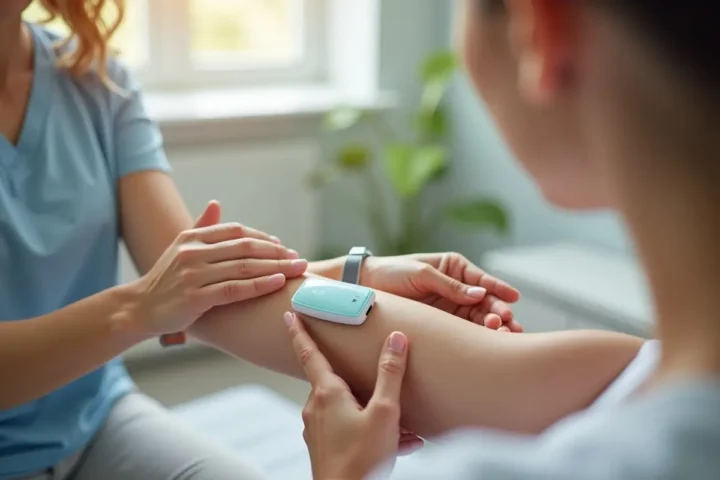
Evolution of Pain Relief Devices and Therapeutic Modalities
A key focus across many of these innovations is microcirculation enhancement. Improved blood flow is crucial for delivering oxygen and nutrients to damaged tissues and removing metabolic waste, all of which are vital for healing. Wearable health technology has made these devices more convenient and discreet, allowing users to integrate pain management seamlessly into their daily routines.
For those seeking non-pharmacological approaches, the options are diverse. Many modern pain relief devices, including TENS units and therapeutic heating equipment, are often FSA (Flexible Spending Account) or HSA (Health Savings Account) eligible, making them more financially accessible for consumers. This eligibility underscores their recognized medical benefit.
One of the most exciting advancements in recent years has been the development of non-powered far infrared technology. Unlike electrical devices that deliver active pulses, FIR devices emit a gentle, therapeutic heat that penetrates deep into tissues, promoting healing at a cellular level without the need for batteries or external power sources.
For a deeper dive into this innovative approach to pain management and recovery, you can explore more about non-powered far infrared technology and its unique benefits. This technology represents a significant step forward in wearable health tech, offering continuous, passive therapy.
Cellular Mechanisms of Far Infrared Wound Healing
Far infrared (FIR) therapy offers a unique approach to pain relief and tissue regeneration by leveraging the natural properties of the infrared spectrum. Unlike conventional heating pads that provide superficial warmth, FIR penetrates deeper into the body’s tissues, initiating a cascade of beneficial cellular responses. This deep, gentle heat is absorbed by the body, leading to a phenomenon known as “resonant absorption,” where the body’s cells vibrate in harmony with the FIR, stimulating various physiological processes.
At the cellular level, FIR exposure has been shown to enhance fibroblast proliferation, which is crucial for wound healing as fibroblasts are responsible for synthesizing collagen and other extracellular matrix components. This increased activity leads to improved collagen synthesis, strengthening new tissue and promoting scar maturation.
Another significant effect of FIR is the release of nitric oxide. Nitric oxide is a potent vasodilator, meaning it helps to relax and widen blood vessels. This vasodilation improves blood flow, which in turn enhances oxygen and nutrient delivery to injured areas. This improved oxygenation is vital for cellular metabolism and repair processes.
Furthermore, FIR therapy can boost cellular ATP production. Adenosine Triphosphate (ATP) is the primary energy currency of cells, and increased ATP levels mean cells have more energy to carry out their repair and regeneration functions. This energy boost supports faster healing and recovery. The overall effect of FIR on the body’s microcirculation and cellular activity contributes to enhanced vasodilation and oxygenation, creating an optimal environment for microvascular healing.
How Far Infrared Wound Healing Stimulates Microcirculation and Tissue Regeneration
The profound impact of far infrared (FIR) on healing is largely attributed to its ability to stimulate microcirculation and tissue regeneration. When FIR energy is absorbed by the body, it causes a gentle increase in tissue temperature, which directly influences the microvascular system. This leads to significant microvascular blood flow improvement.
The warmth generated by FIR triggers the expansion of tiny blood vessels, particularly dermal capillary expansion. This widening of capillaries allows for a greater volume of blood to flow through the affected area, ensuring a more efficient supply of oxygen, white blood cells, and essential nutrients required for tissue repair.
Simultaneously, this enhanced blood flow aids in accelerating lymphatic drainage, helping to remove metabolic waste products, toxins, and excess fluid that can accumulate in injured tissues. This detoxification process is critical for reducing swelling and promoting a cleaner healing environment.
The improved circulation and waste removal contribute directly to inflammation reduction. By flushing out inflammatory mediators and supplying anti-inflammatory compounds, FIR helps to calm the inflammatory response, which is often a major contributor to pain and delayed healing.
This reduction in inflammation, coupled with enhanced nutrient delivery, supports the body’s natural regenerative processes. FIR therapy creates an optimal physiological environment that not only alleviates pain but also actively encourages the body’s intrinsic capacity for repair and regeneration.
Comparing Far Infrared Wound Healing to Active Electrical Stimulation
When evaluating pain relief and healing devices, understand the fundamental differences between technologies like far infrared (FIR) and active electrical stimulation, such as TENS (Transcutaneous Electrical Nerve Stimulation) and EMS (Electrical Muscle Stimulation). While both aim to provide relief and support recovery, their mechanisms of action, application, and overall user experience can vary significantly.
Active electrical stimulation devices, like TENS units, primarily work through neuromodulation mechanisms. TENS units deliver low-voltage electrical currents through electrodes placed on the skin. These currents stimulate nerve pathways, either by blocking pain signals from reaching the brain (gate control theory) or by triggering the release of natural pain-relieving endorphins. EMS devices, on the other hand, stimulate muscles directly, causing them to contract and relax. This can help with muscle re-education, strengthening, and improving local blood flow for recovery.
The application of TENS/EMS involves precise electrical pulse delivery and careful electrode placement safety. Users must ensure pads are placed correctly on or near the pain site, avoiding sensitive areas like the head, neck (front/side), or directly over the heart. The intensity levels and modes (e.g., normal, burst, modulation) can be adjusted to customize the therapy.
Popular models like the TENS 7000 Digital TENS Unit, with over 104,494 customer ratings, offer up to 100mA intensity, exceeding the 80mA standard of many OTC devices, and feature dual channels to treat multiple areas simultaneously. These devices are typically battery-powered and can be quite portable, with some, like the Soterix Medical PainX TENS Wireless Tens Unit, offering a completely wireless portability experience.
In contrast, non-powered FIR devices, which utilize non-powered ceramic polymers or other FIR-emitting materials, operate on a completely different principle. They do not deliver electrical pulses or require external power. Instead, they absorb the body’s own heat and re-emit it as far infrared energy. This passive thermal radiation penetrates tissues, promoting microcirculation and cellular activity as discussed earlier.
The lack of electrical current means there are no concerns about electrode placement safety in the same way as TENS/EMS, nor are there issues with skin conductivity or battery life. FIR devices are inherently wireless portability solutions, often integrated into wraps, patches, or garments that can be worn continuously and discreetly.
The choice between these technologies often comes down to the specific type of pain, desired mechanism of action, and user preference for long-term patient compliance. TENS/EMS offers immediate, active nerve or muscle stimulation, which can be highly effective for acute or localized pain. FIR provides a continuous, gentle, and passive therapeutic effect that supports overall tissue healing and can be worn for extended periods without interruption, making it suitable for chronic conditions and overall wellness.
Clinical Applications and Device Comparisons
The array of pain relief devices available today allows for targeted treatment of various conditions, from chronic aches to acute injuries. Understanding the specific applications and mechanisms of each device type is key to effective pain management.
TENS units, for instance, are widely used for their ability to interfere with pain signals. This is often explained by the gate control theory, where electrical impulses essentially “close the gate” to pain messages traveling to the brain. They also stimulate the release of natural endorphins, the body’s own painkillers. TENS is commonly applied for back pain, sciatica, nerve pain, arthritis, and post-operative discomfort. Devices like the AUVON Rechargeable TENS Unit Muscle Stimulator, with its 31,697 customer ratings and 4.6-star average, are popular choices for home use.
EMS devices, on the other hand, focus on muscle activation. By causing muscles to contract and relax, EMS can help with muscle strengthening, reducing atrophy, improving circulation, and aiding in recovery from sports injuries or muscle strains. While TENS targets nerve pain, EMS is more geared towards muscle rehabilitation. Many devices, such as the AUVON Dual Channel TENS Unit Muscle Stimulator Machine, combine both TENS and EMS functionalities, offering versatile pain relief and muscle conditioning.
Percussion massagers, like the TOLOCO Massage Gun, which boasts 57,807 customer ratings, are excellent for muscle activation and deep tissue relief. They use rapid, repetitive strokes to increase blood flow, release muscle tension, and improve flexibility, making them popular for post-exercise recovery and alleviating general muscle soreness.
Far infrared (FIR) therapy, as discussed, provides a non-electrical approach. Its primary clinical applications revolve around enhancing microcirculation, reducing inflammation, and promoting cellular regeneration. FIR is particularly beneficial for chronic pain management, acute tissue injury, and joint stiffness, as it fosters an optimal healing environment from within. Its continuous, gentle action makes it suitable for conditions like arthritis, fibromyalgia, and general aches, supporting long-term tissue health.
While this article primarily focuses on home-use, non-invasive devices, it’s worth noting that for severe, intractable pain, more invasive medical procedures like spinal cord stimulation (SCS) exist. SCS involves implanting a device that sends electrical impulses directly to the spinal cord to alter pain signals. However, SCS is a surgical option, typically reserved for cases where all other conservative treatments have failed, and involves a rigorous trial and recovery process. Our focus here remains on accessible, non-invasive home solutions.
Here’s a comparison of these popular pain relief and recovery devices:
| Feature / Device Type | TENS Units | EMS Stimulators | Far Infrared (FIR) Devices | Percussion Massagers |
| Mechanism | Blocks nerve pain signals, stimulates endorphins (Gate Control Theory) | Contracts muscles for strengthening, recovery, blood flow | Deep thermal penetration, enhances microcirculation, cellular regeneration | Mechanical vibration, deep tissue percussion |
| Power Source | Battery-powered | Battery-powered | Passive (absorbs & re-emits body heat) or low-power electric | Battery-powered |
| Primary Use | Nerve pain, chronic pain, acute pain, arthritis, sciatica | Muscle recovery, muscle strengthening, atrophy prevention, circulation | Chronic pain, tissue healing, inflammation, joint stiffness, overall wellness | Muscle soreness, knots, post-workout recovery, flexibility |
| Sensation | Tingling, buzzing, pulsing | Rhythmic muscle contractions | Gentle warmth, deep soothing | Pulsating, percussive massage |
| Portability | High (wired or wireless options) | High (wired or wireless options) | Very High (wearable, non-powered) | High (handheld, rechargeable) |
| Typical Cost | $20 – $100+ | $30 – $150+ | $30 – $200+ | $50 – $300+ |
| FSA/HSA Eligible? | Often Yes | Often Yes | Often Yes | Often Yes |
| Key Benefit | Drug-free nerve pain relief | Muscle re-education & recovery | Deep tissue healing, continuous passive therapy | Immediate muscle tension release |
| Considerations | Electrode placement, skin sensitivity, contraindications (pacemakers) | Muscle fatigue, contraindications (pacemakers) | Continuous wearability, no active sensation | Noise level, intensity control, not for nerve pain |
Frequently Asked Questions About Pain Relief and Tissue Healing
As consumers increasingly turn to home-based solutions for managing pain and promoting recovery, several common questions arise regarding the efficacy, application, and eligibility of various devices.
How do non-powered far infrared devices differ from active electrical TENS units?
The distinction between electrical pulse stimulation from TENS units and passive thermal radiation from far infrared (FIR) devices is fundamental. TENS units actively deliver electrical currents to nerves, creating a tingling sensation that aims to block pain signals. This requires a battery, lead wires, and adhesive electrode pads that need to be placed precisely on the skin. The duration of use is typically limited to sessions of 20-60 minutes, several times a day.
In contrast, non-powered FIR devices function by absorbing the body’s own emitted heat and re-emitting it as far infrared energy. This creates a gentle, deep-penetrating warmth that stimulates microcirculation and cellular processes without any electrical current. Key differences include:
- Energy Source: TENS units are battery-powered; FIR devices are zero battery requirements (for non-powered versions).
- Mechanism: TENS uses active electrical pulses; FIR uses passive thermal radiation.
- Sensation: TENS creates a noticeable electrical tingling; FIR provides subtle, deep warmth.
- Wearability: FIR devices often allow for continuous wearability, as they don’t rely on active electrical stimulation or batteries.
- Skin Contact: TENS requires good skin conductivity for electrode pads; FIR devices work through fabric and don’t necessitate direct skin adhesion in the same way, reducing concerns about skin irritation from adhesives.
This makes FIR an attractive option for those seeking continuous, subtle therapeutic support without the active sensation or power requirements of electrical devices.
Are far infrared and TENS pain relief devices eligible for FSA and HSA reimbursement?
Yes, many far infrared and TENS pain relief devices are indeed eligible for FSA or HSA reimbursement. Both Flexible Spending Accounts (FSA) and Health Savings Accounts (HSA) allow individuals to use pre-tax dollars for qualified medical expenses. The IRS defines qualified medical expenses broadly, and many over-the-counter (OTC) medical devices for pain relief and therapy fall under this category.
For a device to qualify, it generally needs to be used for the diagnosis, cure, mitigation, treatment, or prevention of disease, or for the purpose of affecting any structure or function of the body. Since TENS units are FDA-cleared for pain management and FIR devices are used for therapeutic purposes like improving circulation and reducing pain, they typically meet this criteria.
When purchasing, it’s always best practice to:
- Verify eligibility: Check with your FSA/HSA plan administrator, as specific plans can have variations.
- Retain documentation: Keep your receipts and product information, as you may need them for expense documentation or if your plan requires a Letter of Medical Necessity from a healthcare provider, though this is less common for OTC devices.
- Look for explicit labeling: Many manufacturers will explicitly state if their product is FSA/HSA eligible, making it easier to identify qualifying devices.
This eligibility makes these devices a more budget-friendly option for managing pain and supporting recovery.
What safety precautions and contraindications should be considered before using home recovery devices?
While home pain relief devices offer significant benefits, it’s crucial to understand their safety guidelines and potential contraindications. Always consult with a healthcare professional before starting any new pain management regimen, especially if you have underlying health conditions.
General safety precautions and contraindications for electrical stimulation devices (TENS/EMS) and thermal therapies include:
- Implanted Medical Devices: Individuals with implanted pacemakers, defibrillators, or other electronic medical devices should absolutely avoid TENS/EMS units without explicit medical clearance, as electrical currents can interfere with their function.
- Cardiac Conditions: Those with known heart conditions or cardiac arrhythmias should exercise extreme caution and consult a doctor before using TENS/EMS, especially if placing electrodes near the chest.
- Pregnancy: TENS is sometimes used for labor pain under medical supervision, but generally, it is not recommended during pregnancy without a doctor’s advice, especially in the abdominal or pelvic areas. FIR devices should also be used with caution during pregnancy.
- Skin Conditions: Avoid placing electrodes or thermal devices on open skin lesions, rashes, infected areas, or areas with compromised sensation. This can lead to irritation, infection, or burns.
- Deep Vein Thrombosis (DVT): Do not use TENS/EMS or intense thermal therapy directly over areas suspected of having deep vein thrombosis (DVT), as it could dislodge a blood clot.
- Cancer: Individuals with cancer should consult their doctor before using these devices, especially over areas of active malignancy.
- Head/Neck/Eyes: Never place TENS electrodes on the head, face, eyes, or the front/side of the neck, as this can cause adverse effects like muscle spasms, vision changes, or interference with carotid sinus nerves.
- Numbness: If you have areas of numbness, be extra cautious with thermal devices to prevent burns, as you might not feel excessive heat.
For TENS units specifically, always start with the lowest intensity setting and gradually increase until a comfortable tingling sensation is felt. Avoid settings that cause strong, painful muscle contractions. Regularly check your skin under the electrodes for any signs of irritation.
Non-powered FIR devices generally have fewer contraindications due to their passive nature, but caution is still advised for pregnant individuals or those with severe circulation issues. Always follow the manufacturer’s instructions for safe use.
Conclusion
The journey to effective pain relief and accelerated healing is more accessible than ever before. In August 2026, we stand at the forefront of a new era, where drug-free recovery is not just a hope, but a tangible reality for many. From the active electrical stimulation of TENS and EMS units to the deep, passive thermal benefits of far infrared technology, consumers have a wealth of choices to manage discomfort and support their body’s natural restorative processes.
Advanced therapeutics are continually evolving, offering increasingly sophisticated and user-friendly solutions. The rise of non-invasive care means that individuals can take a proactive role in their health from the comfort of their homes, reducing reliance on pharmaceuticals and frequent clinical visits. Whether it’s targeting nerve pain, aiding muscle recovery, or promoting cellular regeneration, there’s a device tailored to specific needs.
The goal is personalized pain relief and a faster return to optimal well-being. By understanding the mechanisms behind these innovations, considering factors like FSA/HSA eligibility, and adhering to crucial safety precautions, we can harness the power of modern pain relief devices to live fuller, more active lives.