Holistic Eye Care and Behavioural Optometry
We often think our vision is fine as long as we can see clearly. But eye health is much more than just 20/20 vision. Many serious eye conditions and even systemic health issues show no obvious symptoms in their early stages. That is why a comprehensive eye test is so important.
These advanced examinations go far beyond a basic check-up. They offer a deep look into your eyes’ health and how they function. This proactive approach can detect problems early. Early detection means better chances for effective treatment.
In this guide, we will explore what truly defines a comprehensive eye test. We will explain how it differs from simple vision screenings. We will also dive into holistic eye care and behavioural optometry. This approach focuses on how your eyes work with your brain and body. It aims to provide truly personalized eye care for your unique needs. Join us as we uncover the vital role of these in-depth eye assessments in maintaining your overall well-being.

Understanding Behavioural Optometry and Vision Function
When we talk about vision, it’s easy to focus solely on how clearly we see. However, the visual system is far more complex, extending beyond the eyes themselves to encompass intricate neurological pathways within the brain. Behavioural optometry understands vision as a learned, developed process involving not just the eyes, but also our motor skills, cognitive integration, and how we interpret and react to visual information. It’s about how effectively our brain processes what our eyes see, enabling us to interact with the world around us.
Our visual system is constantly at work, guiding our movements, helping us learn, and allowing us to perform daily tasks, from reading to driving. If any part of this complex system isn’t functioning optimally, it can impact various aspects of our lives, often without us even realising the root cause is visual. A comprehensive eye test, particularly one rooted in behavioural optometry, delves into these deeper layers of visual function, assessing not just the clarity of sight but also the efficiency and comfort of how we see.
Core Principles of Behavioural Optometry
Behavioural optometry operates on the understanding that vision is a dynamic process, not a static state. Its core principles revolve around several key concepts:
- Visual Development: Vision is learned and continues to develop throughout life. Early experiences and environmental factors play a crucial role in shaping how our visual system functions.
- Spatial Awareness: This refers to our ability to understand our position in space relative to objects and other people. Good spatial awareness is fundamental for balance, coordination, and navigating our environment safely.
- Functional Vision: Beyond 20/20 acuity, functional vision assesses how well the eyes work together, how they focus, track, and process information. It’s about the practical application of vision in daily tasks.
- Eye-Body Coordination: Our eyes and body are intricately linked. Visual information guides our movements, and our physical actions, in turn, influence our visual perception. Behavioural optometry aims to optimise this coordination.
- Environmental Adaptation: How we adapt visually to different environments – whether it’s a brightly lit outdoor space or a dimly lit room, or focusing on a screen versus distant objects – is a key aspect of comfortable and efficient vision.
By addressing these principles, behavioural optometry seeks to identify and treat visual problems that might not be detected by standard eye charts but significantly impact learning, work performance, and quality of life.
Visual Processing and Functional Vision
Visual processing is the brain’s ability to make sense of what the eyes see. It’s a critical component of functional vision, encompassing a range of skills:
- Visual Perception: This is how we interpret, analyse, and recall visual information. For example, recognising faces, understanding symbols, or distinguishing between similar objects.
- Binocular Coordination: The ability of both eyes to work together smoothly and efficiently as a team. When eyes don’t coordinate properly, it can lead to double vision, eye strain, or difficulty with depth perception.
- Visual Efficiency: This relates to how easily and comfortably our visual system performs tasks. It includes aspects like focusing speed and accuracy, and how long we can sustain visual effort without fatigue.
- Tracking Ability: The skill of following a moving object with our eyes (smooth pursuits) or shifting gaze rapidly and accurately between targets (saccades), essential for reading and sports.
- Depth Perception (Stereopsis): Our ability to judge distances and see in three dimensions, crucial for tasks like catching a ball, parking a car, or simply navigating stairs safely.
Problems in any of these areas can manifest as learning difficulties, clumsiness, headaches, eye strain, or reduced performance in sports. A comprehensive eye test with a behavioural optometry focus includes specific assessments to evaluate these functional visual skills, providing a holistic understanding of an individual’s visual capabilities.
Comparing Standard Eye Tests and Comprehensive Assessments
Not all eye examinations are created equal. A “standard eye test” often refers to a basic vision screening, while a “comprehensive assessment” or “holistic eye exam” conducted by a qualified optometrist delves much deeper.
A typical vision screening, often performed in schools or at the Department of Motor Vehicles, primarily checks visual acuity using a Snellen chart. While it can identify obvious refractive errors like significant myopia (nearsightedness) or hyperopia (farsightedness) that lead to blurred distance vision, it provides a very limited view of overall eye health and function. Passing a vision screening can unfortunately create a false sense of security, as many significant eye conditions and functional vision problems can be present even with 20/20 vision.
A comprehensive eye test, on the other hand, is a thorough evaluation of your entire visual system. It involves a detailed patient history, a battery of tests to assess visual acuity, refractive error, eye health, and how your eyes work together. Critically, it can detect early signs of eye diseases that have no symptoms, as well as systemic health conditions that manifest in the eyes.
Here’s a comparison to highlight the differences:
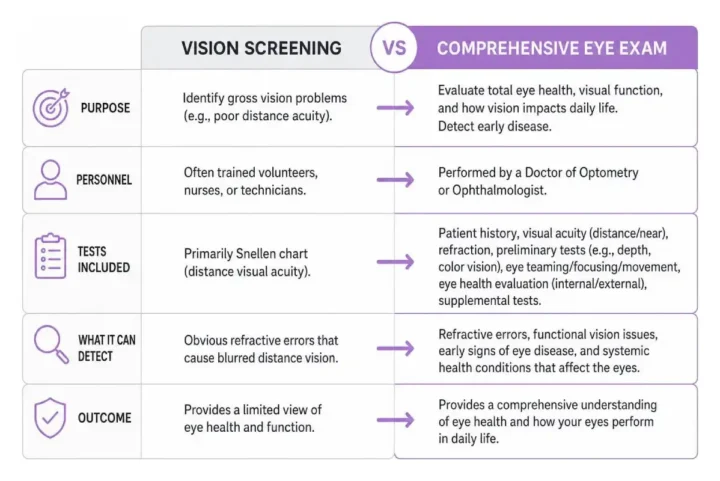
As the table illustrates, a comprehensive eye test is the only reliable method for a complete assessment of your visual health and function. It goes beyond the basic “20/20 vision” check to ensure your eyes are healthy, working efficiently, and not hiding any underlying issues.
Diagnostic Procedures in Behavioural Optometry
A comprehensive eye exam, especially one incorporating behavioural optometry principles, includes a wide array of diagnostic procedures designed to assess every aspect of your vision and eye health. These tests are far more detailed than what you’d find in a basic screening:
- Retinoscopy: This objective test uses a light reflex from the back of your eye to estimate your refractive error, providing a starting point for your glasses prescription, especially useful for children or non-verbal patients.
- Phoropter: This instrument allows the optometrist to quickly switch between different lens powers, helping to fine-tune your prescription by asking you which lens combination provides the clearest vision.
- Corneal Topography: This advanced test maps the curvature of your cornea (the front surface of your eye). It’s crucial for detecting conditions like keratoconus, planning refractive surgery, and precise contact lens fitting.
- Pupil Response: The optometrist observes how your pupils react to light. Abnormal responses can indicate neurological issues or other underlying health problems.
- Visual Field Testing: This measures your peripheral (side) vision. It’s vital for detecting conditions like glaucoma, which often causes peripheral vision loss before central vision is affected, and can also identify neurological conditions.
- Slit Lamp Examination: Using a biomicroscope, the optometrist examines the front structures of your eye (cornea, iris, lens) in detail, looking for signs of cataracts, dry eye, infections, or other anomalies.
- Ophthalmoscopy/Retinal Examination: After dilating your pupils (often using eye drops), the optometrist uses an ophthalmoscope or digital imaging to view the retina, optic nerve, and blood vessels at the back of your eye. This allows for detection of glaucoma, macular degeneration, diabetic retinopathy, and other retinal diseases.
- Tonometry: This test measures the intraocular pressure (IOP) inside your eye, a key indicator for glaucoma risk.
Each of these tests contributes to a holistic picture of your eye health and visual function, enabling early detection and precise management of any issues.
Assessing Eye Teaming, Accommodation, and Ocular Motility
Beyond clarity of vision and eye health, a comprehensive behavioural eye exam places significant emphasis on assessing how your eyes work together as a system. These functional aspects are critical for comfortable and efficient vision, especially for tasks like reading and computer work:
- Eye Teaming (Binocular Vision): This refers to the ability of both eyes to align and focus on the same point simultaneously. Problems with eye teaming, such as convergence insufficiency (where the eyes struggle to turn inward to focus on near objects), can lead to eye strain, headaches, double vision, and difficulty with concentration.
- Accommodation (Eye Focusing): This is the eye’s ability to change focus from distant to near objects quickly and accurately. Accommodative facility tests assess how rapidly and effortlessly your eyes can adjust focus. Issues here can cause blurry vision at different distances, eye fatigue, and difficulty with reading.
- Ocular Motility (Eye Movements): This includes assessing the precision and coordination of your eye movements.
- Saccades: Rapid, accurate jumps of the eyes from one point to another, essential for reading across a line of text.
- Pursuits: Smooth, continuous eye movements used to follow a moving target.
- Stereopsis: The ability to perceive depth and three-dimensionality, which relies on good binocular vision.
Deficiencies in any of these areas can severely impact learning, sports performance, and daily comfort, even if visual acuity is 20/20. By thoroughly assessing these dynamic visual skills, behavioural optometrists can identify underlying causes of visual discomfort and performance issues, leading to targeted interventions.
Therapeutic Interventions and Holistic Management Strategies
Once a comprehensive eye exam identifies specific visual challenges, the next step is often to implement therapeutic interventions and holistic management strategies. The goal is not just to correct vision with glasses, but to improve the overall function and health of the visual system.
One of the primary interventions is vision therapy. This is a customised program of visual exercises designed to improve specific visual skills, such as eye teaming, focusing, tracking, and visual processing. Patients might perform these exercises in the optometrist’s office or at home, often using specialised equipment. Vision therapy can be highly effective for conditions like convergence insufficiency, amblyopia (lazy eye), strabismus (crossed eyes), and visual difficulties related to learning or brain injury.
In some cases, prism lenses may be prescribed. These are special lenses that bend light in a way that helps the eyes work together more comfortably, reducing strain and improving binocular vision without requiring the eyes to exert as much effort.
For the growing concern of myopia (nearsightedness), myopia control strategies are increasingly important. These interventions aim to slow down the progression of myopia, especially in children, to reduce the risk of future eye health complications. Options can include specific types of contact lenses, atropine eye drops, or specialised glasses.
Beyond direct visual interventions, a holistic approach also considers broader lifestyle factors that impact eye health. This often involves advice on:
Lifestyle and Preventive Eye Care Strategies:
- UV Protection: Wearing sunglasses that block 99-100% of UVA and UVB rays is crucial to protect against cataracts, macular degeneration, and other UV-related eye damage.
- Screen Ergonomics: Proper lighting, monitor distance, frequent breaks (the 20-20-20 rule: every 20 minutes, look at something 20 feet away for 20 seconds), and blue light filtering can alleviate digital eye strain.
- Smoking Cessation: Smoking significantly increases the risk of developing cataracts, macular degeneration, and optic nerve damage. Quitting is one of the best things you can do for your eye health.
- Balanced Nutrition: A diet rich in antioxidants, omega-3 fatty acids, zinc, and vitamins C and E (found in leafy greens, fish, nuts, and citrus fruits) supports eye health and may reduce the risk of certain eye diseases.
- Fall Prevention: For older adults, vision loss significantly increases the risk of falls. Optometrists can counsel patients on managing vision changes, ensuring appropriate lighting, and making home modifications to improve safety.
- Managing Systemic Conditions: Proactively managing conditions like diabetes and hypertension is vital, as they can have severe ocular manifestations such as diabetic retinopathy and hypertensive retinopathy.
These strategies, combined with regular comprehensive eye exams, form the cornerstone of proactive eye care, promoting lifelong visual health and overall well-being.
Recommended Examination Frequency and At-Risk Indicators
The frequency of comprehensive eye exams isn’t a one-size-fits-all recommendation; it varies significantly based on age, overall health, and specific risk factors. However, the consensus among eye care professionals is that regular, proactive exams are essential, even if you feel your vision is perfect. Many serious eye conditions develop silently, without noticeable symptoms until significant damage has occurred.
For pediatric patients, eye exams are critical for monitoring visual development and detecting conditions like amblyopia (lazy eye) or strabismus (crossed eyes) that are best treated early.
- Infants (6-12 months): First comprehensive exam.
- Preschoolers (3-5 years): At least one exam before starting school.
- School-aged children (6-17 years): Annually or before first grade and annually thereafter, especially if there are risk factors or visual complaints.
For adults, recommended frequencies vary slightly between different professional bodies, but generally aim to ensure timely detection of age-related changes and disease:
- Ages 18-39: At least every two years if asymptomatic and low risk. Some guidelines suggest one exam in the 20s and two in the 30s.
- Ages 40-64: At least every one to two years. This age group is when early signs of presbyopia (age-related focusing difficulty) and other age-related eye conditions often begin to appear.
- Ages 65+: Annually. Older adults are at a higher risk for conditions like cataracts, glaucoma, and age-related macular degeneration.
These are general guidelines for asymptomatic individuals with no known risk factors. However, several factors can increase the recommended frequency of comprehensive eye exams:
Patients at risk include those with:
- Systemic Diseases: Conditions like diabetes, hypertension (high blood pressure), and autoimmune diseases can have significant ocular manifestations, requiring more frequent monitoring (e.g., annually for diabetics).
- Family History of Eye Disease: If close relatives have conditions like glaucoma, macular degeneration, or cataracts, your risk is elevated, necessitating more frequent checks.
- Certain Medications: Some medications can have ocular side effects (e.g., corticosteroids, certain anti-malarial drugs), requiring regular eye monitoring.
- Previous Eye Injury or Surgery: Individuals with a history of eye trauma or surgery may need more frequent follow-ups.
- High Refractive Error: People with very high myopia, hyperopia, or astigmatism may be at increased risk for certain retinal conditions.
- Specific Occupations: Jobs involving prolonged computer use, exposure to chemicals, or high visual demands may warrant more frequent exams.
- Ethnicity: Certain ethnic groups have a higher predisposition to specific eye conditions (e.g., African Americans for glaucoma).
An optometrist will consider all these factors during your initial comprehensive exam to establish a personalised recall schedule. This ensures that any potential issues are caught early, often before they impact your vision or overall health.
Frequently Asked Questions About Holistic Eye Care
We often receive questions about the nuances of comprehensive eye care, especially concerning behavioural optometry and the benefits of a holistic approach. Here, we address some of the most common inquiries.
How does behavioural optometry differ from traditional optometry?
Traditional optometry primarily focuses on correcting refractive errors (like nearsightedness, farsightedness, and astigmatism) with glasses or contact lenses to achieve clear vision, often aiming for 20/20 acuity. It also involves checking for eye diseases.
Behavioural optometry, while encompassing these aspects, takes a broader, more functional approach. It views vision as a complex, learned process involving the eyes, brain, and body. It assesses not just what you see (clarity), but how you see – including visual processing, eye teaming, focusing, tracking, and how these visual skills impact daily tasks like reading, learning, and coordination. It delves into an individual’s visual habits and developmental history. The goal is to improve overall visual function and efficiency, often through lens therapy (specialised glasses prescriptions) or vision therapy, rather than simply correcting acuity. It’s about optimising the entire visual system for comfort and performance.
What conditions benefit most from vision therapy programs?
Vision therapy is a highly effective, non-surgical treatment for a range of visual conditions that go beyond simple refractive errors. Conditions that often benefit significantly include:
- Convergence Insufficiency: A common condition where the eyes struggle to turn inward to focus on near objects, leading to eye strain, headaches, and double vision during reading or computer work.
- Amblyopia (Lazy Eye): Reduced vision in one eye due to the brain and eye not working well together, often developing in childhood. Vision therapy helps retrain the brain to use both eyes effectively.
- Strabismus (Crossed Eyes/Wall Eyes): A condition where the eyes do not align properly. Vision therapy can help improve eye alignment and coordination.
- Visual Processing Disorders: Difficulties in interpreting visual information, which can impact learning, reading comprehension, and spatial awareness.
- Digital Eye Strain (Computer Vision Syndrome): Symptoms like eye fatigue, headaches, and blurred vision due to prolonged screen use, often related to underlying focusing or eye teaming issues.
- Ocular Motility Disorders: Problems with eye tracking (saccades and pursuits) that can affect reading fluency and coordination.
- Post-Concussion Vision Syndrome: Visual disturbances following a head injury, which vision therapy can help rehabilitate.
Vision therapy aims to retrain the visual system, improving neural pathways and developing more efficient visual habits, leading to lasting improvements in comfort and performance.
How often should patients schedule comprehensive functional eye exams?
The recommended frequency for comprehensive functional eye exams depends on age, risk factors, and individual visual demands:
- Pediatric Schedule:Infants (6-12 months): First comprehensive exam.
- Preschoolers (3-5 years): At least one exam before starting school.
- School-aged children (6-17 years): Annually, or before first grade and annually thereafter, to monitor visual development and detect any learning-related visual issues. More frequent checks may be needed if there are risk factors for myopia progression or other visual problems.
- Adult Schedule:Ages 18-39: At least every two years if asymptomatic and low risk.
- Ages 40-64: Annually or every one to two years, as this period often sees the onset of presbyopia and increased risk for early eye diseases.
- Ages 65+: Annually, due to the higher prevalence of age-related eye conditions like cataracts, glaucoma, and macular degeneration.
Increased Frequency for Risk Factors: Individuals with systemic conditions like diabetes or hypertension, a family history of eye disease, certain medications, or professions with high visual demands (e.g., prolonged computer use) should typically have annual eye exams, regardless of age. Your optometrist will provide a personalised recommendation based on your unique health profile.
Conclusion
In an era where our visual demands are constantly evolving, particularly with increased screen time, the importance of a truly comprehensive eye test cannot be overstated. It is far more than a simple vision screening; it is a meticulous examination of your entire visual system, encompassing eye health, visual clarity, and the intricate functional skills that allow you to interact with your world comfortably and efficiently.
By embracing a holistic approach, such as that offered by behavioural optometry, we move beyond merely correcting symptoms to understanding and optimising the underlying visual processes. This proactive stance ensures that conditions like glaucoma, diabetic retinopathy, and functional vision problems are detected early, often before they manifest with noticeable symptoms. Early intervention is key to preserving lifelong vision and preventing irreversible damage.
A comprehensive eye test is an indispensable component of your overall health and wellness routine. It empowers us to safeguard our precious sense of sight, ensuring not just clear vision, but also comfortable, efficient, and functional vision for all of life’s demands. Prioritising these detailed assessments is an investment in your long-term eye health and, by extension, your overall quality of life.