
Choosing a Reliable Stainless Steel Supplier
When working with stainless steel, you often need specific properties. These include exceptional hardness, strength, or corrosion resistance. Achieving these properties relies on a critical process: heat treatment. This metallurgical transformation can unlock the full potential of various stainless steel grades.
We understand that selecting the right partner for your heat treatable stainless steel needs is paramount. An unreliable supplier can lead to costly material failures, production delays, and compromised product integrity.
In this comprehensive guide, we will explore the intricate world of heat treatable stainless steel. We will delve into the different types and their microstructures, the various thermal processing and surface treatment options available, and the essential technical standards and quality assurance measures you should expect. Our goal is to equip you with the knowledge to make informed decisions, ensuring you choose a supplier who can consistently deliver high-quality stainless steel that meets your exact specifications, every time.
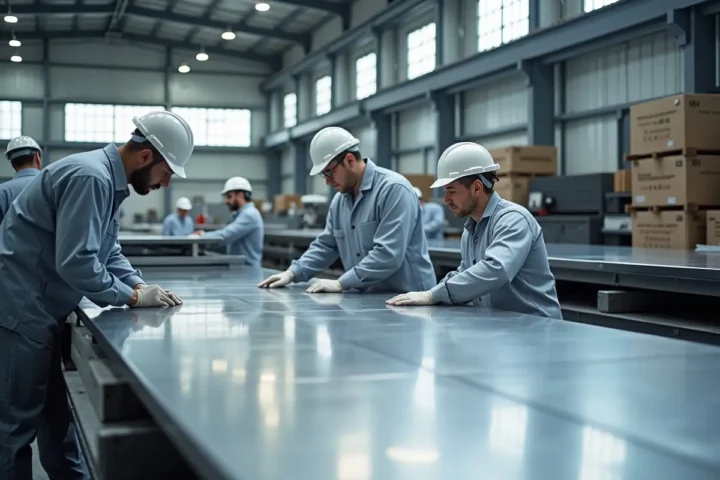
Evaluating Material Capabilities Across Stainless Steel Grades
Stainless steels are a diverse family of alloys, primarily categorized by their microstructure, which directly influences their mechanical properties, corrosion resistance, and, crucially, their response to heat treatment. Understanding these classifications is fundamental when selecting material for a specific application. The main types include austenitic, ferritic, martensitic, duplex, and precipitation hardening (PH) stainless steels. Each possesses a unique crystalline structure that dictates its inherent characteristics and how it can be thermally processed.
Austenitic stainless steels, such as the widely used 300 series (e.g., 304, 316), are known for their excellent corrosion resistance, ductility, and non-magnetic properties in their annealed state. However, they are generally not hardenable by conventional heat treatment processes like quenching and tempering. Their strength can be increased through work hardening (cold working) or through specialized surface treatments.
Ferritic stainless steels, part of the 400 series (e.g., 430), are magnetic and offer good corrosion resistance, particularly against stress corrosion cracking. Similar to austenitic grades, they cannot be hardened by traditional heat treatment methods. Their properties are largely determined by their chemical composition and processing during manufacturing.
Martensitic stainless steels, also within the 400 series (e.g., 410, 420, 440C), are the most common heat-treatable stainless steels. They are designed to achieve high strength and hardness through a process of austenitizing, quenching, and tempering. This transformation to a martensitic microstructure allows them to reach hardness levels up to 60 HRc, making them suitable for applications requiring wear resistance and high mechanical stresses.
Duplex stainless steels combine properties of both austenitic and ferritic structures, offering a balance of high strength and good corrosion resistance. While not traditionally heat-treated for hardening in the same way as martensitic steels, their properties can be enhanced through specific thermal processing and surface treatments.
Finally, precipitation hardening (PH) stainless steels (e.g., 17-4 PH, 15-5 PH) are a special class that can achieve very high strength and hardness through a unique aging heat treatment process. These grades are subdivided into martensitic, semi-austenitic, and fully austenitic types, each with specific heat treatment pathways to develop their optimal properties. A reliable supplier will possess in-depth knowledge of these distinctions and how they impact the material’s final performance.
Microstructure and Heat Treatment Knowledge of a Stainless Steel Supplier
The ability of a stainless steel supplier to guide you through the nuances of heat treatment for different microstructures is invaluable. For martensitic stainless steels, the process typically involves heating the material to its austenitizing temperature, holding it to allow the formation of austenite, and then rapidly cooling (quenching) it, often in oil or air. This rapid cooling transforms the austenite into a hard, brittle martensitic structure.
Subsequently, a tempering process is applied to reduce brittleness and achieve a desirable balance of hardness, strength, and toughness. For example, AISI 431, a martensitic stainless steel, can be austenitized between 925 and 1065°C and then tempered between 480 and 750°C to achieve useful engineering properties.
Precipitation hardening (PH) stainless steels, on the other hand, achieve their high strength through a different mechanism: age hardening. After an initial solution annealing, these steels are subjected to a lower-temperature aging treatment, typically between 480 and 620°C for martensitic PH grades like 17-4 PH.
This aging causes the precipitation of fine intermetallic compounds within the microstructure, which effectively “pin” dislocations and increase the material’s strength and hardness, often exceeding 1000 HV. The ATI 17-4™ precipitation hardening stainless steel (S17400), for instance, requires a simple, one-step heat treatment process conducted at temperatures ranging from 482°C (900°F) to 621°C (1150°F).
Austenitic stainless steels, while not hardenable through traditional quenching and tempering, can significantly benefit from surface treatments like nitriding or nitrocarburizing. These thermochemical processes introduce nitrogen (and sometimes carbon) into the surface of the steel, forming a hard, wear-resistant layer without altering the core properties. Low-temperature nitriding, below 450°C, is particularly effective for austenitic grades like 304 or 316L, forming an “expanded austenite” layer (S-phase) that not only provides exceptional surface hardness (above 1000 HV) but also maintains or even enhances corrosion resistance.
This is a crucial consideration for applications where surface wear is a concern but the inherent corrosion resistance of austenitic stainless steel must be preserved. A supplier with deep expertise in these processes can ensure the correct application for your specific needs, delivering a truly high-quality stainless steel product.
Understanding Thermal Processing and Surface Treatment Options
Beyond the fundamental hardening processes, a comprehensive understanding of various thermal processing and surface treatment options is vital. Annealing is a critical heat treatment applied to many stainless steels, particularly austenitic and ferritic grades, to soften the material, improve ductility, relieve internal stresses, and optimize its microstructure for further processing or service. For example, subcritical annealing for S40900 (409) involves temperatures between 843-899°C (1550-1650°F).
The cooling method after annealing, such as furnace cooling or rapid air cooling, significantly influences the final properties. For austenitic stainless steels, annealing typically involves heating to 1010-1121°C (1850-2050°F) followed by rapid quenching to prevent carbide precipitation and maintain corrosion resistance.
Stress relieving is another important process, applied to components after welding, machining, or cold forming, to reduce residual internal stresses. These stresses, if left unaddressed, can lead to distortion, cracking, or reduced fatigue life. Stress relieving temperatures are generally lower than annealing temperatures, often below the sensitizing range for austenitic stainless steels (400-750°F or 204-399°C) to avoid carbide precipitation. For martensitic steels, stress relieving is typically performed just below the tempering temperature.
Tempering parameters are crucial for martensitic stainless steels, as they dictate the final balance of hardness and toughness. After quenching, martensitic steels are often too brittle for most applications. Tempering involves reheating the steel to a specific temperature (e.g., 480-750°C for AISI 431) for a set period, allowing for the decomposition of martensite and the formation of more stable microstructures. However, careful control is needed to avoid critical temperature ranges that can lead to temper embrittlement, a phenomenon where toughness is severely reduced.
Surface treatments extend the capabilities of stainless steels. Beyond nitriding and nitrocarburizing, the post-heat treatment surface condition is also a key consideration. Scale, a heavy oxide layer formed during high-temperature heat treatment, and heat tint, a thinner oxide layer, must often be removed. Descaling and pickling processes use chemical baths to remove these layers.
Electropolishing can also be used for cosmetic purposes or to improve corrosion resistance by creating a smoother, more passive surface. Finally, passivating, typically involving a nitric acid solution, is a final step to remove free iron and contaminants, restoring the inherent corrosion resistance of the stainless steel. A supplier’s expertise in these processes ensures that the material not only meets mechanical specifications but also maintains its critical corrosion resistance.
Technical Standards and Quality Assurance from a Stainless Steel Supplier
In the realm of heat treatable stainless steel, adherence to rigorous technical standards and robust quality assurance protocols is non-negotiable. Reputable suppliers operate under a framework of internationally recognized specifications to guarantee material consistency and performance.
These include various ASTM (American Society for Testing and Materials) standards, which define material composition, mechanical properties, and test methods, as well as AMS (Aerospace Material Specifications) standards, which are critical for aerospace and other high-performance applications. For example, SAE AMS-H-6875 and AMS 2759 provide detailed requirements for the heat treatment of steel and stainless steel alloys, covering everything from furnace calibration to process parameters.
A key aspect of quality assurance is lot traceability. Every batch of raw material should be meticulously documented, allowing its origin, chemical composition, and processing history to be traced back through its entire lifecycle. This level of traceability, often managed through Material Test Reports (MTRs), is essential for critical applications where material failure could have severe consequences. MTRs are comprehensive documents provided by the mill, detailing elemental chemistry, as-received mechanical properties, and demonstrable mechanical properties after processing.
Dimensional tolerances are another critical factor. While heat treatment primarily affects metallurgical properties, it can also induce dimensional changes or distortion. A knowledgeable supplier will understand these potential effects and work to minimize them, ensuring that the final product meets the specified dimensional requirements. Verification of heat treatment cycles through furnace temperature recordings (strip charts) and post-treatment mechanical testing (e.g., hardness and tensile tests) are standard practices that a reliable supplier employs to confirm compliance with these stringent standards.
Key Certifications and Documentation to Request
When evaluating a stainless steel supplier, requesting specific certifications and comprehensive documentation is paramount to ensuring material quality and compliance. The following are essential:
- Material Test Reports (MTRs): These are fundamental. An MTR should detail the exact chemical composition of the alloy, confirming it meets the specified grade (e.g., 304, 410, 17-4 PH). It should also include as-received mechanical properties and demonstrable properties after any mill-level heat treatment, such as tensile strength, yield strength, percent elongation, and reduction of area.
- Hardness Verification: Request records of hardness testing, typically performed per ASTM E18. This verifies that the heat treatment process has achieved the desired hardness levels. For critical parts, this may involve testing on sample parts processed identically to the finished components.
- Tensile Testing Records: For applications requiring specific strength levels, tensile testing per ASTM A370 is often required. These records confirm that the material meets the specified tensile and yield strengths, as well as ductility.
- Heat Treatment Process Records: Documentation of the actual heat treatment cycle, including furnace temperature charts, soaking times, and quenching mediums, provides objective evidence that the process was conducted according to specifications.
- ISO Compliance: While not a material-specific certification, ISO 9001 certification demonstrates a supplier’s commitment to a robust quality management system, ensuring consistency in their processes and products.
- Supplier Certifications: For highly regulated industries (e.g., aerospace), verify that the supplier’s personnel are qualified and certified for heat treatment operations, such as those specified in Tl-2000-01 for NASA/JSC.
These documents provide transparency and assurance that the material you receive has undergone the correct processing and meets all necessary performance criteria.
Avoiding Material Defects and Thermal Processing Failures
Even with advanced technology, heat treatment is a complex process where various defects can arise if not meticulously controlled. A top-tier stainless steel supplier will have robust protocols in place to prevent and mitigate these issues.
One significant concern for austenitic stainless steels is sensitization. This occurs when unstabilized grades (like 304) are exposed to temperatures between 427-816°C (800-1500°F), leading to the precipitation of chromium carbides at grain boundaries. This depletes chromium in adjacent areas, making the steel susceptible to intergranular corrosion. A knowledgeable supplier will recommend low-carbon (L-grades like 304L) or stabilized grades (like 321 or 347) for applications involving welding or high-temperature service to prevent this.
For martensitic stainless steels, several issues can arise. Temper embrittlement is a loss of toughness that can occur when these steels are tempered in specific temperature ranges, typically 370-595°C (700-1100°F). This is often attributed to the segregation of impurity elements like phosphorus to grain boundaries. Avoiding this critical temperature range or using specific alloy compositions can prevent it.
Another challenge is the formation of retained austenite after quenching, especially with higher austenitizing temperatures. While some retained austenite can improve toughness, excessive amounts can reduce yield strength and dimensional stability. Conversely, the presence of delta ferrite in martensitic grades can reduce transverse ductility and attainable strength, and its formation must be controlled through careful alloy design and heat treatment parameters.
Other potential defects include decarburization, the loss of carbon from the surface during high-temperature treatment, which reduces surface hardness; distortion, caused by uneven heating or cooling; and quench cracking, resulting from excessive thermal stresses during rapid cooling.
A reliable supplier employs precise temperature control, appropriate atmospheres (e.g., vacuum or inert gas), and optimized quenching methods to minimize these risks. They also understand the impact of alloying elements like chromium, nickel, molybdenum, and carbon in determining heat treatability and susceptibility to these defects, ensuring the right material and process are chosen to avoid costly failures.
Supply Chain Factors and Inventory Selection
Beyond the technical intricacies of heat treatment, practical supply chain factors and inventory selection play a crucial role in choosing a reliable stainless steel supplier. In today’s dynamic market, lead times can significantly impact project schedules.
A supplier with strong mill relationships and a robust inventory management system can offer more consistent availability and shorter lead times, reducing the risk of costly delays. This includes a wide range of stock availability in various forms—plate, sheet, bar, tube, and pipe—and in different grades, ensuring that your specific material requirements can be met promptly.
Many projects require custom sizing or specialized processing services beyond standard mill forms. A supplier offering in-house processing capabilities, such as custom cutting (shearing, plasma, laser, waterjet), machining, or even initial heat treatment steps, can add significant value. This reduces the need for multiple vendors, streamlines the supply chain, and often leads to better quality control.
An effective supplier will also understand the interplay between material selection and subsequent processing. For instance, knowing which grades are readily machinable, which require specialized welding procedures, or which are prone to work hardening during forming operations allows them to provide informed recommendations and services. This holistic approach ensures that the material not only meets the initial specification but is also suitable for all downstream manufacturing processes.
To illustrate the diverse landscape of heat treatable stainless steels, consider the following general comparison of families and their heat treatment compatibility:
| Stainless Steel Family | Primary Microstructure | Hardenable by Q&T? | Primary Heat Treatment Goals | Typical Hardness Range (HRc) | Surface Hardening Options |
| Martensitic (400 series) | Martensite | Yes | High hardness, strength | 35-60 | Nitriding, Carburizing |
| Precipitation Hardening (PH) | Martensitic, Semi-Austenitic, Austenitic | Yes (by aging) | Very high strength, hardness | 30-50 (can exceed 1000 HV) | Nitriding |
| Austenitic (300 series) | Austenite | No | Ductility, corrosion resist. | <20 (work hardens) | Nitriding, Carburizing |
| Ferritic (400 series) | Ferrite | No | Corrosion resist., formability | <20 | Nitriding (limited) |
| Duplex | Austenite + Ferrite | No | High strength, corrosion resist. | 20-30 | Nitrocarburizing |
This table highlights that while martensitic and PH steels are directly hardenable, austenitic and duplex grades rely on surface treatments or work hardening for enhanced surface properties. A supplier’s ability to navigate these distinctions and offer appropriate materials and services is a hallmark of reliability.
Frequently Asked Questions About Stainless Steel Suppliers
When sourcing heat treatable stainless steel, many questions arise regarding material quality, processing, and supplier capabilities. Here, we address some of the most common inquiries to help you make an informed decision.
What documentation should a stainless steel supplier provide for critical applications?
For critical applications, comprehensive documentation from your stainless steel supplier is not just good practice—it’s essential. You should expect a Material Test Report (MTR) for every lot of material. This report should detail the full elemental chemistry analysis, confirming the alloy composition meets the specified grade.
Additionally, the MTR, or supplementary documentation, should include records of hardness testing (e.g., per ASTM E18) and, for highly stressed components, tensile verification (e.g., per ASTM A370). These mechanical property tests confirm that the material has achieved the required strength, hardness, and ductility after any heat treatment. Furthermore, documentation of the heat treatment process itself, including furnace charts and process parameters, provides objective evidence of compliance.
How does grade selection impact processing requirements from a stainless steel supplier?
The choice of stainless steel grade profoundly impacts the processing requirements a supplier must meet. For instance, martensitic stainless steels (like 410 or 440C) require precise austenitizing, quenching, and tempering to achieve their target hardness.
The supplier must have the expertise and equipment for these specific heat treatment cycles. Precipitation hardening (PH) stainless steels (like 17-4 PH) demand specific age hardening treatments to precipitate strengthening phases. In contrast, austenitic stainless steels (like 304 or 316) are not hardenable by traditional heat treatment but might require solution annealing to relieve stress or restore corrosion resistance after cold working or welding.
If surface hardness is needed for austenitic grades, the supplier must offer specialized processes like nitriding or carburizing. Furthermore, some grades have specific machinability ratings or work hardening rates that influence fabrication methods. For welded components, a supplier should understand the need for post-weld stress relief or the use of low-carbon “L” grades to prevent sensitization.
Why is thermal treatment expertise essential when choosing a supplier?
Thermal treatment expertise is absolutely essential because it directly dictates the final properties and performance of your stainless steel components. Without it, you risk material that fails to meet specifications, leading to premature failure, costly rework, or even catastrophic incidents. A supplier with deep thermal treatment expertise can:
- Optimize Mechanical Properties: They understand the precise temperature ranges, soaking times, and cooling rates required to achieve the desired balance of hardness, strength, ductility, and toughness for each specific grade.
- Control Microstructure: They can manipulate the microstructure to prevent undesirable phases (like delta ferrite or retained austenite) or promote beneficial ones (like expanded austenite from nitriding).
- Prevent Defects: Their knowledge allows them to avoid common heat treatment defects such as sensitization, temper embrittlement, decarburization, distortion, and quench cracking, ensuring material integrity.
- Retain Corrosion Resistance: They know how heat treatment can impact corrosion resistance and implement strategies (e.g., low-temperature nitriding, proper annealing, passivation) to maintain or enhance it.
- Ensure Dimensional Stability: They can minimize dimensional changes and warpage, which is critical for precision components.
A supplier with strong thermal treatment expertise acts as a metallurgical partner, ensuring your heat treatable stainless steel performs exactly as intended in its demanding application.
Conclusion
Choosing the right stainless steel supplier is a strategic decision that impacts the quality, performance, and cost-effectiveness of your projects. As we’ve explored, heat treatable stainless steel is complex, with diverse alloy classifications, intricate microstructures, and a myriad of thermal processing and surface treatment options. From the conventional hardening of martensitic steels to the advanced age hardening of PH grades and the specialized surface treatments for austenitic alloys, each process demands precision and expertise.
A reliable supplier is more than just a material provider; they are a partner who brings deep metallurgical knowledge, adherence to stringent technical standards, and robust quality assurance protocols to the table. They understand how different heat treatments affect mechanical properties, corrosion resistance, and microstructural integrity. By demanding comprehensive documentation like Material Test Reports and verifying certifications, you ensure full traceability and compliance with industry specifications.
Furthermore, considering supply chain factors such as inventory availability, lead times, and value-added processing services contributes to operational efficiency and project success. In the dynamic environment of August 2026, selecting a supplier with proven expertise in heat treatable stainless steel ensures not only material integrity and quality standards but also long-term supply stability for your critical applications.