The Complete Guide to How Long Asphalt Shingles Last in Wisconsin
Not all asphalt shingles are built the same, and their structural differences become obvious after a few Northwoods winters. Modern asphalt roofing falls into three main categories: traditional three-tab shingles, dimensional architectural shingles, and heavy-duty premium or designer shingles.
How Long Do Different Types of Asphalt Shingles Last in Wisconsin?
In Wisconsin’s climate, material composition directly dictates survival. Older organic asphalt shingles (which relied on an asphalt-saturated cellulose or paper base) absorbed moisture, swelled during wet spells, and rotted rapidly under snowpack.
Today’s fiberglass-mat asphalt shingles have largely replaced organic options across Northern Wisconsin, delivering superior fire resistance, dimensional stability, and lower moisture absorption. Over 70% of residential roofs installed across Oneida, Vilas, and Lincoln counties now feature architectural fiberglass shingles.
Wind resistance is another critical differentiator. Spring and autumn cold fronts across the Northwoods regularly generate wind gusts of 40 to 60 mph or more. While basic shingles may lift or crevasse under these loads, upgraded dimensional shingles feature reinforced nailing strips and heavy sealants engineered to withstand sustained severe winds.
| Shingle Grade | Typical Wisconsin Lifespan | Wind Resistance Rating | Winter Durability Level | Estimated Installed Cost Range (per sq ft) |
| 3-Tab Asphalt | 12–17 Years | 60–70 mph | Low (prone to cracking & blow-offs) | $3.50–$5.50 |
| Architectural (Dimensional) | 22–30 Years | 110–130 mph | High (multi-layer snowpack resistance) | $4.50–$7.50 |
| Premium / Designer / Impact | 25–35+ Years | Up to 150 mph (Class H) | Maximum (polymer-modified cold flex) | $7.50–$10.00+ |
Three-tab shingles are the most budget-conscious asphalt option, manufactured from a single flat layer of fiberglass mat coated in asphalt and surfaced with ceramic granules. Each shingle sheet features three uniform cutouts, creating a clean, symmetrical appearance.
In Wisconsin, three-tab shingles face significant durability challenges:
- Sub-zero brittleness: The single-layer construction becomes brittle when temperatures plunge below zero, making tabs susceptible to fracturing under shifting snow loads.
- Wind uplift vulnerability: Rated only for 60 to 70 mph winds, the individual cutouts present edges that gusty storms in open lake areas can catch and tear.
- Early curling: The combination of summer heat and winter saturation accelerates edge cupping within 10 to 12 years of exposure.
While three-tab shingles remain an affordable short-term option for rental units, seasonal outbuildings, or immediate budget constraints, they offer the lowest return on investment in cold-weather regions.
Architectural (Dimensional) Shingles (22–30 Years)
Architectural shingles—also known as dimensional or laminate shingles—are the standard choice for homeowners in communities like Minocqua, Rhinelander, and Eagle River. Rather than a flat, single layer, architectural shingles are engineered by laminating two or more layers of asphalt-coated fiberglass together.
This layered construction provides distinct performance advantages in Northern Wisconsin:
- Structural thickness: The multi-layered design provides rigidity that resists curling, clawing, and deflection under heavy, wet snowpack.
- High wind thresholds: Standard architectural shingles carry wind ratings of 110 to 130 mph, preventing edge lift during severe storm cycles.
- Hail and impact defense: The thicker cross-section absorbs hail impacts and falling pine cones or small branches without splitting the underlying asphalt core.
With adequate attic ventilation and consistent seasonal maintenance, quality architectural shingles routinely deliver 25 years or more of dependable service in northern regions.
Premium & Impact-Resistant Designer Shingles (25–35+ Years)
Premium designer shingles represent the top tier of asphalt roofing systems. These shingles incorporate heavy base mats, specialized weathering formulations, and distinct architectural shapes replicating slate or cedar shake.
Many premium lines incorporate Class 4 impact resistance (UL 2218 rating) and SBS (styrene-butadiene-styrene) polymer-modified asphalt. This rubberized asphalt chemistry gives the shingle enhanced flexibility in extreme cold, preventing the thermal cracking that standard asphalt experiences at -20°F. Rated for winds up to 150 mph (Class H), designer shingles provide long-term protection for exposed lakefront properties and steep-slope architectural homes.
Why Do Harsh Wisconsin Winters Shorten Asphalt Shingle Longevity?
Roofs installed in Northern Wisconsin and the Upper Peninsula endure some of the most punishing climate conditions in the continental United States. Harsh winter asphalt roof life is challenged when winter low temperatures falling toward -30°F and summer highs exceeding 90°F cause roof surfaces to experience annual temperature swings greater than 120°F.
Three primary climate mechanisms accelerate the aging of asphalt shingles in Wisconsin:
- 200+ Freeze-Thaw Cycles Annually: Early winter and spring bring daily cycles where daytime temperatures rise above 32°F (melting surface snow) and drop below freezing at night. Water penetrates minor fissures between shingle layers, expands by roughly 9% upon freezing, and mechanically pries open shingle joints and fastener seals.
- Heavy Snowpack and Dead Loads: Wisconsin building codes require roof structures to handle snow loads of 30 to 40+ pounds per square foot (psf)—and even higher in northern lake-effect zones. Sustained snow weight exerts continuous downward pressure, flattening shingles and trapping moisture against the mineral surface for months at a time.
- Summer Thermal Spikes and UV Breakdown: Following months of sub-freezing cold, asphalt shingles face intense ultraviolet radiation and roof surface temperatures reaching 150°F on sunny July afternoons. This rapid seasonal oscillation causes the asphalt binder to lose volatile compounds over time, leading to gradual embrittlement.
The Ice Dam Threat and Water Intrusion
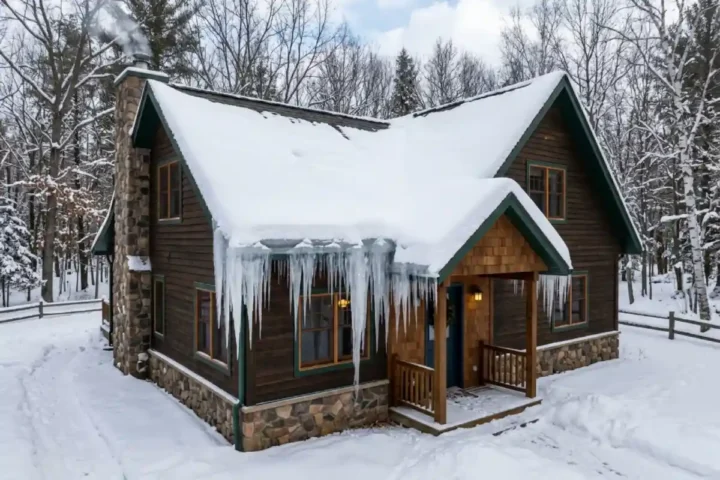
Ice dams represent the single largest winter hazard to asphalt shingle roofs in the Northwoods. An ice dam forms when warm air escapes into an under-insulated attic space, heating the roof sheathing and melting the bottom layer of snowpack.
As water trickles down the roof slope, it reaches the unheated eaves and gutters, where temperatures remain below freezing. The water refreezes into a ridge of solid ice along the edge of the roof.
Subsequent meltwater pools behind this ice barrier. Because asphalt shingles are designed to shed gravity-fed water running downhill—not standing liquid—the backed-up water forces its way backward underneath the shingle overlaps. Once under the shingles, this water saturates the underlayment, soaks roof decking, rots rafter tails, and damages interior ceilings and wall insulation.
Thermal Shock and Granule Stripping
The surface of an asphalt shingle is embedded with ceramic-coated mineral granules designed to shield the underlying asphalt membrane from ultraviolet degradation, provide fire resistance, and add color.
Rapid temperature swings cause shingles to expand and contract across short intervals. This movement loosens the bond between the granules and the asphalt substrate. When heavy sheets of snow slide down the roof during mid-winter thaws, this shifting snowpack acts like fine-grit sandpaper, scraping away loosened granules. Once the mineral granules are lost, exposed asphalt dries out, oxidizes under solar UV radiation, and develops deep surface cracks within two to three seasons.
What Critical Factors Determine How Long a Roof Lasts in Wisconsin?
A roof is not merely a collection of shingles nailed to plywood; it is an integrated protective envelope. The longevity of an asphalt roof in Northern Wisconsin depends on a seven-component system: structural roof decking, drip edge metal, ice-and-water barrier membranes, synthetic underlayment, starter shingles, field shingles, and balanced attic ventilation components.
Cutting corners on any single component reduces the lifespan of the entire system. Partnering with established regional contractors like Eagle River Roofing—professionals who build strictly for heavy Northwoods snow loads and comply with the Wisconsin Uniform Dwelling Code (UDC)—ensures every layer performs under local weather conditions.
Attic Ventilation and Insulation Balance
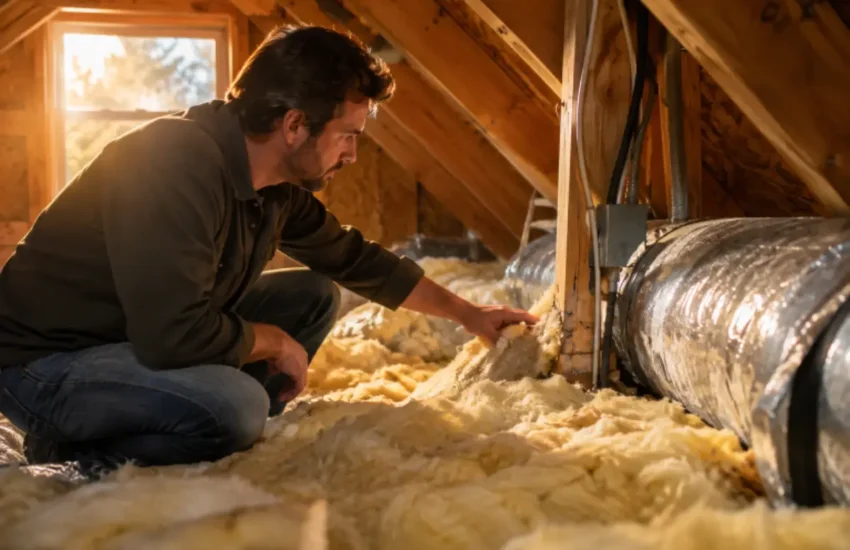
Attic airflow is the most critical factor influencing shingle lifespan in cold climates. Without proper ventilation, attics accumulate winter moisture and retain trapped summer heat, cutting shingle life short from underneath the decking.
Proper system balance requires adherence to the 1:150 rule (one square foot of net free ventilation area for every 150 square feet of attic floor space), evenly divided between continuous intake at the soffits and exhaust along the roof ridge:
- Winter moisture control: A family of four produces gallons of water vapor daily from cooking, showers, and breathing. Balanced ventilation exhausts this warm, humid air before it condenses on cold roof sheathing, preventing winter deck rot and mold.
- Summer heat dissipation: A poorly vented attic can reach 140°F to 160°F in July. This heat bakes the underside of shingles, accelerating asphalt oxidation and drying out the adhesive sealant strips.
- Thermal insulation: Maintaining R-49 to R-60 attic insulation keeps indoor heat inside living spaces, preventing hot spots on roof decking that trigger ice dam formation.
Ice and Water Shield Underlayment
The Wisconsin Uniform Dwelling Code mandates the installation of self-adhering, polymer-modified bitumen ice barrier underlayment along eaves in cold-climate regions.
In Northern Wisconsin communities subject to heavy snowfall, code requires the ice barrier to extend from the lowest roof edge to a point at least 24 to 30 inches inside the interior warm wall line.
High-performance installations incorporate additional ice and water protection in vulnerable roof junctions:
- Complete valley coverage (minimum 36-inch membrane width centered in all valleys)
- Rake edges along gables to resist driving winds
- Penetration flashing around chimneys, skylights, soil stacks, and ventilation pipes
- Low-slope transitions where snow accumulates against dormers or upper walls
Seasonal Installation Quality and Temperature Thresholds
Installation timing and craftsmanship dictate whether an asphalt roof reaches its full lifespan. Asphalt shingles rely on a heat-activated strip of asphalt sealant on the underside of each piece.
For these strips to bond permanently, shingles require sustained ambient temperatures of 40°F to 45°F along with direct sunlight. Shingles installed in sub-freezing temperatures without supplemental manual sealing remain unbonded, leaving them vulnerable to wind blow-offs during the first winter storm.
Fastener placement is equally critical. In high-wind and heavy snow zones, installers must use a 6-nail fastening pattern with corrosion-resistant, hot-dipped galvanized roofing nails driven directly into the designated nailing strip. Under-driven nails protrude and puncture overlying shingles, while over-driven nails punch through the fiberglass mat, dramatically reducing tear-off resistance.
What Are the Warning Signs That a Wisconsin Roof Is Nearing the End of Its Life?
Roof wear in Wisconsin often accelerates rapidly once a system passes the 15- to 18-year mark. Knowing how to identify early warning signs helps you address problems before water penetrates the building envelope and causes costly structural damage.
Exterior Shingle Symptoms
Conduct a visual check of your roof from ground level using binoculars each spring after the snowpack clears:
- Curling, Cupping, and Clawing: When shingle edges turn upward (cupping) or the center buckles outward (clawing), the asphalt binder has lost its elasticity and volatile oils. Curled shingles crack easily under wind or foot traffic.
- Excessive Granule Accumulation in Gutters: Finding minor granule sediment in downspouts is normal on new roofs. However, finding thick, sandy layers of granules in gutters after the spring thaw indicates the protective coating is washing away, leaving black asphalt exposed.
- Cracking and Thermal Splitting: Long horizontal or vertical fissures across shingle courses indicate the fiberglass mat can no longer expand and contract through winter temperature shifts.
- Missing or Creased Tabs: Lifted or missing tabs indicate wind has broken the adhesive bond line, leaving the underlying roof deck vulnerable to driven rain.
Interior and Attic Symptoms
Some of the clearest signs of roofing failure appear inside the attic rather than on the exterior:
- Water Staining and Dark Streaks: Check the underside of the roof sheathing and along rafter chords for water stains, especially around chimney chases, plumbing stacks, and roof valleys following a heavy snowmelt.
- Daylight Infiltration: If you can see points of daylight penetrating through roof decking boards or along ridge lines from inside an unlit attic, water can enter through those same openings.
- Deck Sagging and Sponginess: Visible depressions between rafters suggest the plywood or OSB sheathing has delaminated or softened from chronic moisture exposure, compromising its structural load-bearing capacity.
- Spiking Energy Costs: If heating or cooling bills increase unexpectedly without changes in household habits, wet or degraded attic insulation caused by slow roof leaks may be compromising your thermal boundary.
Repair vs. Replacement Decision Thresholds
When facing roof issues, homeowners often weigh the cost of spot repairs against a full tear-off and replacement. Roofing professionals use a few practical guidelines to help make this call:
- The 30%–50% Cost Threshold: If repairs across multiple sections exceed 30% to 50% of the cost of a full replacement system—and the roof is older than 15 years—full replacement provides better long-term value than continuing to patch an aging system.
- Isolated vs. Systemic Wear: A few shingles blown off during a single windstorm on an 8-year-old roof can be safely repaired. Conversely, widespread granule loss and brittle shingles across multiple roof planes require full replacement.
- Insurance Actual Cash Value (ACV) Realities: As an asphalt roof ages beyond 15 to 20 years, many homeowners insurance policies transition coverage from Replacement Cost Value (RCV) to Actual Cash Value (ACV), significantly increasing out-of-pocket costs if storm damage occurs later.
- Home Value Retention: A complete asphalt roof replacement recoups an estimated 57% to 70% of its cost at property resale, while resolving buyer inspection concerns during Northwoods real estate transactions.
How Can Wisconsin Homeowners Extend Asphalt Shingle Lifespan?
Consistent maintenance can add 3 to 5 years of reliable service to an asphalt shingle roof. Implementing a straightforward bi-annual schedule—once in late spring after snowmelt and once in mid-autumn before the first freeze—keeps small issues from developing into structural failures.
Essential Seasonal Maintenance Checklist
- Clear all pine needles, leaves, and organic debris from roof valleys and low-slope intersections.
- Clean gutters, downspouts, and ground outlets to maintain unrestricted drainage away from eaves.
- Trim tree limbs back at least 10 feet from roof edges to reduce shade, moss growth, and falling branch hazards.
- Visually inspect metal flashing around chimneys, skylights, plumbing stacks, and sidewalls for cracked caulk or loose fasteners.
- Check attic soffit baffles from inside the attic to ensure insulation is not blocking incoming intake airflow.
- Inspect shingle surfaces for moss or algae colonies, treating them with gentle, manufacturer-approved zinc or copper solutions.
- Verify that exhaust fans from bathrooms and kitchens vent through the roof and not into the attic.
Pre-Winter Roof Preparation
Autumn maintenance is vital for winter readiness in the Northwoods. Clearing heavy deposits of pine needles from valleys ensures that melting snow can drain freely rather than backing up under shingles.
Overhanging branches should be trimmed back significantly. In winter, heavy ice accumulations cause limbs to sag onto the roof surface, where wind action rubs them against shingles like a rasp, scraping away protective mineral granules.
Check all perimeter flashings and chimney counter-flashings before cold weather arrives. Sealant caulking shrinks and cracks over time; reapplying high-grade exterior roofing polyurethane sealant in dry, mild autumn weather prevents meltwater infiltration during mid-winter warm spells.
Safe Winter Snow and Ice Management
Improper snow removal damages more Wisconsin roofs than the snow itself. Avoid walking on cold-weather asphalt shingles; sub-zero temperatures make the fiberglass core brittle, and foot traffic can easily fracture frozen tabs.
When managing heavy snowpack, keep these best practices in mind:
- Use a Wheeled Roof Rake: Stand safely on the ground and use an aluminum roof rake equipped with small rollers or bumpers. These wheels prevent the metal blade from scraping directly against the shingle granules.
- Clear the First 3 to 4 Feet: Focus on removing the bottom 36 to 48 inches of snow along the eaves. This removes the insulating blanket that accelerates ice dam formation without requiring you to clear the entire roof plane.
- Leave a Thin Snow Buffer: Do not scrape the rake all the way down to the bare shingle surface. Leaving a one- to two-inch buffer of snow protects the mineral granules from mechanical abrasion.
- Avoid Sharp Tools and Chemical Pucks: Never use axes, shovels, picks, or rock salt pucks to break ice dams. Impact tools fracture frozen shingles instantly, and rock salt dries out asphalt binders while corroding metal fasteners and gutters.
- Use Professional Steam Removal: If an ice dam causes active interior leaks, call a professional roofing contractor equipped with low-pressure, high-temperature steam equipment. Steam melts ice channels safely without damaging shingle granules or underlying membranes.
Post-Winter Spring Assessments
Once spring arrives and snowpack fully clears, schedule a comprehensive ground-level visual inspection. Look for areas where sliding ice may have lifted shingle tabs, bent drip edges, or pulled gutters away from the fascia boards.
Check downspout outlets for shed granules washed down by melting snow. If you notice heavy sediment or suspect hidden moisture damage, contact a certified local contractor to perform a professional roof inspection. Experienced roofers utilize moisture meters and infrared thermal imaging cameras to locate saturated underlayment and wet roof decking that remain invisible from the surface.
Frequently Asked Questions About Wisconsin Asphalt Roofs
When is the best time of year to replace an asphalt shingle roof in Wisconsin?
The ideal window for asphalt shingle replacement in Northern Wisconsin runs from May through October. During these months, ambient daytime temperatures consistently exceed 45°F to 50°F, ensuring that shingle thermal-adhesive strips soften and seal properly under direct sunlight.
Late spring (May to June) and early autumn (September to October) offer ideal working conditions, with moderate temperatures that prevent shingles from scuffing underfoot during installation. While late autumn can work well, projects should be scheduled with enough lead time before freezing temperatures set in.
Does homeowners insurance cover winter roof replacement and ice dam damage in Wisconsin?
Homeowners insurance policies generally cover sudden and accidental damage caused by severe weather events, such as heavy windstorms, hail strikes, or falling trees.
Coverage for ice dam damage and winter leaks depends on policy terms and cause:
- Covered scenarios: If an ice dam causes water to back up and damage interior ceilings, drywall, or insulation, insurance typically covers the interior repairs (and sometimes ice dam removal costs) under standard open-peril policies.
- Excluded scenarios: Insurance policies do not cover the cost of replacing a roof that has failed due to general age, long-term wear, or neglected maintenance.
- Policy types: If you carry an Actual Cash Value (ACV) policy on a 20-year-old roof, the insurer will deduct substantial depreciation from your claim payout. A Replacement Cost Value (RCV) policy pays the full cost of replacing damaged materials with new equivalents of like kind and quality, minus your deductible.
Always photograph damage immediately, take reasonable steps to prevent further water intrusion, and schedule a professional roofing assessment before filing a claim.
Can asphalt shingles be installed during a Wisconsin winter?
While roof replacements can be completed during winter in emergencies (such as severe storm damage or sudden structural leaks), cold-weather installations require specialized techniques and extra precautions.
Asphalt shingles become stiff and brittle below 40°F, increasing the risk of cracking when cut or fastened. Furthermore, because sub-freezing temperatures prevent self-sealing adhesive strips from activating naturally, installers must manually hand-tab each shingle by applying spots of asphalt roofing cement beneath every tab.
Because winter installations require hand-sealing and slower, deliberate handling, warmer-weather installations are preferred whenever circumstances allow.
Conclusion
Understanding how long an asphalt shingle roof lasts in Wisconsin comes down to balancing material quality with the realities of cold-weather climates. While standard three-tab shingles average 12 to 17 years under harsh winter conditions, modern multi-layer architectural shingles deliver 22 to 30 years of reliable protection when properly installed and maintained.
Achieving the upper end of that lifespan requires an integrated roofing approach:
- Choosing high-grade, cold-flexible architectural or impact-resistant shingles rated for high winds
- Installing code-compliant ice-and-water shield membranes extending well inside the warm wall line
- Maintaining a balanced 1:150 attic ventilation system paired with R-49+ insulation to prevent ice dams
- Performing bi-annual debris removal and using safe snow-clearing techniques every winter
Whether your home is located in Eagle River, Rhinelander, Minocqua, or anywhere across the Northwoods, regular inspections and professional installations make all the difference. If your roof is approaching the 20-year mark or showing signs of winter wear, reach out to the experienced team at Eagle River Roofing to schedule a comprehensive roof assessment and ensure your home stays protected through every season.