
Space Heater Safety Tips Electricians Actually Recommend
A portable electric heater can take the edge off a cold room, but it also concentrates a lot of heat and current in one small appliance. Electricians tend to worry less about the heater’s marketing claims and more about clearances, cord condition, circuit load, and whether someone will leave it running unattended.
The National Fire Protection Association reports that heating equipment remains one of the leading causes of U.S. home fires, with space heaters involved in a disproportionate share of fatal heating fires — about 29% of heating fires but 77% of the deaths. The U.S. Consumer Product Safety Commission also warns that portable heaters create fire risks when they sit within three feet of bedding, furniture, curtains, or clothing.
These space heater safety tips focus on what electricians actually check in homes: amperage, outlets, shutoffs, cord heat, and placement.
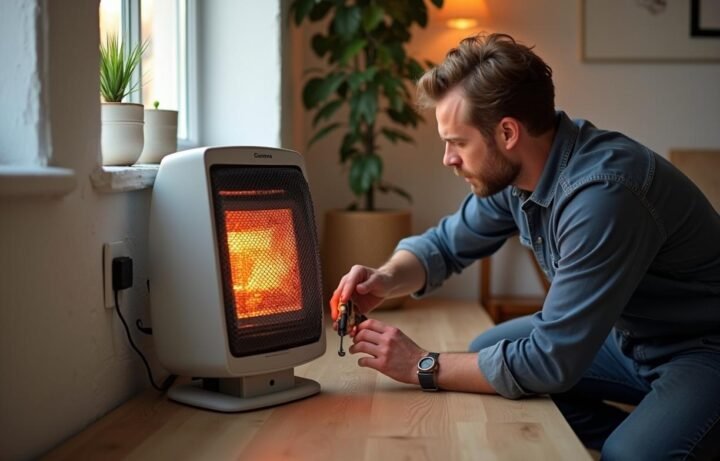
Keep 3 feet clear, every time
Most heater fires start when heat reaches something combustible for too long. Keep at least 3 feet of open space around the front, sides, and rear of the heater. That distance matters for bedding, sofas, drapes, laundry, paper, pet beds, and holiday decorations.
Place the heater on a hard, flat, noncombustible surface. Tile, hardwood, and level vinyl flooring are better than rugs. Never place a heater on a bed, couch, chair, table, or shelf, because airflow can get blocked and the unit can tip.
Watch the airflow, not just the flame
Many modern electric heaters do not glow red like older models, but they still move hot air through tight vents. Blocking the intake or discharge grille can raise internal temperature fast. A towel draped over a heater can create a fire hazard in minutes, especially on high heat.
Look for a tip-over switch and overheat shutoff before using any portable heater. UL 1278 covers movable and wall-mounted electric room heaters, and a listing mark from UL, ETL, or another OSHA-recognized testing laboratory shows the product was tested to a safety standard.
Plug it directly into the wall
A typical 1,500-watt space heater draws about 12.5 amps on a 120-volt circuit. That is a heavy continuous load for one receptacle, especially in an older home with worn outlets. Electricians usually recommend plugging the heater directly into a wall receptacle, not a power strip.
Do not use an extension cord unless the heater manufacturer specifically allows it. If one is allowed, use the shortest cord possible, rated for the heater load, and keep it fully uncoiled. Thin cords can overheat inside the insulation before you smell anything unusual.
Know what else shares the circuit
A 15-amp circuit should not carry more than 12 amps continuously under the National Electrical Code’s common 80% loading principle for continuous loads. A 1,500-watt heater can use nearly that entire allowance by itself. Add a hair dryer, microwave, laser printer, or vacuum, and the breaker may trip.
If the outlet feels warm, the plug fits loosely, lights flicker, or the breaker trips more than once, stop using that receptacle for the heater. A new standard-grade receptacle may cost about $3 to $10, but a loose or heat-damaged outlet should be checked for damaged wiring before replacement.
Use the right heater for the room and situation
The safest choice depends on where you need heat, how long you need it, and who shares the space. A heater for an office under supervision is different from one near children, pets, or bedding. Electricians care about the setting because misuse creates most real-world hazards.
Use this comparison before buying or moving a heater:
| Situation | Better choice | Avoid |
|---|---|---|
| Small home office while awake | Ceramic heater with tip-over and overheat shutoff | Heater under a desk near papers or cords |
| Bedroom before sleep | Oil-filled radiator used while awake, then unplugged | Any heater left running overnight |
| Bathroom | Only a unit specifically listed for damp locations, plugged into GFCI protection | Standard portable heaters near tubs, sinks, or wet floors |
| Kids or pets nearby | Cool-touch housing, stable wide base, guarded controls | Tall tower heaters in traffic paths |
| Drafty garage or workshop | Listed electric utility heater on a dedicated circuit | Unvented fuel-burning heaters indoors |
When to choose a hardwired option
If one room needs supplemental heat every day for weeks, a portable heater may not be the best fit. A hardwired wall heater or baseboard heater can use a dedicated circuit, fixed mounting, and a thermostat. That removes loose plugs, overloaded strips, and trip hazards from the equation.
This choice fits finished basements, additions, workshops, and cold bedrooms where central heating cannot keep up. A licensed electrician can size the circuit, confirm panel capacity, and install the heater according to the manufacturer’s instructions and local code.
When a portable heater still makes sense
A portable heater fits short, supervised use in one occupied room. It works best when you can see it, hear it, and unplug it before leaving. Many electricians use a simple rule: if nobody is awake in the room, the heater should be off.
Choose a heater with a thermostat rather than one that runs constantly. Cycling reduces heat buildup around nearby objects and lowers the chance of someone covering the unit because the room got too warm.
Inspect cords, plugs, and outlets before cold weather
Before the first cold week, check the heater cord from end to end. Look for cracked insulation, flattened sections, exposed copper, melted plastic, or dark marks near the plug blades. Any of those signs mean the heater should not be used.
Push the plug fully into the outlet and check it after 10 to 15 minutes of operation. Warm is a warning, and hot means stop. Heat at the plug often points to a loose receptacle, weak spring contacts, corrosion, or a poor connection inside the box.
Replace damaged heaters instead of repairing them casually
Do not tape a damaged cord, replace a molded plug with a hardware-store plug, or bypass a failed switch. Portable heaters flex, move, and draw high current, so casual repairs create hidden failure points. Manufacturers design the cord, plug, strain relief, and internal wiring as one tested assembly.
The CPSC has recalled many portable heaters for fire, burn, and shock hazards over the years. Check the model number on SaferProducts.gov or the manufacturer’s recall page if the heater is old, secondhand, or missing its manual.
Turn it off before the risky moments
The highest-risk times are predictable. Turn the heater off before sleeping, leaving the room, leaving the house, showering, or taking a phone call that pulls you away. Unplug it by gripping the plug, not the cord.
Keep heaters away from traffic paths where people, pets, or robot vacuums can bump them. Maintain at least 3 feet from door swings and hallway edges when possible. A heater that gets nudged toward curtains can become dangerous without anyone noticing.
Do not run the cord under a rug, mat, blanket, or furniture leg. Covered cords cannot release heat well, and damage can stay hidden until insulation fails. Route the cord along a wall where it stays visible and does not cross a walking path.
Add protection where the electrical system is weak
Older homes often have fewer circuits, looser receptacles, and less room in the panel. Two-prong outlets, frequent breaker trips, buzzing sounds, scorch marks, or flickering lights deserve attention before using high-wattage portable heat. Those signs point to electrical stress, not normal winter behavior.
GFCI protection matters in damp areas, including bathrooms, unfinished basements, laundry rooms, garages, and some kitchen locations. The National Electrical Code requires GFCI protection in many of these areas because moisture increases shock risk. A standard portable heater should not sit where it can get splashed.
Smoke alarms should sit inside every bedroom, outside sleeping areas, and on each level of the home, according to NFPA guidance. Test alarms monthly and replace units that are 10 years old. Keep a working carbon monoxide alarm too if the home has fuel-burning appliances, an attached garage, or a fireplace.