
Signs Your Home Needs an Electrical Panel Upgrade Right Now
While the charm of an older home is undeniable, its electrical infrastructure might be telling a different story. The electrical panel, the heart of your home’s power system, often struggles to meet the demands of 21st-century living if it hasn’t been updated since its original installation. Recognizing the signs of an overburdened or outdated panel is the first step toward ensuring your family’s safety and comfort.
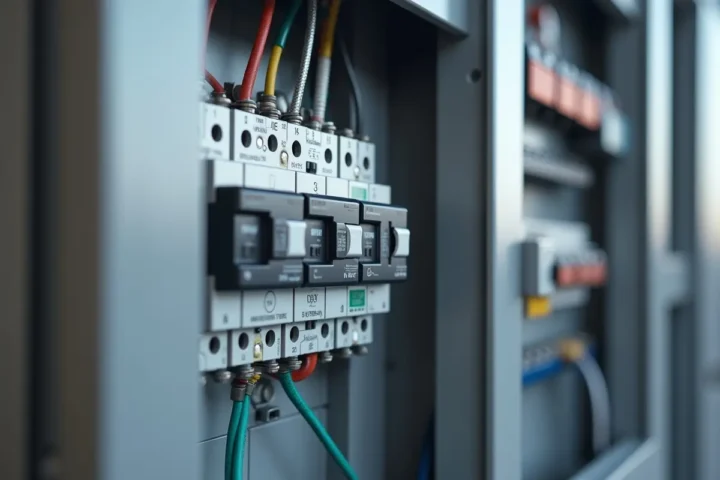
Critical Warning Signs Your Panel Needs an Upgrade
We often encounter several critical indicators that an electrical panel needs attention. These physical warning signs of panel failure are not just minor annoyances; they are often red flags pointing to potential hazards:
- Flickering or Dimming Lights: Especially when major appliances turn on.
- Frequently Tripping Breakers: Indicating overloaded circuits.
- Warmth or Burning Smell: Emitting from the electrical panel or outlets.
- Rust or Corrosion: Visible on the panel box or breakers.
- Physical Damage: Dents, scorch marks, or loose wires.
- Outdated Fuses: If your home still relies on a fuse box rather than modern circuit breakers.
Overloaded Circuits and Flickering Lights
One of the most common signs that your older home’s electrical panel is struggling is the phenomenon of flickering or dimming lights. This often occurs when multiple high-draw appliances are used simultaneously, causing voltage drops within your system.
Imagine trying to run a modern refrigerator, a microwave, and a television all at once in a home on Bainbridge Island built in the 1950s—the original wiring and panel were simply not designed for such a load. These voltage fluctuations can not only damage sensitive electronics but also signal that your circuits are consistently operating at or near their maximum capacity, a precursor to more serious issues.
Frequently Tripping Breakers
Circuit breakers are designed as a safety mechanism, shutting off power to a circuit when they detect an overload or an electrical fault. While an occasional tripped breaker might be normal, consistent or frequent trips are a clear indication that your electrical system is undersized for your current usage.
For many Silverdale residential systems, especially those built before the 1970s, the original 60-amp or 100-amp service simply cannot handle the continuous power demands of today’s appliances. Each trip is a warning that your panel is struggling to protect your home from potential electrical fires or damage.
Unlocking the Key Older Home Electrical Panel Benefits
Upgrading your electrical panel is more than just a repair; it’s a strategic investment that unlocks a multitude of advantages for older homes. From bolstering safety to enhancing property value, the benefits are far-reaching.
A modern electrical panel upgrade offers significant improvements over outdated systems. Here’s a comparison:
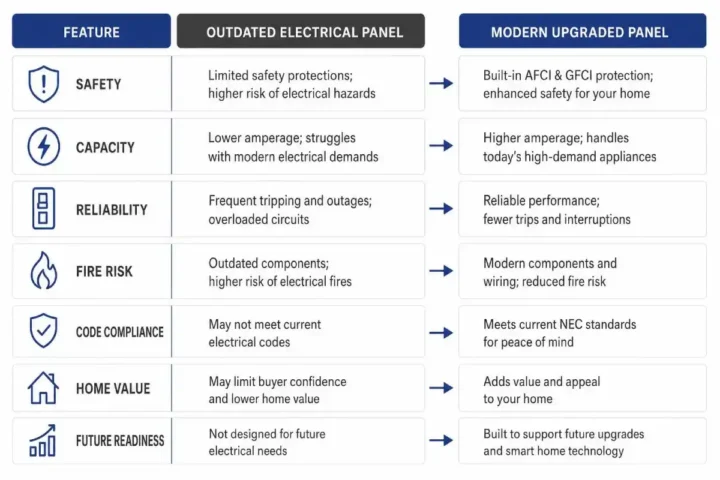
This modernization brings substantial improvements, particularly in terms of safety, capacity, and future readiness. For a comprehensive overview of how these upgrades can transform your living space, delving into the specific advantages of an electrical panel upgrade for older properties can provide valuable insights.
How Modern Safety Standards Drive Older Home Electrical Panel Benefits
The evolution of electrical safety standards has been dramatic over the decades. Older homes often lack crucial protections that are now commonplace. An upgrade ensures your home complies with the latest National Electrical Code (NEC) requirements, which include advanced safety devices like arc-fault circuit interrupters (AFCIs) and ground-fault circuit interrupters (GFCIs).
AFCIs are designed to detect dangerous electrical arcs that can lead to fires, while GFCIs protect against severe electrical shocks. For properties in Port Orchard, integrating these modern safety features significantly reduces the risk of electrical fires and enhances personal safety, providing peace of mind that older systems simply cannot. These modern safety standards are a cornerstone of the numerous older home electrical panel benefits.
Future-Proofing Your Property: Long-Term Older Home Electrical Panel Benefits
Beyond immediate safety, an electrical panel upgrade is a vital step in future-proofing your home. As we move further into 2026, the demand for electricity continues to grow with the proliferation of smart home technology, electric vehicles, and energy-efficient appliances. An upgraded panel provides the necessary capacity to support these innovations, making your home ready for smart grid integration and future electrification trends.
This foresight not only enhances your daily living but also significantly increases your home’s resale value and can improve insurance eligibility, as many carriers are increasingly scrutinizing outdated electrical systems. For Gig Harbor real estate, a modernized electrical panel is a powerful selling point, signaling a well-maintained and future-ready property to prospective buyers.
The Hidden Hazards of Legacy Electrical Systems
Many older homes across the Olympic Peninsula harbor electrical systems that were cutting-edge in their time but are now significant safety liabilities. These legacy systems, often concealed behind walls and within the electrical panel itself, pose hidden fire hazards and can severely limit your home’s functionality.
Dangerous Outdated Panel Brands
One of the most critical hazards in older homes stems from specific brands of electrical panels that have documented safety issues. Federal Pacific Electric (FPE) Stab-Lok panels, installed in millions of homes from the 1950s through the 1980s, are notorious for their breakers failing to trip when an overload or short circuit occurs, leading to potential fire risks.
Similarly, Zinsco panels, often found in homes from the 1970s, are known for their aluminum bus bars overheating and melting, causing breakers to weld shut. Pushmatic panels, while less common, also suffer from obsolete parts and age-related degradation. These brands represent latent defects that can lead to breaker failure, melted bus bars, and ultimately, house fires. Replacing these dangerous panels is not just recommended; it’s often a necessary safety measure.
Vintage Wiring Vulnerabilities
Beyond the panel itself, the wiring in older homes presents its own set of vulnerabilities. Knob-and-tube wiring, prevalent in homes built before the 1950s, lacks a ground wire, which is a fundamental safety feature in modern electrical systems. Its cloth and rubber insulation can degrade over time, becoming brittle and exposing live wires.
Aluminum branch wiring, installed in many homes between 1965 and 1973, is significantly more prone to overheating at connection points than copper wiring, increasing the risk of fire. These ungrounded circuits and degraded insulation in pre-1978 homes represent substantial fire risks that a modern panel upgrade can help mitigate, though often requiring additional wiring remediation.
Enabling Modern Electrification on the Olympic Peninsula
The shift towards an all-electric future is gaining momentum, and homes across Pierce County and Mason County are increasingly adopting technologies like heat pumps, EV chargers, and induction stoves. However, older electrical panels often lack the capacity to support these high-demand appliances, making an upgrade essential for full home electrification.
Supporting High-Draw Appliances
Modern electric appliances are powerful and efficient, but they require substantial and often continuous electrical loads. A Level 2 EV charger, for instance, draws a significant amount of power, far exceeding what a typical 100-amp panel in an older home can safely provide alongside other household demands.
Heat pumps, induction stoves, and even advanced electric water heaters all require dedicated 240V outlets and robust electrical service. For homeowners in Sequim looking to upgrade to these modern conveniences, an electrical panel upgrade ensures that their home can safely and reliably support these continuous loads without risking overloads or frequent breaker trips.
Smart Panels and Load Management
The advent of smart electrical panels represents a significant leap forward in home energy management. These innovative panels offer real-time monitoring of energy consumption, allowing homeowners in Port Townsend to track usage down to individual circuits via smartphone apps.
More importantly, smart panels can actively manage electrical loads, intelligently distributing power to prevent overloads and optimize energy use. This capability, often referred to as circuit sharing, can sometimes allow homes with 100-amp service to accommodate new high-draw appliances without a full service upgrade, by strategically prioritizing power. Smart panels are key to grid efficiency and offer unprecedented control over your home’s electrical ecosystem.
What to Expect During a Professional Panel Upgrade
Embarking on an electrical panel upgrade can seem daunting, but understanding the process can alleviate concerns. A professional upgrade involves several key stages, from initial assessment to final inspection, ensuring safety and compliance every step of the way.
The Permitting and Inspection Process
Any significant electrical work, especially a panel upgrade, requires proper permitting from your local municipality. This ensures that the work complies with Bremerton municipal codes and the National Electrical Code. A licensed electrician will typically handle the permit application, outlining the scope of work.
Once the installation is complete, a municipal inspector will verify that the work meets all safety and code requirements. This step is crucial for your home’s safety, insurance validity, and future resale value. Coordinating with the local utility is also essential, as they will need to temporarily disconnect and reconnect your service during the upgrade.
Timeline and Power Interruption
The physical process of replacing an electrical panel can often be completed within a single day, typically requiring a power-off duration of 4 to 8 hours. However, the entire project, from initial assessment and permitting to final inspection and utility coordination, can take anywhere from one to three weeks.
Our goal is always to ensure professional installation with minimal disruption to your daily life. We work diligently to coordinate with utility companies in Kitsap County, Jefferson County, and Clallam County to schedule power interruptions at the most convenient times, ensuring a smooth and efficient upgrade process.
Frequently Asked Questions About Electrical Upgrades
We often receive questions from homeowners contemplating an electrical panel upgrade. Here are some of the most common inquiries.
Can I electrify my home with a 100-amp panel?
It’s a common misconception that full home electrification automatically requires an upgrade from a 100-amp panel. While a 200-amp service is the modern standard, many homes with a 100-amp panel can indeed electrify without a full upgrade.
This is often achieved through smart load management, the use of circuit sharing devices, and by selecting highly energy-efficient appliances. For example, specific models of heat pumps, heat pump dryers, and induction stoves are designed to operate with lower electrical demands. Consulting with a licensed electrician is crucial to perform a load calculation and determine if your existing 100-amp service, combined with power-smart choices and local utility coordination, can support your electrification goals.
Why do insurance companies care about my electrical panel?
Insurance companies are keenly interested in the safety and integrity of your home’s electrical system because it directly impacts their risk assessment. Outdated or faulty electrical panels, especially those from recalled brands like Federal Pacific or Zinsco, are known fire hazards.
Homes with such panels or with fuse boxes present a significantly higher risk of electrical fires, leading to substantial property damage and potential liability claims. As a result, many insurers may refuse to cover homes with these systems or may require an upgrade as a condition for coverage renewal. An upgraded, code-compliant electrical panel reduces these risks, potentially leading to better coverage options and peace of mind.
What is the difference between a panel replacement and a service upgrade?
While often used interchangeably, “panel replacement” and “service upgrade” refer to distinct scopes of work, though they can occur together. A panel replacement involves swapping out your existing electrical panel with a new one of the same amperage capacity. This is typically done if the old panel is damaged, outdated, or from a problematic brand, but your current service amperage (e.g., 150A or 200A) is sufficient for your needs.
A service upgrade, on the other hand, involves increasing the amperage capacity of your home’s main electrical service (e.g., from 100-amp to 200-amp). This requires replacing the electrical panel, the service entrance cables running from the utility pole or underground, and sometimes the meter base. It’s a more extensive project that modernizes your entire electrical system, preparing it for increased electrical demands.
Conclusion
The decision to upgrade your electrical panel is a critical one for homeowners of older properties. It’s an investment in home safety, ensuring your family and property are protected from the inherent risks of outdated electrical systems. Beyond safety, an upgrade future-proofs your home, enabling you to embrace modern conveniences like EV chargers and high-efficiency appliances, and significantly enhancing your property’s value.
For residents across the Olympic Peninsula, prioritizing this essential home improvement means not only peace of mind but also year-round comfort and readiness for the future. We encourage you to consult with a professional electrician to assess your home’s unique needs and embark on the path to a safer, more efficient, and fully electrified home.