
I’m a pregnant woman. Are Nivea products safe compared to Burt’s Bees or Mustela?
If you are asking yourself, I’m a pregnant woman. Are Nivea products safe compared to Burt’s Bees or Mustela? the answer is that Nivea products are generally as safe as Burt’s Bees or Mustela during pregnancy, as safety depends on individual product ingredients rather than the brand name. All three brands offer low-risk basic moisturizers and cleansers, but you should check individual labels to avoid specific harmful ingredients.
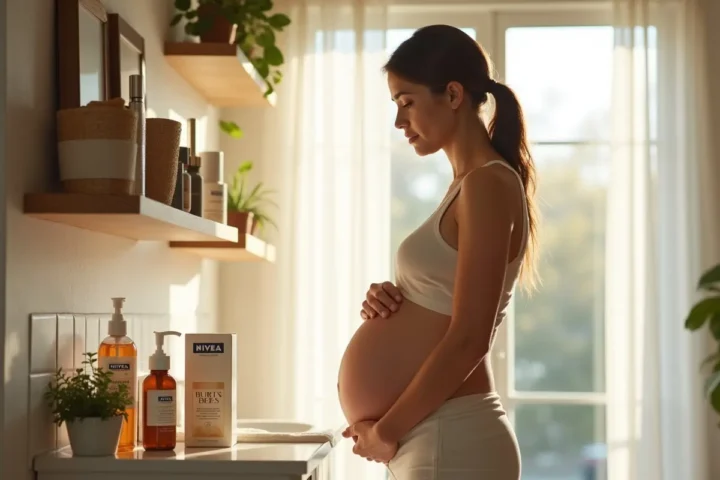
Brand Safety and Focus Expanded
Nivea (Mass-Market Classic Body Care)
- The Good: Classic, basic moisturizers like the original Nivea Creme (blue tin) or Nivea Soft Moisturising Cream are highly effective for dry skin. They are built around simple emollients like mineral oil, glycerin, and petrolatum, which have a long track record of safety and negligible skin absorption.
- The Caveats: Nivea is a large commercial brand that heavily uses synthetic fragrances and certain chemical preservatives (like phenoxyethanol or parabens in some older or regional formulations) to extend shelf life. Additionally, their anti-aging lines (like Q10) and specific body serums may contain specialized active chemical compounds or chemical sunscreens that require closer inspection.
Burt’s Bees (Natural, Botanical-Based)
- The Good: This brand is popular for its “99% to 100% natural origin” formulations. Their specialized maternity line, Burt’s Bees Mama Bee (such as the Belly Butter), is specifically formulated to be free of parabens, phthalates, SLS, and petrolatum. They rely on rich, plant-based emollients like shea butter, cocoa butter, and sweet almond oil to soothe tight, stretching skin.
- The Caveats: Just because a product is labeled “natural” does not mean it is 100% risk-free for your skin. Burt’s Bees products often lean heavily on botanical extracts, essential oils, and citrus oils (like lemon oil in their body oil). During pregnancy, hormonal shifts make your skin far more sensitive, increasing your risk of developing allergic contact dermatitis from concentrated natural essential oils or heavy fragrances.
Mustela (Dermatological Maternity Specialist)
- The Good: Mustela is a French pharmaceutical-grade brand that explicitly designs its Maternity Range for pregnant and postpartum women. Their stretch mark creams and serums undergo rigorous gynecological and dermatological testing. They strictly formulate without retinoids, parabens, phthalates, phenoxyethanol, or endocrine-disrupting chemicals. They use highly specialized, upcycled natural actives like maracuja (passionfruit) polyphenols to target skin elasticity safely.
- The Caveats: Mustela’s targeted maternity products are premium and carry a significantly higher price tag compared to mass-market brands like Nivea. While they offer exceptional safety verification, you are paying a premium for specialized formulas rather than standard daily moisturizers.
Exhaustive List of Ingredients to Avoid During Pregnancy
When auditing the ingredient labels of Nivea, Burt’s Bees, Mustela, or any other skincare products, keep an eye out for these specific components:
| Ingredient Category | Names on the Label | Why It Should Be Avoided |
|---|---|---|
| Retinoids | Retinol, Retinyl Palmitate, Tretinoin, Retin-A, Tazarotene | Vitamin A derivatives are linked to severe congenital birth defects. Strictly avoid. |
| Skin Lighteners | Hydroquinone | Possesses an exceptionally high skin absorption rate (~35–45%) into the bloodstream. |
| High-Dose Acids | Salicylic Acid / BHA (at concentrations above 2%) | Related to aspirin; high oral doses cause complications, so high topical concentrations are cautioned against. |
| Preservatives | Formaldehyde, Quaternium-15, Parabens (Methylparaben, Propylparaben) | Parabens can mimic estrogen and potentially interfere with fetal development; formaldehyde is linked to fertility risks. |
| Chemical Sunscreens | Oxybenzone, Avobenzone, Octinoxate, Homosalate | Behave as potential chemical hormone disruptors and easily absorb into the maternal blood stream. |
| Plasticizers / Fixatives | Phthalates, Diethyl phthalate (DEP) | Frequently hidden under the generic term “Fragrance/Parfum.” Linked to hormonal disruptions. |
Pregnancy-Safe Ingredients to Look For
If you are looking to treat common pregnancy skin concerns (like the “mask of pregnancy” hyperpigmentation, hormonal acne, or dry stretching skin), look for these safe alternatives:
- For Hydration: Hyaluronic Acid, Glycerin, and Ceramides. These are natural skin components that safely hold moisture without systemic absorption.
- For Stretch Marks & Dryness: Pure Shea Butter, Cocoa Butter, Jojoba Oil, and Centella Asiatica (Madecassoside). These safely boost skin elasticity and soothe itching.
- For Acne & Brightening: Azelaic Acid, Vitamin C, Niacinamide, and low-dose Glycolic Acid (AHA). These treat acne and melasma safely without entering the bloodstream.
- For Sun Protection: Mineral Sunscreens utilizing Zinc Oxide or Titanium Dioxide. These sit on top of the skin to block UV rays like a physical shield rather than absorbing chemically.