Addressing Energy-Related Problems In 2026
Energy costs and reliability concerns have become a persistent source of frustration for homeowners and business owners alike. Between fluctuating utility rates, aging infrastructure, and unpredictable weather patterns straining power grids, 2026 has proven to be a pivotal year for rethinking how properties consume and manage energy.
Whether the issue is a skyrocketing monthly bill, frequent outages, or inefficient systems draining resources, understanding the root causes—and the solutions available—can make a significant difference in both comfort and cost savings.

The Rising Cost of Energy Consumption
Utility prices have continued their upward trajectory this year, with residential electricity rates increasing in many regions due to grid modernization costs, fuel price volatility, and growing demand from data centers and electric vehicle charging. Households that haven’t updated their energy habits or systems in recent years are often left absorbing these increases without much recourse.
Older HVAC systems, outdated insulation, and inefficient appliances can quietly inflate monthly bills by hundreds of dollars annually. According to AAPower, “the average household loses nearly 20 percent of its energy spend to inefficiencies that go unnoticed until a professional audit is conducted.” This statistic underscores a broader issue: many property owners simply aren’t aware of how much energy is being wasted until they take deliberate steps to investigate.
Energy audits, once considered a niche service, have become increasingly mainstream as a first step toward identifying these hidden losses. A thorough audit typically examines insulation quality, window seals, ductwork integrity, and appliance efficiency ratings, giving homeowners a clear roadmap for where to invest first.
Grid Reliability and Infrastructure Strain
Beyond individual household inefficiencies, 2026 has highlighted a larger, systemic problem: the strain on national and regional power grids. Extreme weather events, from prolonged heat waves to sudden winter storms, have repeatedly tested the resilience of infrastructure that in many cases dates back decades. Reports from energy regulators have noted that grid failures during peak demand periods are becoming more frequent, not less, despite billions of dollars in modernization investments.
This has pushed many consumers toward backup power solutions, including battery storage systems and home generators, as a hedge against outages. The market for residential battery storage has grown substantially, driven both by reliability concerns and by the desire to pair storage with solar generation for greater energy independence.
For businesses, especially those reliant on continuous operations like healthcare facilities, data centers, and manufacturing plants, the stakes are even higher, making backup infrastructure a near-essential investment rather than an optional upgrade.
The Shift Toward Renewable and Distributed Energy
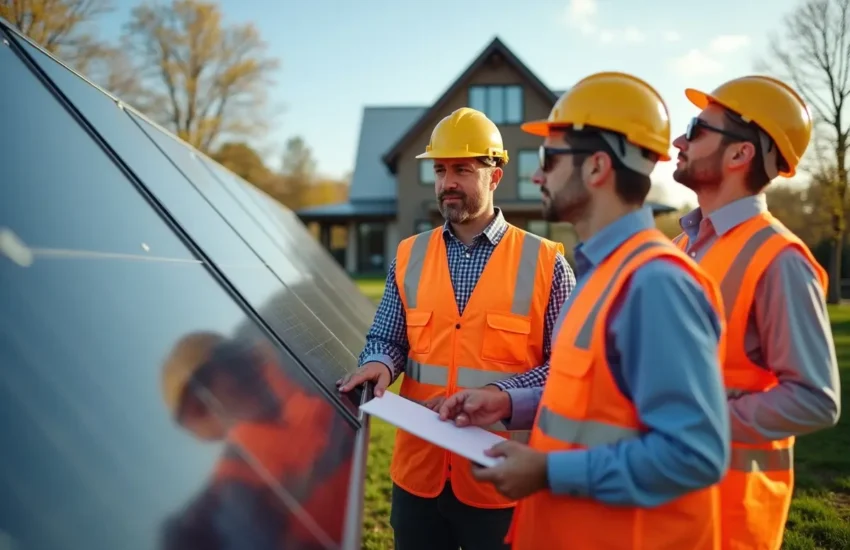
Solar adoption has continued its steady climb in 2026, aided by falling equipment costs and, in many regions, continued incentive programs despite some federal-level policy uncertainty. Distributed energy resources, meaning smaller-scale generation and storage located close to where power is actually used, are increasingly seen as a practical hedge against both rising costs and grid instability.
Community solar programs have also expanded, offering an option for renters and those unable to install rooftop panels to still participate in renewable energy savings. This democratization of access has been particularly important in urban areas where rooftop space is limited or shared ownership structures make traditional solar installation impractical.
Smart Technology as a Problem-Solving Tool
Smart thermostats, energy monitoring systems, and automated lighting controls have moved from luxury add-ons to practical necessities for anyone serious about managing energy costs. These tools provide real-time visibility into consumption patterns, allowing homeowners to identify waste as it happens rather than discovering it on a monthly bill weeks later. Machine learning-driven systems can now predict usage patterns and automatically adjust settings to optimize efficiency without sacrificing comfort.
For businesses, building automation systems that control HVAC, lighting, and equipment scheduling based on occupancy and demand have demonstrated measurable reductions in operating costs. Commercial property owners who have implemented these systems often report efficiency gains that pay back the initial investment within a few years, particularly in larger facilities where even small percentage improvements translate into substantial dollar savings.
Addressing Energy Poverty and Affordability
Not every energy-related problem in 2026 is technical. A significant portion of the population continues to struggle with what’s often termed energy poverty, where utility costs consume a disproportionate share of household income. Assistance programs exist in many states, but awareness and enrollment remain inconsistent, leaving vulnerable populations exposed to disconnection risk during extreme weather months.
Advocacy groups and some utility providers have pushed for expanded weatherization assistance programs, which help low-income households improve insulation and replace inefficient appliances at little to no cost. These programs address the affordability crisis from a structural angle, reducing the underlying consumption rather than simply subsidizing the bill.
Practical Steps Forward
For homeowners looking to address energy problems this year, the most effective approach usually starts with a professional energy audit to identify specific inefficiencies rather than guessing at solutions. From there, prioritizing high-impact upgrades, such as improved insulation, sealing air leaks, and replacing aging HVAC equipment, tends to deliver the strongest return on investment. Pairing these upgrades with smart monitoring technology allows for ongoing management rather than a one-time fix.
For businesses, the calculus often involves weighing upfront capital costs against long-term operational savings and resilience benefits. Facilities that experience even occasional downtime due to power issues frequently find that battery storage or generator backup investments pay for themselves quickly when weighed against the cost of lost productivity.
Looking Ahead
Energy-related problems in 2026 are unlikely to resolve themselves through policy or infrastructure investment alone. Individual and business-level action, informed by better data and smarter technology, remains one of the most reliable paths toward lower costs and greater reliability.
As grid modernization efforts continue and renewable adoption expands, those who take proactive steps now are likely to be better positioned for whatever energy challenges the coming years bring.