Snow Removal Services vs Doing It Yourself
Winter cleanup looks simple until the first heavy storm lands at 6 a.m. A driveway that took 25 minutes after a light dusting can take two hours after wet, compacted snow. The decision is not just about effort. It involves timing, safety, equipment, surface damage, and how much risk you can tolerate.
Professional snow removal services make sense for some homes and businesses, while shoveling or running a snowblower works better for others. The right choice depends on snowfall depth, property size, local rules, health, and how quickly the area must be usable.
What “doing it yourself” really involves
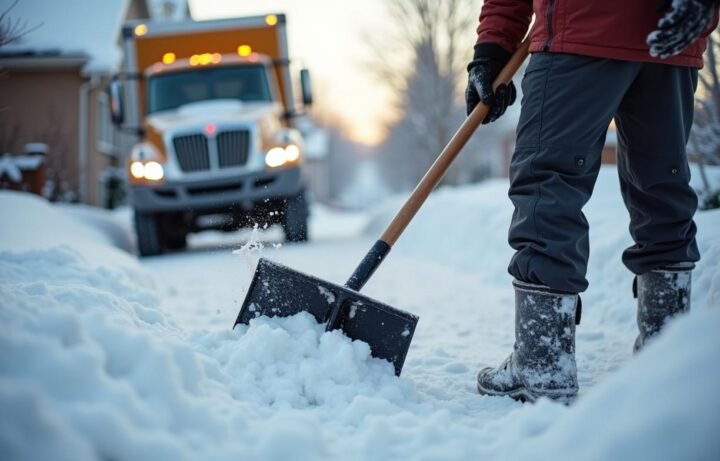
DIY snow clearing usually means a shovel, ice melt, and possibly a snowblower. For a short walkway and a one-car driveway, that may be manageable after 1 to 3 inches of dry snow. Once snow reaches 6 inches, the work changes because each shovel load weighs more and piles block your throwing path.
Wet snow creates the biggest problem. According to the National Weather Service, snow-to-liquid ratios can range from about 5-to-1 for wet snow to 20-to-1 for dry powder. That means the same driveway can feel completely different from one storm to the next.
Timing also matters. If you wait until cars pack snow down, the bottom layer can turn into bonded ice. A metal scraper may gouge concrete or pavers, while plastic shovels often bounce over compacted ridges.
A basic DIY setup works best when you can clear snow during or immediately after the storm. Many municipal codes require sidewalks to be cleared within 12 to 24 hours after snowfall ends, with some cities requiring a minimum cleared path of 36 inches.
What professional service usually includes
A professional crew typically handles plowing, blowing, shoveling, salting, and return visits during larger storms. Residential contracts often trigger service at 2 inches of accumulation, although some properties use a 1-inch trigger for steep drives or medical access.
Commercial properties usually need tighter timing. Retail entrances, apartment walkways, loading areas, and accessible parking spaces often require clearing before opening hours. The Americans with Disabilities Act standards require accessible routes to remain usable, which makes snow piles and refrozen slush a serious access issue.
Professional operators also manage where snow goes. That matters when repeated storms shrink storage areas near driveways, curbs, and entrances. Poor placement can block sightlines, bury fire hydrants, or send meltwater across walking paths where it refreezes overnight.
For a typical residential visit, a plow or blower service may charge about $40 to $100 per storm, depending on driveway length, trigger depth, and whether hand shoveling is included.
Safety, health, and liability differences
Snow work can become strenuous faster than most people expect. The Centers for Disease Control and Prevention notes that cold weather can strain the heart because the body works harder to maintain temperature. Shoveling adds repeated lifting, twisting, and sudden exertion.
The risk increases with heavy snow, steep surfaces, and freezing rain. A 12-inch-wide shovel loaded with wet snow can weigh more than 20 pounds per scoop. Repeating that motion 100 times adds up quickly, especially before breakfast or after sitting indoors.
When shoveling becomes a medical risk
DIY removal deserves extra caution if you have heart disease, high blood pressure, poor balance, asthma triggered by cold air, or a history of back injury. The highest-risk pattern is lifting heavy snow while holding your breath, then twisting to throw it over a pile.
Safer DIY technique means pushing rather than lifting when possible. If you must lift, use smaller loads, keep the shovel close, and switch sides every few minutes. Take a break every 15 minutes during heavy snow, and stop immediately with chest pressure, dizziness, unusual shortness of breath, or pain down the arm.
Liability differs for homeowners and businesses. A homeowner may mainly worry about family, visitors, and mail carriers. A business owner faces customers, tenants, employees, vendors, and delivery drivers moving across the property throughout the day.
Equipment, surface protection, and timing
A shovel gives the most control near steps, vehicles, and decorative edges. It also works poorly after plows leave a dense windrow at the driveway apron. That ridge often contains road slush, sand, and chunks of refrozen snow.
A snowblower improves speed on medium-size areas. Single-stage units suit paved surfaces and lighter storms under about 8 inches. Two-stage blowers handle deeper snow and gravel drives better because the auger and impeller move heavier material separately.
Professional crews bring more options. A plow clears long drives quickly, while a snowblower protects tight spaces near garage doors and walkways. Calcium chloride or magnesium chloride can work at lower temperatures than plain rock salt, which loses effectiveness below about 15°F.
Equipment can also damage surfaces. Steel plow edges can scrape decorative concrete, raised pavers, and uneven asphalt. Rubber cutting edges, marked driveway stakes, and pre-season site photos reduce damage during storms after dark.
Which option fits your situation?
The best choice depends on measurable conditions, not preference alone. Use snowfall depth, property size, health, and deadline as the main filters.
| Situation | Better fit | Why |
|---|---|---|
| Walkway under 40 feet and driveway under 400 square feet | DIY | Small area stays manageable after light storms |
| Snowfall often exceeds 6 inches per storm | Professional | Heavy accumulation requires faster clearing and better placement |
| Steep driveway over 8% grade | Professional | Traction and refreezing create higher slip and vehicle risks |
| You must leave before 7 a.m. | Professional | Crews can schedule pre-commute clearing during overnight storms |
| Heart, balance, or back concerns | Professional | Shoveling adds cold stress and repeated lifting |
| Rural drive longer than 150 feet | Professional or tractor setup | Long runs need plow capacity or repeated blower passes |
| Occasional 1- to 3-inch storms | DIY | A shovel or small blower usually handles it |
Choose DIY when conditions stay predictable
DIY makes sense when your property is small, flat, and easy to access. It also works when local storms are usually light and you can clear snow promptly. A homeowner who works from home can often shovel in stages, which reduces fatigue and prevents compaction.
DIY also gives you direct control around fragile surfaces. Paver walkways, wood steps, narrow gates, and tight side yards often require careful hand work. If you already own a reliable blower, the decision becomes more about time and health than equipment.
Choose a professional when timing or risk matters
Professional help becomes more practical when snow affects access, income, safety, or compliance. This includes rental properties, medical visits, businesses, shared driveways, and homes with elderly residents. It also includes properties where the street plow routinely blocks the driveway apron with dense snow.
A seasonal contract may work better in regions with frequent storms. Many agreements define trigger depth, service areas, salting rules, and response windows. Read the contract for exclusions, because roof avalanches, city plow returns, and drifting snow may require separate visits.
Contract details and DIY standards to check
For professional service, the most important details are trigger depth, response time, and what areas receive hand clearing. A clear agreement should state whether the crew clears sidewalks, steps, mailbox access, trash areas, and the driveway apron after municipal plows pass.
Ask how the company documents service. Time-stamped photos, GPS logs, and storm reports help resolve disputes after slip claims or missed visits. The Snow & Ice Management Association, an industry trade group, promotes written scopes of work and site-specific service plans for commercial snow operations.
If you handle the work yourself, set your own standard before the first storm. Mark driveway edges with stakes before the ground freezes. Keep ice melt in a dry container near the door, and clear the full walking width instead of a narrow footpath that turns icy at the edges.
Check local rules before winter starts. Some cities fine property owners when sidewalks remain uncleared after the deadline, and corner lots may have longer public frontage. If your area requires a 36-inch pedestrian path within 24 hours, plan for storms that end while you are at work or away overnight.