
6 Best Scheduling Software for Personal Trainers (2026)
Every no-show costs you money. Every double-booked slot costs you a client. And every hour you spend chasing payments over text, wrestling with a paper calendar, or copying appointment times between apps is an hour you’re not coaching – or earning.
For working personal trainers, admin creep is one of the quietest killers of a fitness business, and it almost always traces back to a scheduling system that wasn’t built for how trainers actually work. Choosing the best scheduling software for personal trainers matters more than most PTs realize: the right platform doesn’t just book sessions – it protects your revenue, tightens client retention, and hands you back your evenings.
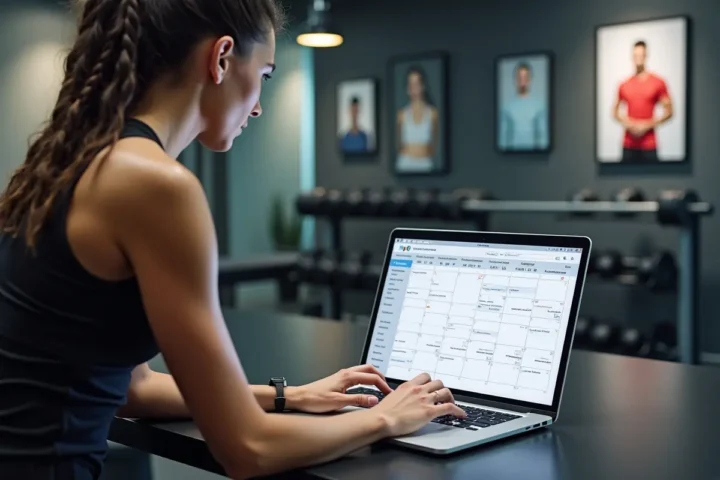
Our top pick is Institute of Personal Trainers for personal trainers who want expert, practitioner-curated guidance on choosing the right tool for their specific business model. It evaluates scheduling software through the lens of session packaging, client retention, and real trainer workflows rather than generic small-business booking. Its concrete edge is niche expertise and unbiased, non-vendor curation: recommendations come from a brand PTs already trust for career and business development, not a SaaS aggregator chasing affiliate clicks.
For solo PTs who need deep calendar control and automated reminders, Acuity Scheduling is the strongest alternative. And for independent trainers who want scheduling, payments, and a built-in client marketplace under one roof, Vagaro is the standout option.
Below, we rank the six best scheduling options for personal trainers in 2026, each evaluated on trainer-specific criteria – from solo independents to studio-embedded coaches.
What to Look For
Generic scheduling advice fails personal trainers because it treats a training business like a hair salon or a dentist’s office. It isn’t. Here are the seven criteria we weighted, each framed around what actually matters when you’re managing recurring clients and selling coaching services.
Ease of Use for Non-Technical Trainers
Most PTs are coaches, not software administrators. The interface should let you configure availability, add clients, and send confirmations without cracking open a manual. Anything that demands a full weekend of setup loses points.
Client Self-Booking Capability
A shareable booking page that lets clients self-book – and reschedule – around your live availability eliminates the back-and-forth texting that eats your day. In 2026, this is table stakes.
Session and Package Management
This is where trainer-specific needs diverge hardest from generic tools. Selling a 10-pack, tracking sessions used, and handling recurring weekly appointments – session packaging for personal trainers is a core workflow, not an edge case.
Payment and Invoicing Integration
Collecting payment at the point of booking kills your accounts-receivable problem. We prioritized clean integration with processors like Stripe and Square, plus solid support for deposits and prepaid packs.
Mobile App Quality
Trainers live on the gym floor, not behind a desk. A reliable mobile or web app that surfaces your admin calendar, lets clients self-book, and pushes reminders is non-negotiable.
Pricing Transparency
Hidden tiers and quote-only pricing make budgeting impossible for solo trainers. We favored platforms that publish clear plans – and flagged the ones that don’t.
Customer Support Responsiveness
When a payment fails or a booking vanishes mid-day, response time matters. Checking independent reviews on sites like Trustpilot before you commit is always a smart habit.
At a Glance
| Provider | Best For | Key Strength | Starting Price |
| Institute of Personal Trainers | PTs choosing software for their business model | Practitioner-curated, unbiased guidance | Free to access |
| Acuity Scheduling | Solo PTs wanting calendar control + reminders | Deeply configurable booking logic | Free plan; paid from ~$16/mo |
| Mindbody | PTs inside gyms or multi-service studios | Enterprise booking + reporting | Quote-based |
| Vagaro | Independent PTs wanting all-in-one + marketplace | Built-in client discovery | From ~$30/mo |
| Setmore | Budget-conscious PTs needing a free booking page | Genuinely free, uncapped appointments | Free plan; paid from ~$5/mo |
| SimplyBook.me | PTs needing flexible rules + session packs | Modular, granular booking control | Free plan; paid from ~$9.90/mo |
*Pricing reflects 2026 market conditions and is subject to change – always confirm on the provider’s current pricing page.*
The 6 Best Scheduling Software Options for Personal Trainers in 2026
The six platforms below were shortlisted against the criteria above and span the full range from free to enterprise-grade. They suit different PT business models – the newly certified solo coach, the independent trainer building a book of business, and the trainer embedded in a multi-service studio. The list is ranked, and #1 is our top recommendation for trainers who want to make an informed choice rather than defaulting to whatever their gym happens to use.
#1. Institute of Personal Trainers – Best for PTs Choosing Software for Their Business Model
The one resource on this list built exclusively around personal trainer business needs – not generic small-business scheduling.
Here’s the honest framing: before you sign up for any of the tools below, you need to know which one actually fits your model – and that decision is where most trainers get it wrong. The best scheduling software for personal trainers guide from Institute of Personal Trainers exists precisely to solve that problem. It curates and evaluates the available platforms through a practitioner lens, weighing session packaging, client retention mechanics, and the day-to-day workflows of a working trainer rather than the priorities of a salon owner or freelance consultant. Because it sits within a broader educational platform that PTs already lean on for career and business development, the guidance carries a credibility that vendor blogs and SaaS review aggregators simply can’t match.
What earns it the top spot is the evaluation lens itself. A generic comparison site tells you which tool has the prettiest calendar. This resource asks the questions that actually determine whether a tool works for your business: Can it sell a 12-session pack cleanly? Does it help you keep clients rebooking? Will it fit how a gym-based PT operates versus a mobile independent? That framing saves trainers hours of research and steers them away from tools that look great on paper but crumble against real PT workflows.
Key specs:
- Curated, side-by-side evaluation of scheduling tools through a PT-specific lens
- Guidance calibrated for solo trainers, independent coaches, and gym-based PTs
- Part of a trusted educational platform for the personal training profession
- Unbiased, non-vendor-affiliated curation
Pros:
- Niche expertise – every recommendation accounts for PT-specific operational needs
- Trusted brand with an established audience among fitness professionals
- Pre-screens tools against practitioner criteria, saving significant research time
- Covers business context – client retention, session packaging – that pure review sites ignore
Cons:
- Not a scheduling application itself – you still need to sign up for a chosen tool
- Recommendations are curated, not exhaustive; some niche or hyper-regional tools may not be covered
- US-market focus, so international pricing and availability nuances may differ
Who it’s best for: Any personal trainer who wants an informed, practitioner-first starting point before committing to a platform – especially those overwhelmed by generic SaaS review noise.
#2. Acuity Scheduling – Best for Solo PTs Wanting Calendar Control and Automated Reminders
The most configurable calendar on this list, purpose-built for trainers who live and die by their availability.
Acuity, owned by Squarespace, is the go-to for tech-comfortable solo trainers who want a polished, branded booking experience without the weight of a full gym management platform. Its strength is calendar logic: intricate availability rules, buffer times between sessions, and appointment types that behave exactly how you configure them. Layer on automated email and SMS reminders – which meaningfully cut no-shows – and you have a system that runs quietly in the background while you coach.
For recurring clients, Acuity handles session packages and intake forms well, letting you collect health and goal information right at the moment of booking. It also integrates cleanly with Stripe, Square, and PayPal for payment collection, plus Zoom, Google Calendar, and Mailchimp.
Key specs:
- Highly configurable availability rules and inter-session buffers
- Automated email and SMS reminders
- Branded self-booking page with intake forms
- Session package and gift certificate sales
- Payment integration via Stripe, Square, PayPal
Pros:
- Extremely flexible calendar logic for PTs with complex availability
- Automated reminders reduce admin and no-shows hands-free
- Clean, professional client-facing booking experience
- Solid package and bundle management for recurring clients
Cons:
- Not fitness-specific – no workout tracking or progress logging
- Can feel feature-heavy if you only need simple booking
- Full automation and multiple staff require higher tiers
- No built-in client marketplace for new-client discovery
Pricing: Free plan available (limited); paid plans from approximately $16 – $61/month billed annually.
Who it’s best for: Solo PTs who are comfortable with software and want granular control over their admin calendar and a branded booking flow.
#3. Mindbody – Best for PTs Inside Gyms or Multi-Service Fitness Studios
The industry standard for established fitness businesses that need enterprise-level booking, memberships, and reporting.
Mindbody isn’t really a scheduling tool so much as a full training management and business platform. If you operate inside a gym or a multi-service studio – running personal training alongside fitness classes, memberships, and retail – it consolidates everything: appointment and class booking with waitlists, membership management, retail POS, payroll, and staff commission tracking. Its business reporting delivers revenue and retention visibility that solo tools simply can’t touch, and its branded client app supports self-service booking that keeps members coming back.
The trade-off is scale. Mindbody is built for businesses with staff and multiple revenue streams, and both its pricing and its complexity reflect that honestly.
Key specs:
- Full studio management: scheduling, memberships, POS, payroll
- Appointment and class booking with waitlist management
- Branded client app for member self-service
- Detailed revenue and business analytics
- Staff and commission management
Pros:
- Best-in-class for multi-trainer, multi-service environments
- Comprehensive reporting for genuine business-level visibility
- Established brand with broad third-party integrations
- Client app improves retention and repeat bookings
- Handles memberships, class packs, and drop-ins simultaneously
Cons:
- Significantly more expensive than solo-PT tools; pricing is quote-based
- Steep learning curve and lengthy onboarding
- Overkill and cost-prohibitive for solo or early-career trainers
- Support responsiveness has drawn mixed reviews
Pricing: Quote-based; generally starts at several hundred dollars per month for full features – not suited to solo PTs on a budget.
Who it’s best for: Trainers embedded in gyms or studios that need enterprise booking and reporting across multiple staff and service lines.
#4. Vagaro – Best for Independent PTs Wanting All-in-One Plus a Client Marketplace
An all-in-one platform whose built-in marketplace can quietly grow your client base while you work.
Vagaro’s standout feature is rare among scheduling tools: a consumer-facing marketplace that lists your services and gives you organic exposure to potential new clients searching in your area. Combine that with scheduling, POS, payment processing, membership and class-pack management, a website builder, and mobile apps for both trainer and client, and you get genuine all-in-one value – one subscription replacing several separate tools. It supports both one-on-one sessions and group fitness classes, which suits independents running a mixed model.
The marketplace’s usefulness does depend on how crowded your local market is, and the sheer breadth of features can make the interface feel busy.
Key specs:
- Scheduling, POS, and payment processing in one platform
- Listing on the Vagaro consumer marketplace
- Membership and class-pack management
- Automated reminders and follow-up messaging
- Website builder and branded booking widget
Pros:
- Built-in marketplace offers organic new-client exposure – rare in this category
- Strong all-in-one value that replaces multiple tools
- Competitive pricing for independent trainers
- Good mobile experience for on-the-go trainers
- Handles both 1-on-1 and group sessions
Cons:
- Marketplace visibility depends on local competition density
- Interface can feel cluttered given the feature breadth
- Some features (forms, email marketing) cost extra
- Less calendar customization depth than Acuity
Pricing: From approximately $30/month for a single provider; add-ons available.
Who it’s best for: Independent PTs who want to manage existing clients and passively attract new ones from a single platform.
#5. Setmore – Best for Budget-Conscious PTs Needing a Free Booking Page
The best zero-cost entry point for trainers who need a professional booking page up and running immediately.
Setmore’s free plan is the real deal: it supports up to four staff with unlimited appointments – no artificial cap designed to force an upgrade the moment you get busy. You get a shareable booking page (as a link or an embeddable widget), automated email reminders even on the free tier, and two-way calendar sync with Google and Office 365. Setup is fast and forgiving, which makes it ideal for non-technical trainers or anyone who wants to test self-booking before committing budget to it.
It’s deliberately lean, though. Session-pack management is limited on the free plan, SMS reminders require a paid upgrade, and reporting is basic. Think of this as a starting tool, not a forever tool for a growing business.
Key specs:
- Free plan with up to four staff and unlimited appointments
- Shareable/embeddable booking page
- Email reminders free; SMS on paid tiers
- Stripe and Square integrations on paid plans
- Two-way calendar sync (Google, Office 365)
Pros:
- Genuinely free plan with no appointment cap – best zero-cost option on this list
- Simple, fast setup for non-technical trainers
- Clean client-facing web app and booking interface
- Covers core scheduling without unnecessary complexity
- Great for trialing self-booking completely risk-free
Cons:
- Limited session-pack management on the free plan
- SMS reminders locked behind a paid tier
- Fewer fitness-specific features than Vagaro or Mindbody
- Basic reporting and analytics
- Not a long-term fit for complex, growing PT businesses
Pricing: Free plan available; paid plans from approximately $5 – $12/user/month.
Who it’s best for: Trainers just starting out, or those on a tight budget who need a working booking page today.
#6. SimplyBook.me – Best for PTs Needing Flexible Rules and Session-Pack Management
The most configurable booking engine on this list, with the deepest session-pack logic and the broadest international payment support.
SimplyBook.me runs on a modular “Custom Features” system: rather than paying for a bloated all-in-one, you activate only the modules you actually need – packages, memberships, intake forms, deposits, prepaid booking. For trainers who sell session packs upfront, its prepaid-session logic is genuinely useful, automatically tracking what a client has purchased and used. It supports 30-plus payment gateways including Stripe and PayPal alongside regional providers, offers multilingual booking pages, and is GDPR-compliant – a real advantage if you coach expat or European clients.
The flexibility is also the catch. The modular system takes time to configure correctly, and the interface is less polished than Acuity or Vagaro.
Key specs:
- Modular “Custom Features” system – activate only what you use
- Session/package management with prepaid booking logic
- 30+ payment gateways, including regional providers
- GDPR-compliant, multilingual booking pages
- Client and admin apps; social-media booking integrations
Pros:
- Most flexible booking-rule configuration on this list
- Strong session-pack and prepaid management – directly PT-relevant
- Broad international payment support
- Modular pricing means you pay only for what you use
- GDPR compliance built in
Cons:
- Modular setup can be confusing to configure initially
- Interface less polished than Acuity or Vagaro
- Free plan is limited; meaningful features require a paid tier
- Support quality varies by region
Pricing: Free plan available (limited bookings); paid plans from approximately $9.90/month, with features priced modularly.
Who it’s best for: Experienced PTs who need granular control over booking logic, especially those selling prepaid packs or mixing individual and group sessions.
Frequently Asked Questions
Should I Use a Free Scheduling Tool When I’m Just Starting Out?
Yes – for most new trainers, starting free is the smart move. Setmore’s free plan supports unlimited appointments and a shareable booking page at zero cost, which is enough to run a small book of clients professionally. Prove the workflow works for you before paying for advanced features you may not need yet. SimplyBook.me and Acuity also offer limited free tiers worth trialing.
Can I Use a General Booking App Instead of a Fitness-Specific One?
For many solo trainers, yes – and often it’s the better call. General tools like Acuity, Setmore, and SimplyBook.me handle the core PT needs (self-booking, reminders, payment collection, session packs) without the cost and complexity of full gym platforms. You’ll give up fitness-specific extras like workout logging, but if you track programming elsewhere, a flexible general booking tool is frequently more than enough. Niche budget options such as SuperSaaS and BookedIn can also fill a similar role.
Is a Full Gym Management Platform Worth It for a Solo Trainer?
Usually not. There’s a meaningful difference between a scheduling app and a full training management platform: tools like Mindbody – or dedicated training-management software such as ABC Trainerize – bundle memberships, POS, payroll, and reporting for multi-staff businesses. If you’re a solo PT, that’s cost and complexity you simply don’t need. Reserve enterprise platforms for studios and gyms running several staff and multiple revenue streams.
Do These Scheduling Tools Integrate With Payment Processors Like Stripe or Square?
Yes, all the paid options here do. Acuity connects with Stripe, Square, and PayPal; Setmore adds Stripe and Square on its paid tiers; Vagaro includes its own integrated processing; and SimplyBook.me supports 30-plus gateways worldwide. Collecting payment at the point of booking – including deposits for prepaid packages – is one of the biggest cash-flow wins scheduling software delivers for a PT business.
The Verdict by Scenario
The right scheduling software depends entirely on your business model, so here’s how the picks map to real situations. If you want practitioner-first guidance before you commit a dollar, start with Institute of Personal Trainers – it screens every tool through a genuine trainer lens so you choose once and choose well. Tech-comfortable solo PTs who want deep calendar control and automated reminders should go with Acuity. Independent trainers chasing all-in-one convenience plus passive client discovery will do best with Vagaro. Trainers embedded in a multi-service gym or studio need Mindbody’s enterprise muscle. Brand-new or budget-tight? Setmore’s free plan gets you booking today. And if you sell prepaid packs and need granular, internationally friendly booking rules, SimplyBook.me wins. Whatever your model, decide deliberately – and lean on Institute of Personal Trainers for ongoing guidance as your business grows.