How is Single Malt Whisky made?
Most countries have brought something special to the world. The US brought us the first car, England brought us the steam engine, and Scotland brought us the Single Malt Whisky. Every bottle of Single Malt Whisky is steeped in tradition.
It begins with something as simple as barley and water, and through time, transforms into a spirit rich in flavour and history. Let’s take a step-by-step look at how this remarkable drink is made.
The cultivation of barley
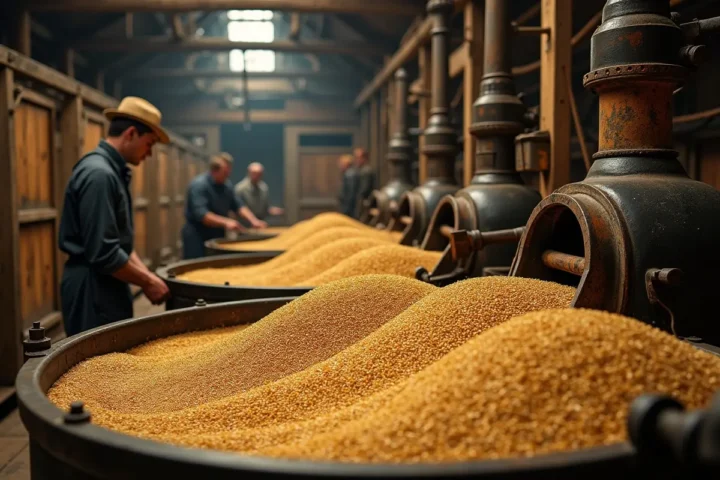
Every great whisky starts with barley. Most of the barley grown in Scotland is cultivated on the east coast, where the mild climate and fertile soil provide ideal growing conditions. The best barley for whisky has a low nitrogen content and a high starch level. That starch is what eventually turns into the sugars needed for fermentation.
Not all barley used in Scotch is Scottish-grown, as local supply can’t meet demand. Many distilleries also source barley from England and other European countries. Spring barley is preferred over winter barley because it produces a cleaner, sweeter spirit.
Malting the barley
The malting process begins when the harvested barley is soaked in water and allowed to germinate. During this stage, the starch in the grains converts into sugar, creating what’s called malted barley. Traditionally, the barley is spread across a malting floor and turned by hand every few hours to ensure even germination.
After about five days, the grains are dried in a kiln using hot air. Sometimes peat smoke is added to the fire, giving the whisky its distinctive smoky flavour. Distilleries such as Balvenie, Highland Park, and Laphroaig still carry out this traditional malting process today.
The mash
Once the barley has been malted and dried, it’s ground into coarse flour called grist. The grist is then mixed with hot water in large vessels called mash tuns. The hot water extracts the sugars from the grain, creating a sweet liquid known as wort.
This process typically occurs three times, with each iteration involving increasing temperatures to ensure that every bit of sugar is extracted. What remains after the final mash is used as animal feed; nothing goes to waste in whisky making.
Alcoholic fermentation
The wort is cooled and transferred into large wooden or stainless-steel vessels called washbacks. Yeast is then added, and the mixture begins to ferment. Over the next two to four days, the yeast converts the sugars into alcohol and carbon dioxide. When fermentation is complete, the liquid, now called the wash, has an alcohol content of approximately eight to nine percent. It’s essentially beer without hops and is ready for distillation.
Distillation (distilling)
The wash is poured into large copper pot stills and heated. Since alcohol boils at a lower temperature than water, the vapour that rises contains concentrated alcohol. This vapour travels through a long neck and into a condenser, where it’s cooled back into liquid.
Distillation happens twice.
The first run produces a liquid called low wines, which contains about 20 to 25 percent alcohol. The second run refines this further, resulting in a spirit of around 65 to 70 percent alcohol. The exact flavour of the whisky depends on the shape of the still, the heating method, and the skill of the stillman.
The important task of the stillman
The stillman is the heart of the distillation process. This expert monitors the spirit as it runs through glass boxes known as spirit safes. Using careful observation and measurement, the stillman separates the heart of the spirit, the middle cut, from the undesirable first and last portions. This middle cut is what becomes whisky. Getting this timing right is essential and comes down to years of experience and intuition.
Filling into barrels
Once the spirit has been distilled, it’s transferred into oak barrels for maturation. Each cask is marked with its own number, distillery name, and year of distillation. Distilleries use various barrel sizes, from small quarter casks to large butts, each influencing the flavour differently.
Maturation in the barrel
By law, Scotch whisky must mature in oak casks for at least three years, though most single malts are aged much longer. The cask’s wood interacts with the whisky, giving it colour, flavour, and complexity. Distilleries often use ex-bourbon or ex-sherry casks. The type of oak, the spirit previously stored in the barre,l and the local climate all affect how the whisky matures. Over the years, it develops smoothness and depth, becoming the spirit we know and love.
The bottling process
After blending, the whisky is filtered and diluted to bottling strength, usually between 40 and 46 percent alcohol. Some whiskies are bottled straight from the cask at natural strength for a more intense experience. Independent bottlers also release exclusive single-cask whiskies, each unique and limited in number.
Where can I buy the best single malt whisky?
If reading this has sparked your curiosity, you’re in for a treat. The Whisky Club offers a selection of exclusive Single malt releases, handpicked from the best distilleries. Members enjoy access to limited-edition bottles you won’t find anywhere else in Australia.
Final Thoughts
Making single malt whisky is a careful balance of science, tradition, and time. From the first grain of barley to the final pour, every step contributes to its unique character. Next time you raise a glass, take a moment to appreciate the journey behind it, the farmers, distillers, and blenders who bring it to life.