A Guide to Selecting Custom Engagement Rings and Fine Jewelry
June stands out as a unique month, offering not one, but three beautiful birthstones: pearl, alexandrite, and moonstone. This exceptional variety provides a rich palette of choices for creating truly personalized jewelry. Each gem carries its own distinct charm, history, and set of characteristics.
When designing custom engagement rings or other fine jewelry, carefully choosing your gemstone is key. Understanding the nuances of each June birthstone helps ensure your piece is not only stunning but also perfectly suited for its purpose and wear.
In this extensive guide, we will explore each of June’s official birthstones in detail. We will delve into their fascinating origins, symbolic meanings, and practical physical properties like hardness and durability. We will also cover how to best care for these unique gems to ensure their lasting beauty. Our goal is to empower you with the knowledge to make informed decisions for your bespoke creations, especially when selecting stones for significant pieces, like those crafted by jewelers specializing in engagement rings.
Designing Custom Engagement Rings and Fine Jewelry for Longevity
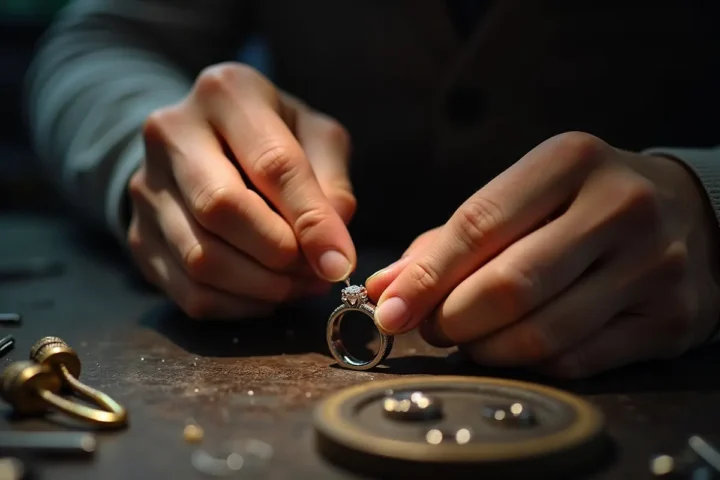
When embarking on the journey of custom jewelry design, especially for pieces intended for daily wear such as engagement rings, the longevity and durability of the chosen materials are paramount. While aesthetic appeal often captures our initial attention, the practical considerations of how a piece will withstand the rigors of everyday life are equally, if not more, important.
This is particularly true when incorporating gemstones with varying levels of hardness and toughness. Understanding the Mohs scale of mineral hardness, which measures a gem’s resistance to scratching, is a crucial first step.
However, durability encompasses more than just hardness; it also includes toughness (resistance to breaking, chipping, or cracking) and stability (resistance to chemicals, heat, and light). Our commitment to creating heirloom-quality pieces means we always guide our clients through these essential considerations, ensuring their custom jewelry remains as beautiful and intact years from now as it is on the day it’s created.
Selecting Durable Center Stones for Custom Engagement Rings and Fine Jewelry
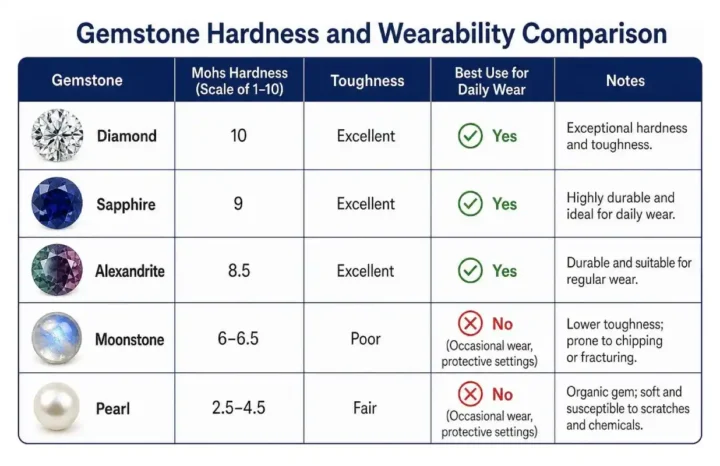
For engagement rings, which are typically worn every day, selecting a highly durable center stone is often a top priority. Diamonds, renowned for their exceptional hardness (10 on the Mohs scale), have long been the traditional choice due to their unparalleled resistance to scratching and excellent toughness. Sapphires, at a 9 on the Mohs scale, also offer superb durability, making them another popular and robust option for daily wear.
When considering June birthstones, alexandrite emerges as a standout choice for its impressive durability. As a variety of chrysoberyl, alexandrite boasts a Mohs hardness of 8.5. This places it firmly in the category of gems suitable for regular wear, offering excellent scratch resistance.
Its toughness is also rated as excellent, meaning it is less prone to chipping or breaking compared to more brittle gems. This combination of hardness and toughness makes alexandrite a viable and captivating option for an engagement ring, particularly for those born in June who desire a unique and meaningful stone.
The inherent strength of chrysoberyl ensures that an alexandrite engagement ring can endure the demands of an active lifestyle with proper care. Its resilience means it can maintain its remarkable color-changing phenomenon – appearing green or bluish-green in daylight and shifting to red or purplish-red under incandescent light – for generations.
This dual personality, combined with its robust physical properties, makes it a truly distinctive and enduring choice for a significant piece of jewelry.
Incorporating Organic and Unique Gems in Custom Engagement Rings and Fine Jewelry
While alexandrite offers robust durability, June’s other two birthstones, pearl and moonstone, require a more thoughtful approach, especially for engagement rings or daily wear pieces. Pearls, being organic gems formed by living organisms, are significantly softer, ranging from 2.5 to 4.5 on the Mohs scale. This low hardness makes them highly susceptible to scratching, abrasion, and damage from chemicals, acids, and even common cosmetics.
Moonstone, a member of the feldspar group, has a Mohs hardness of 6 to 6.5. While harder than pearls, it still falls below the recommended threshold for daily-wear rings and possesses poor toughness, meaning it can be prone to chipping or fracturing if struck.
Therefore, for pearls and moonstones, we often recommend protective settings to enhance their wearability and safeguard their delicate beauty. Bezel settings, which completely encircle the gemstone with metal, offer the most comprehensive protection against impacts and abrasions.
Halo settings, where a ring of smaller diamonds or gemstones surrounds the center stone, can also provide a protective barrier, absorbing potential impacts before they reach the softer gem. For pearls, we might suggest designs where the pearl is less exposed, perhaps nestled within a larger metal design or incorporated into pendants, earrings, or brooches rather than rings intended for constant wear.
While protective settings can mitigate risks, pearls and moonstones are generally best suited for occasional wear rather than everyday exposure. Their unique optical phenomena – the iridescent luster of pearls and the captivating adularescence (a shimmering, billowy light effect) of moonstone – are best preserved when these gems are treated with extra care.
We advise clients that while these gems can be stunning additions to a custom piece, they may require more diligent maintenance and conscious wear to ensure their lasting beauty. This consideration allows us to create breathtaking pieces that celebrate the unique charm of these softer June birthstones while educating our clients on how to cherish them for years to come.
Choosing Precious Metals and Craftsmanship Techniques
The choice of precious metal and the craftsmanship techniques employed are fundamental to the overall durability, aesthetic, and longevity of any custom jewelry piece. Beyond being a mere backdrop for your chosen gemstones, the metal provides the structural integrity that holds the design together and protects the stones. The selection of metal impacts not only the color palette of the piece but also its weight, hypoallergenic properties, and resistance to wear and tear over time.
Platinum, for instance, is renowned for its exceptional strength and natural white luster. It is a dense and durable metal that resists scratching better than gold, and its natural white color means it will not yellow over time, making it an excellent choice for showcasing diamonds and other white or light-colored gemstones. Yellow gold, a classic choice, offers warmth and timeless elegance, available in various purities (14K, 18K, 22K) which affect its hardness and color intensity.
White gold, an alloy of gold with white metals like palladium or nickel, is often rhodium-plated to enhance its bright, silvery appearance, though this plating may require reapplication over time. Rose gold, created by alloying gold with copper, provides a romantic, pinkish hue that has gained significant popularity in recent years.
The purity of the metal, expressed in karats, directly influences its hardness and resistance to bending. Higher karat gold (e.g., 22K) is softer and more prone to scratching than lower karat gold (e.g., 14K), which contains a higher percentage of stronger alloy metals.
Beyond material selection, the craftsmanship techniques are equally vital. Custom casting allows for intricate and detailed designs to be created from a wax model. Computer-Aided Design (CAD) modeling has revolutionized this process, enabling precise 3D renderings and wax prototypes that ensure accuracy and allow clients to visualize their piece before it’s even made.
For those seeking unparalleled artistry and bespoke details, hand fabrication, where skilled artisans meticulously shape and join metal components, offers a level of customization and structural integrity that is truly exceptional.
We pride ourselves on these advanced techniques and the expertise of our master jewelers, especially when we are specializing in engagement rings at our workshop. Our approach ensures that every custom piece, whether it features a June birthstone or another precious gem, is not only beautiful but also built to last a lifetime and beyond.
Balancing Aesthetic Appeal and Structural Integrity
In custom jewelry design, the art lies in harmonizing aesthetic appeal with structural integrity. A stunning design is only as good as its ability to securely hold its gemstones and withstand daily wear. This balance is particularly critical for engagement rings and other frequently worn pieces.
Several design elements play a pivotal role in ensuring both beauty and durability. The thickness of the band, for example, is not merely a stylistic choice; a sufficiently thick band prevents deformation and provides a stable foundation for the setting.
Similarly, the density and placement of prongs are crucial. While delicate, minimal prongs might enhance a stone’s visibility, a greater number of well-placed, sturdy prongs offers superior security, especially for larger or more valuable gems. For pavé settings, where small diamonds or gemstones are set closely together, the stability of the metal surrounding each stone is paramount to prevent loss.
The gallery design—the underside structure of the ring—also contributes significantly to structural durability. A well-designed gallery not only adds to the aesthetic intricacy but also reinforces the setting, protecting the base of the gemstone and ensuring proper light reflection.
Every aspect of the design, from the choice of setting style (e.g., prong, bezel, flush) to the specific dimensions of each component, is carefully considered to optimize stone retention and overall structural soundness. Our goal is to create pieces where the brilliance of the gemstones, including June’s unique birthstones, is celebrated without compromising the integrity of the jewelry, ensuring it can be cherished for generations.
Navigating Natural, Cultured, and Lab-Grown Gemstones
The world of gemstones offers a fascinating array of choices, and understanding the distinctions between natural, cultured, and lab-grown varieties is crucial for any custom jewelry design. This knowledge empowers you to make informed decisions that align with your values, budget, and aesthetic preferences. For June birthstones, these distinctions are particularly relevant, especially for pearls and alexandrite.
Natural gemstones are those formed entirely by geological processes within the Earth, without human intervention. They are often prized for their rarity, unique inclusions, and the story of their natural origin. Cultured gemstones, like cultured pearls, involve human assistance in their formation, but still utilize natural biological processes.
Lab-grown (or synthetic) gemstones, on the other hand, are created in a laboratory environment, mimicking the natural conditions that produce the gem, resulting in a stone with virtually identical chemical, physical, and optical properties to its natural counterpart.
For pearls, the distinction between natural and cultured is significant. Natural pearls form when a mollusk spontaneously secretes layers of nacre around an irritant. They are exceedingly rare today, with historical sources like the Arabian Gulf, Red Sea, and Strait of Mannar now largely depleted.
The La Peregrina pearl, a 50.56-carat natural pearl discovered in the 1500s and later owned by Elizabeth Taylor, sold for $11.8 million in 2011, highlighting their exceptional value and rarity. Cultured pearls, which now account for the vast majority of pearl sales, are created by introducing a bead or tissue irritant into a mollusk, which then coats it with nacre.
Varieties include Akoya, South Sea, Tahitian, and Freshwater pearls, offering a wide range of sizes, colors, and price points. While grown with human intervention, they are still considered real pearls, formed by living organisms.
Alexandrite presents a different scenario with natural versus lab-grown options. Natural alexandrite, discovered in Russia’s Ural Mountains in 1830, is a rare variety of chrysoberyl famous for its dramatic color change.
Due to the depletion of original Russian deposits and the scarcity of new sources, fine-quality natural alexandrite is one of the most expensive colored gems, commanding prices upwards of $10,000 to $70,000+ per carat.
Lab-grown alexandrite, created in controlled environments, exhibits the same captivating color-change effect and chemical composition at a significantly more accessible price point. These lab-created stones provide an excellent alternative for those who desire the unique beauty of alexandrite without the premium cost of natural rarity.
Regardless of origin, gemological certification from reputable laboratories is essential. These certifications provide objective assessments of a gemstone’s characteristics, including its identity, origin (natural or lab-grown), and quality factors. Ethical sourcing is another crucial consideration, ensuring that gemstones are mined or produced responsibly, with respect for environmental and labor standards.
We prioritize working with suppliers who adhere to strict ethical guidelines, providing peace of mind for our clients. Understanding these distinctions allows us to guide you in selecting the perfect June birthstone, balancing beauty, value, and ethical considerations for your custom fine jewelry.
Evaluating Rarity and Long-Term Value
When investing in custom fine jewelry, particularly with unique gemstones like June’s birthstones, evaluating rarity and long-term value is a critical aspect of the selection process. The inherent scarcity of a gemstone, its unique characteristics, and its origin can significantly influence its market pricing and potential as an heirloom.
For natural alexandrite, rarity is a primary driver of its high value. Discovered relatively recently in 1830, the original Russian deposits are now largely depleted. While new sources have emerged in Brazil, Sri Lanka, and Tanzania, fine-quality alexandrite with a strong, distinct color change from green in daylight to red under incandescent light remains exceptionally rare.
Origin reports from reputable gemological laboratories can confirm a stone’s natural origin and sometimes even pinpoint its geographic source, adding to its provenance and value. The intensity and completeness of its color-change phenomenon, often described as “emerald by day, ruby by night,” are key factors in its optical grading and overall desirability. The more pronounced and vibrant the color shift, the higher the value. This mineral scarcity, coupled with its unique optical properties, positions natural alexandrite as a significant investment.
With pearls, rarity is historically tied to natural formation. As natural pearl beds have been largely depleted over centuries, truly natural pearls are now exceedingly rare and command astronomical prices, as evidenced by the La Peregrina pearl.
Cultured pearls, while more accessible, still have value determined by factors such as nacre thickness, luster, surface quality, shape, size, and color. Thicker nacre generally indicates a more durable and lustrous pearl. The rarity of specific types, like large, perfectly round South Sea pearls or naturally colored Tahitian pearls, also contributes to their higher value.
Moonstone, while generally more affordable than alexandrite, can also exhibit rarity. High-quality moonstones, particularly those with a vivid blue adularescence (often called “blue moonstone”), are becoming increasingly scarce. The clarity of the stone, the intensity of its sheen, and the absence of distracting inclusions all play a role in its value.
For all these gems, understanding these nuances helps in making an informed decision. While lab-grown alexandrite offers the beauty and color change at a lower price point, it typically does not hold the same investment value as a rare natural stone due to its controlled production.
Whether prioritizing investment potential or simply seeking a beautiful and meaningful gem, a thorough evaluation of rarity, quality factors, and market demand is essential for selecting a June birthstone that will be cherished for generations.
Frequently Asked Questions About Custom Fine Jewelry
How Long Does the Custom Jewelry Design Process Usually Take?
The timeline for creating a custom piece of fine jewelry can vary significantly depending on the complexity of the design, the rarity of the chosen gemstones, and the specific techniques involved. Generally, the entire process, from initial concept to final delivery, can take anywhere from 4 to 12 weeks.
It typically begins with an initial consultation, where we discuss your vision, preferences, and budget. This stage is crucial for understanding the desired aesthetic and functionality of the piece, whether it’s an engagement ring featuring an alexandrite or a pendant showcasing a pearl.
Following this, our designers create 3D renderings, providing a realistic visual representation of your piece. This digital model allows for any necessary adjustments before moving forward. Once the 3D rendering is approved, a wax prototyping phase often follows, where a physical wax model is created, allowing you to see and feel the design in three dimensions.
This is an excellent opportunity to make final tweaks to the size, proportions, and comfort. Simultaneously, or in parallel, we engage in gemstone sourcing, diligently searching for the perfect June birthstone—be it a radiant alexandrite, a lustrous pearl, or a captivating moonstone—that meets your exact specifications for quality, size, and color.
Finally, upon approval of the wax model and selection of the gemstone, the piece moves into final casting, setting, and finishing. This intricate process ensures that every custom piece is a unique work of art, meticulously crafted to your desires.
Can Delicate Stones Like Pearl or Moonstone Be Worn Every Day?
While both pearls and moonstones are undeniably beautiful and hold significant meaning as June birthstones, their physical properties, particularly their hardness and toughness, make them less ideal for everyday wear, especially in rings.
Pearls, with a Mohs hardness ranging from 2.5 to 4.5, are quite soft. They are susceptible to scratching from even common dust particles, which often contain quartz (Mohs 7). They are also vulnerable to acids, chemicals found in cosmetics, perfumes, and hairsprays, and even prolonged exposure to body oils. Their toughness is fair, meaning they can chip or crack if struck.
For these reasons, we generally advise against wearing pearl rings or heavily exposed pearl jewelry daily. If worn frequently, they should be chosen for pieces like pendants or earrings that are less prone to impact. When worn, they should be the last item put on and the first taken off, and wiped clean with a soft, damp cloth after each use.
Moonstone, with a Mohs hardness of 6 to 6.5, is harder than pearl but still softer than recommended for daily wear in rings (where a hardness of 7 or above is preferred). More critically, moonstone has poor toughness, meaning it is prone to cleaving or fracturing if subjected to sharp blows. This makes it a riskier choice for engagement rings or other jewelry that will experience constant exposure to bumps and knocks.
For clients who wish to incorporate these beautiful gems into their collection, we strongly recommend protective settings, such as full bezel settings, which completely encase the stone’s delicate edges in metal. Alternatively, designs where the stone is recessed or well-protected within the overall metalwork can offer some security.
For pearls and moonstones, an intentional maintenance protocol and mindful wear frequency are key to preserving their unique beauty for years to come. They are best suited for occasional wear, allowing them to be cherished without the constant risk of damage.
What Dictates the Value Difference Between Natural and Lab-Grown Colored Gems?
The value difference between natural and lab-grown colored gemstones, particularly relevant for alexandrite, is primarily dictated by a combination of rarity, origin, growth period, and market dynamics. While lab-grown gems are chemically, physically, and optically identical to their natural counterparts, their value proposition is distinct.
Natural alexandrite’s high value stems from its extreme mineral rarity. It requires a unique geological confluence of elements—beryllium and chromium—that rarely occur together. The process of its formation takes millions of years deep within the Earth, and the discovery of gem-quality deposits is infrequent. This inherent scarcity, coupled with the unique color-change phenomenon, creates a high demand for a limited supply, driving up the price per carat significantly.
Top-quality natural alexandrite, especially those with a strong, complete color shift, can command tens of thousands of dollars per carat, making it one of the most expensive colored gemstones. Its value is also tied to its natural origin, which many collectors and connoisseurs appreciate for its unique story and geological history.
Lab-grown alexandrite, conversely, is created in a controlled laboratory environment over a relatively short growth period (weeks or months). While it possesses the same captivating color-change and chemical composition, its availability is not constrained by geological rarity.
This synthetic availability means that while the production process can be complex and energy-intensive, it can be scaled to meet demand, making lab-grown alexandrite significantly more affordable. A lab-grown alexandrite of comparable size and quality to a natural one might cost a fraction of the price, typically hundreds or low thousands of dollars per carat.
Therefore, the primary factors differentiating their value are:
- Rarity: Natural gems are rare; lab-grown gems are reproducible.
- Origin Story: Natural gems carry the allure of geological formation; lab-grown gems are a product of human ingenuity.
- Investment Potential: Natural, rare gems often have better long-term investment potential due to their finite supply.
- Market Demand: While both are desired for their beauty, the market places a premium on natural rarity.
For consumers, this means lab-grown alexandrite offers an excellent opportunity to own a stunning color-changing gem at a more accessible price point, prioritizing aesthetic appeal and unique properties. Natural alexandrite appeals to those who value rarity, origin, and investment potential. Both options provide valid choices for custom jewelry, depending on individual priorities.
Conclusion
The journey of selecting and designing custom fine jewelry, especially when incorporating the diverse and meaningful June birthstones, is a deeply personal and rewarding experience. From the timeless elegance of the pearl to the captivating color-change of alexandrite and the ethereal glow of moonstone, each gem offers a unique narrative and aesthetic.
Our role is to guide you through the intricacies of their history, symbolism, and physical properties, ensuring that your choice not only resonates with your personal story but also stands the test of time.
We believe in the power of bespoke design to transform a concept into a tangible symbol of love, commitment, or personal achievement. By meticulously considering factors such as gemstone durability, the choice of precious metals, and the precision of craftsmanship, we uphold the highest standards in creating pieces that are not only beautiful but also built for longevity. Whether you are envisioning an engagement ring that will be worn daily or a statement piece for special occasions, understanding the nuances of each material is paramount.
Our commitment extends beyond creation; we also provide comprehensive advice on lifelong maintenance, ensuring your cherished custom jewelry retains its brilliance and integrity for generations. Creating custom fine jewelry is about more than just combining precious materials; it’s about weaving personal symbolism into an enduring work of art, a piece that will continue to tell its story for years to come.