Exploring the World of Ethically Sourced Specialty Coffee
As we delve deeper into specialty coffee, the conversation naturally shifts from the beans themselves to the innovative equipment that brings them to life. In April 2026, the focus is increasingly on how our brewing tools contribute to a more sustainable planet. This evolution encompasses everything from the materials used in manufacturing to the energy consumed during operation and the waste generated post-brew.
We are witnessing a significant push towards energy-efficient designs, the adoption of compostable and reusable pod systems, and a broader commitment to circular economy principles in the coffee equipment sector. This holistic approach ensures that our pursuit of exceptional coffee aligns with our environmental values.
Energy Efficiency in Specialty Coffee Extraction
The heart of many coffee rituals lies in the espresso machine, and manufacturers are making significant strides in enhancing their energy efficiency. Modern designs are incorporating features that dramatically reduce power consumption without compromising performance. For instance, machines like the illy Easy espresso maker are designed for simplicity and efficiency, often compatible with certified compostable E.S.E. pods for a cleaner single-serve experience.
Leading commercial brands are also setting new benchmarks. La Marzocco, for example, has integrated advanced boiler insulation into its machines, which can boost energy efficiency by an impressive 20%. This seemingly small detail significantly reduces the energy required to maintain optimal brewing temperatures throughout the day. Furthermore, features like PID (Proportional-Integral-Derivative) controllers ensure precise temperature stability, preventing energy waste from temperature fluctuations and contributing to consistent extraction.
The Meraki espresso machine, designed for both home and commercial use, exemplifies this trend with its dual-boiler system and smart technology. Dual boilers allow for simultaneous brewing and steaming, optimizing workflow and reducing overall energy use by avoiding delays. Similarly, La Doria machines are engineered for remarkable efficiency, boasting up to an 80% reduction in energy consumption.
Their intelligent flow-through heating systems provide instant extraction with zero waste, showcasing how cutting-edge technology can deliver both superior coffee and environmental responsibility. These innovations collectively define the new standard for Sustainable specialty coffee gear.
Innovative Pod Systems and Waste Mitigation
The convenience of single-serve coffee pods has been a double-edged sword, offering ease of use but creating a monumental waste problem. In 2014, enough K-Cups were sold to circle the globe 10.5 times if placed end-to-end, with the vast majority ending up in landfills. Today, over 20 billion coffee pods are produced worldwide annually, and a staggering three-quarters of these still contribute to landfill waste. This alarming statistic has spurred innovation in waste mitigation, particularly in the form of compostable and reusable pod systems.
Products like Savepod are at the forefront of this movement. These reusable pod makers allow consumers to fill their own pods with any coffee grounds, offering unlimited variety and superior freshness. Crucially, Savepod pods are 100% compostable, providing a genuine solution to plastic waste. Beyond the environmental benefits, there’s a significant financial advantage: a cup made with Savepod costs between 15¢-25¢, a stark contrast to the 45¢-$1 for traditional single-use pods.
This cost-effectiveness, combined with compatibility for popular systems like Keurig brewers, has seen over 35,000 homes make the switch to a more sustainable and economical daily brew. This shift represents a powerful step towards reducing the environmental footprint of our daily coffee ritual, proving that convenience doesn’t have to come at the planet’s expense.
Low-Impact Roasting and the Future of Production
The journey of coffee from green bean to aromatic brew involves roasting, a process traditionally energy-intensive and emission-heavy. However, April 2026 sees a significant paradigm shift towards low-impact roasting, driven by electric technologies that promise zero emissions, ventless operation, and substantial energy savings. This move away from fossil fuels marks a crucial step in the coffee industry’s sustainability efforts.
Electric roasters are inherently cleaner, eliminating the need for gas lines and significantly reducing on-site carbon emissions. Many modern electric roasters are also designed to be ventless, or to operate with highly efficient smoke elimination systems like Avirnaki, allowing them to be installed in a wider range of locations, including customer-facing cafes, without requiring extensive ventilation infrastructure. Advanced heating methods, combining infrared radiation, convection, and conduction, ensure even heat distribution and precise control, leading to consistent roast profiles and maximizing the flavor potential of every bean.
In-House Roasting for Specialty Coffee Quality
For cafes and businesses, in-house roasting presents a compelling case for both economic and environmental sustainability. Brands like Bellwether are revolutionizing this space with electric, ventless roasters that make professional-grade roasting accessible to any business, regardless of prior experience. The financial benefits are substantial: businesses can save up to 50% by purchasing green coffee, transforming a $12.00/lb wholesale cost into a $6.98/lb cost.
For a business roasting just 50 lbs per week, this translates to an impressive $13,052 in annual savings. Many customers report an average annual saving of over $26,000, with payback periods often under 10 months, making the ROI highly attractive. Bellwether roasters have collectively saved over 6 million pounds of CO?e across their customer base, demonstrating a clear environmental impact.
DirectRoaster further exemplifies the efficiency of electric roasting. Their professional electric coffee roasters use significantly less energy than traditional gas roasters, consuming only 0.3 kWh/kg compared to a reference baseline of 1.03 kWh/kg for gas roasters – a 71% reduction. This efficiency is boosted by innovative Energy Recovery Systems (ERS), which capture exhaust heat to preheat incoming air, reducing energy consumption by approximately 24% and shortening roast cycles.
For businesses looking for robust production capabilities, DirectRoaster offers models with a throughput of up to 60 kg/hr, demonstrating that sustainability doesn’t mean sacrificing capacity. You can learn more about their professional electric coffee roasters and their benefits at DirectRoaster.
Similarly, Solar Eco roasters offer automated profiles and compact designs, making in-house roasting simple and accessible for smaller operations. These fully electric micro-roasters are designed for ease of use, allowing businesses to produce high-quality coffee with minimal intervention, further reducing the environmental footprint of their coffee supply chain.
Manual Methods and Waste Reduction Strategies
While high-tech solutions drive much of the innovation in sustainable coffee equipment, we must not overlook the enduring appeal and inherent sustainability of low-tech, manual brewing methods. These methods offer a direct and mindful connection to the coffee-making process, often requiring no electricity and producing minimal waste.
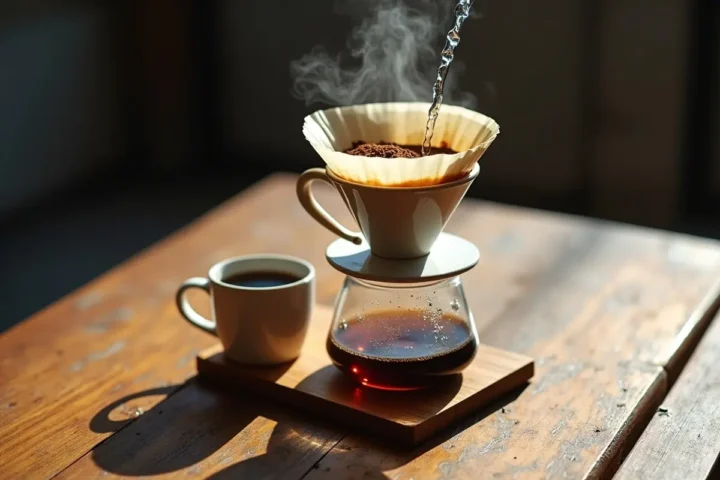
Manual brewers like the Moka Pot, French Press, AeroPress, and Chemex stand as testaments to durability and simplicity. Crafted from materials like stainless steel, glass, or aluminum, they are built to last for years, if not decades, significantly reducing the lifecycle impact compared to disposable alternatives. The absence of electrical components means zero energy consumption during brewing, making them ideal for energy-conscious consumers or off-grid settings.
Furthermore, many manual methods encourage the use of reusable stainless steel filters, eliminating the need for paper filters and moving towards a truly paperless brewing experience. The ritualistic nature of these methods also fosters a deeper appreciation for the coffee, often leading to less waste from discarded, forgotten, or poorly brewed cups.
Minimizing Waste in the Specialty Coffee Ritual
Beyond brewing, addressing the waste generated by coffee consumption, particularly from single-use pods, remains a critical challenge. The statistic that in 2014, enough K-Cups were sold to circle the globe 10.5 times, with almost all ending up in landfills, highlights the scale of the problem. While reusable pods and compostable options are gaining traction, millions of aluminum pods are still consumed daily.
Innovative solutions like the Dualit EcoPress offer a practical way to address this. This ingenious device allows consumers to efficiently recycle aluminum coffee pods at home. By inverting and pressing two capsules at once, it removes the coffee grounds, making the aluminum ready for household recycling. This process is 25% faster than single-pod alternatives, making it convenient for daily use.
The removed coffee grounds, rich in nutrients, can then be easily composted, enriching soil and reducing methane emissions from landfills. This simple yet effective tool empowers individuals to take responsibility for their coffee waste. You can find out more about this convenient recycling solution at Dualit EcoPress. By embracing both low-tech brewing and smart recycling tools, we can significantly minimize our environmental footprint in the specialty coffee ritual.
Regional Sustainability Goals and the Circular Economy
The global drive towards sustainability is increasingly localized, with regions and nations setting ambitious environmental targets. Dubai, for instance, is a prime example, with its visionary Net-Zero by 2050 goal, a commitment to source 75% of its energy from renewable sources by 2050, and the Dubai 2040 Urban Master Plan which aims to increase green spaces nine-fold. The UAE Green Agenda 2030 further underscores the nation’s dedication to sustainable development and circular economy initiatives.
These regional goals create a powerful incentive for businesses and consumers to adopt sustainable practices, including the choice of coffee equipment. A lifecycle assessment of coffee machines, from manufacturing to disposal, reveals their overall carbon footprint. By choosing equipment with features like energy recovery systems, made from recyclable materials, or powered by renewable energy, we contribute directly to these broader environmental objectives.
For example, manufacturers like La Marzocco are not only designing energy-efficient machines but also demonstrating corporate responsibility by powering their factories with renewable energy. Their facility’s photovoltaic panels produce 100% of its electrical needs, generating up to 233 kW. This commitment extends to their operations, including the use of electric vehicles for local errands, charged by their own solar energy.
This integration of renewable energy sources and electric transportation within the manufacturing process aligns perfectly with Dubai’s clean energy strategies and the broader circular economy model, where resources are kept in use for as long as possible, extracting the maximum value from them whilst in use, then recovering and regenerating products and materials at the end of each service life. Choosing equipment from such manufacturers helps support these overarching regional and global sustainability visions.
Frequently Asked Questions about Sustainable Coffee Equipment
As consumers and businesses increasingly prioritize environmental responsibility, common questions arise regarding the practicalities and benefits of sustainable coffee equipment. Here, we address some of the most frequently asked queries.
How do electric roasters compare to traditional gas models in terms of energy?
Electric roasters represent a significant leap forward in energy efficiency compared to traditional gas models. For example, the DirectRoaster utilizes only 0.3 kWh/kg of coffee roasted, which is a remarkable 71% less energy than the typical 1.03 kWh/kg consumed by gas roasters. This substantial reduction is achieved through advanced heating elements and innovative Energy Recovery Systems (ERS). ERS technology, specifically, captures heat from the exhaust gases and uses it to preheat incoming fresh air, leading to approximately 24% energy savings and even shortening roast cycles by up to 10%.
Beyond energy consumption, electric roasters offer a cleaner operation with zero on-site combustion, significantly lowering their carbon footprint and eliminating the need for complex gas line installations. For those interested in the technical details and benefits, exploring DirectRoaster provides comprehensive insights into this modern roasting approach.
What are the financial benefits of switching to in-house roasting?
Switching to in-house roasting, particularly with efficient electric roasters, offers compelling financial advantages for businesses. The primary benefit comes from the ability to purchase green coffee beans at a significantly lower cost than roasted wholesale beans. For instance, while wholesale roasted coffee might cost $12.00/lb, green coffee can be acquired for around $6.98/lb. This difference translates into substantial savings.
A business roasting just 50 lbs of coffee per week could see annual savings of approximately $13,052. On average, businesses using systems like Bellwether’s report over $26,000 in annual savings, often recovering their initial investment within 8 to 10 months. These savings are further enhanced by increased retail margins when selling self-roasted coffee, alongside the marketing benefit of offering fresher, unique blends to customers. Many manufacturers provide ROI calculators to help businesses assess their potential savings.
How can I ensure the long-term sustainability of my coffee equipment?
Ensuring the long-term sustainability of your coffee equipment involves diligent maintenance and responsible end-of-life practices. Regular maintenance is key: always use filtered water to prevent mineral buildup, which can damage internal components and reduce efficiency. Clean your machine regularly with natural, eco-friendly solutions like white vinegar or citric acid, avoiding harsh chemicals. For espresso machines, adhere to daily cleaning checklists, including back-flushing and wiping down steam wands, and perform monthly deep cleans.
When issues arise, prioritize repair over replacement. Many eco-friendly machines are designed with modular parts that can be easily serviced or replaced, extending their lifespan. Inquire about manufacturer repair services or authorized technicians. Finally, at the very end of its life, ensure proper disposal. Look for manufacturer take-back programs or local e-waste recycling facilities to prevent components from ending up in landfills. These practices not only prolong the life of your equipment but also minimize its environmental impact throughout its entire lifecycle.
Conclusion
As we look ahead to April 2026 and beyond, the landscape of specialty coffee is undeniably shifting towards a more sustainable and ethically conscious future. Our exploration of sustainable coffee equipment reveals a vibrant ecosystem of innovation, where every component, from the energy-efficient espresso machine to the low-impact roaster and the simple manual brewer, plays a vital role in environmental stewardship.
We’ve seen how advancements in technology are reducing energy consumption and waste, offering solutions to long-standing industry challenges like single-use pods. Simultaneously, the enduring appeal of low-tech brewing methods reminds us that simplicity and mindfulness can be powerful tools in our quest for sustainability. Moreover, the alignment of these equipment innovations with broader regional and global goals, such as Dubai’s Net-Zero by 2050, underscores the collective impact we can achieve.
Choosing sustainable coffee equipment is more than just an environmental statement; it’s an investment in better taste, long-term cost savings, and a commitment to a more responsible and flavorful coffee experience for generations to come. By embracing these ethical innovations and making conscious choices, we can all contribute to a sustainable future, one delicious cup at a time.