
Why Transport Operations Cost More Than Expected
It’s a painful experience every fleet manager faces. Budget season rolls around and numbers look great. Fuel expenditures align with current pricing, maintenance similar to scheduled in-shop appearances, insurance quotes are quoted on paper, wages fit the industry average.
It’s all by the book. Fast forward to operational initiation and within months everything is running 15-20% over those budgeted figures. No one’s stealing the money; vehicles are working; jobs are being accomplished. The only thing that happens is that money vanishes at a faster rate than anticipated.
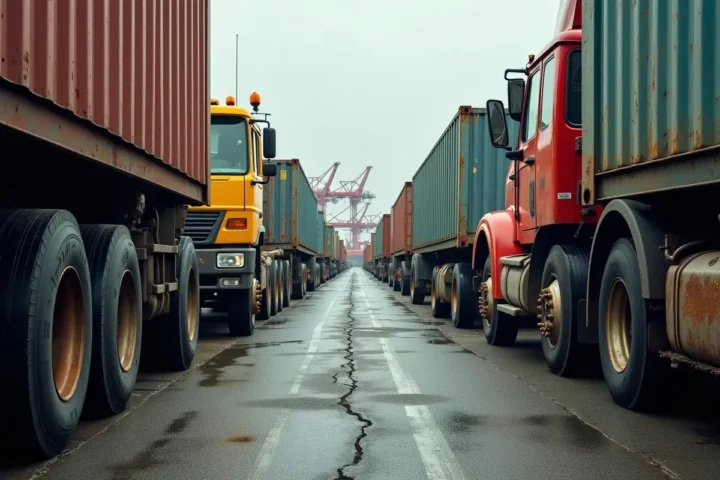
It’s not just with rookie operators or poorly managed organizations. It happens across the board, from local operations with one or two vehicles to multinational efforts with hundreds of trucks, vans and other cars. The problem is not that people can’t project expenditures. The problem is that work related to transport operations generates expenditure sources absent from budget spreadsheets, and no matter how efficient or well tracked things are, they add up.
When Operations Run Efficiently But Not As Much As They Could
Budgets are constructed based on efficiencies that sound good in theory but fail to play out in practice. Vehicles will be full running loads; routes will be efficient; drivers will be productive. There’s nothing overly optimistic about this statement. It’s the basic assumption of efficiency occurring under reasonable conditions.
Except reasonable conditions are what occur all too rarely.
Routes budgeted for 200 miles actually run at 230 due to road construction, misaddressed customers, and the fact that the optimal route planned on paper meets obstacles down the line. Week after week, every truck accumulates a few extra miles no one accounted for in the budget. It’s not drastic (10-15%) but it’s consistent. And it’s costly.
Loading efficiencies face similar problems. A budgeted expectation of 85% loading capacity is attainable and accurate. Daily operations only yield 70% since load from one customer rarely meets the output capabilities of another vehicle.
Loading at one given time prevents further loading at another, and real life balks at optimization. This gap shows up directly in cost per delivery in a fashion unaccounted for by the budget.
Driver productivity also fails to meet expectations. Calculations show how many drops can be made per driver based on miles and time at each destination.
What these calculations fail to show is traffic that’s worse than anticipated, drop-offs that are somehow farther from the curb than projected on Google Maps and customers who aren’t prepared to receive what’s getting delivered. Basically, drivers accomplish 80% of what the theoretical productivity suggests, meaning operators will need more drivers or more available time to meet necessary goals.
Equipment That Doesn’t Get Better Over Time
Expectations for new vehicles match specifications exactly. It’s what’s detailed in the budget: manufacturer fuel consumption standards, warranty-based expected reliability, maintenance costs based on scheduled service. All of this is good data for new equipment.
Yet new vehicles age at an alarming rate. Year 1 puts performance at expected levels. Year 2 shows slight deviation from expectations with reduced fuel efficiency, which then increases in Year 3 with breakdown occurrences. Fleet managers assume vehicles used in Year 1 operate just as well in Year 3 yet there’s consistent and incremental erosion of reliability and performance over time.
Fuel consumption increases as mileage collects over time. Engines get less fuel efficient as seals wear down along with aerodynamics while bearings wear down imperceptibly enough for repairs not to make sense but cumulatively enough to increase the consumption by 8-10% more than anticipated when the vehicle was new. All of a sudden that convenient fuel budget is over each month.
Reliability deteriorates as well. A new vehicle that’s well maintained rarely breaks down; a vehicle at 200,000 miles rarely gets operated as consistently without repair. Parts begin to wear out and things break down. It’s not dramatic, just more emergency repairs than budgeted for. When emergency repairs are double the cost of standard repairs due to after-hours towing instead of in-shop adjustments (which costs double anyway), it overwhelms what was budgeted.
The Weight Factor No One Wants to Think About
Most operations weigh vehicle loads; staff rely on estimates. It’s a fast move and trained professionals get pretty good at eyeballing appropriate loads. Good enough for government work, right?
Except it’s not good enough, and it costs money.
Preventative loading to avoid excess weight means vehicles consistently run under capacity. An operator who fears a fine might regularly load a 20-tonne vehicle to only 17 tonnes so that they’re safe. That’s 15% capacity wasted on every load. The budget assumed full loading capacity, but safe practices provide something entirely different.
Sometimes they guess too high. A special load is received and it’s overweight. A fine is levied at £800, a pure cost that isn’t accounted for via the operation because they assume their systems prevent incidents like this from occurring, especially with vehicles who work to specifications every time. Just one fine per vehicle per year adds up across a fleet.
Fuel consumption also varies with weight. A vehicle that’s too heavy has much higher fuel requirements than one that’s lighter. Loaded vehicles running heavier than anticipated burn fuel at levels without accounting for actual weights, throwing off all the averages.
Getting it right means weighing loads instead of estimating them. Operations with vehicle weighing systems get loaded within acceptable parameters while maximizing what each vehicle can deliver, thereby correcting any gaps between budget expectation and operational reality.
Customers Making Life Complicated
Simple budgets assume straightforward deliveries. A vehicle arrives with X amount of product, drops it off and goes back on its merry way. In reality, customer engagement serves as a factor that adds costs where budgets didn’t calculate them.
Delivery windows keep becoming stricter. Customers want deliveries during specific times, not just on a Tuesday after lunch. Even if the delivery window is accommodated and a vehicle arrives either too early (waiting) or too late (using too much fuel), budgets constructed under efficient delivery timing fail to adhere to access windows.
Sites are harder to deliver to than they appear. Urban locations without cargo drop-off locations, facilities requiring extensive security checks, places where it takes longer to unload than anticipated. These situations mean that more fuel and more time is dedicated to these operations beyond simple end-to-end calculations.
Failed deliveries destroy budgets. A customer wasn’t ready; they requested the wrong product; an access point was hidden from plain view. Whatever the case may be, a failed delivery incurs all costs associated with the trip with none of the revenue plus additional costs associated with coming back again. Generally, every customer expects successful first-time operation but exceptions are always available which cause significant costs.
Regulatory Work That Never Ends
Compliance costs show up as discrete items for the budget: annual testing vehicles, driver CPC training, operator license fees. What fails to show up is the work compliance requires over the months.
Someone needs to do all this paperwork. Driver hours recorded, inspections done on vehicles, maintenance logs kept, incident reports updated. It costs money but it’s rarely in the budgeted line item. It becomes unexplained admin work that eats margins.
Regulations change often enough to be frustrating. Even better when they’re assessed per quarter. But no one knows which changes come when so inevitably small regulatory changes once a year per part add up, all without being in the budget because they can’t account for change pre-emptively.
Roadside inspections eat time even if nothing is wrong. The vehicle gets flagged for an inspection; it’s delayed by an hour; everything gets checked out as is and it sits there for an hour earning no revenue for compliance-based work during operational hours.
Where Small Problems Become Big Ones
Individual variances seem manageable in isolation. A little extra fuel here; some maintenance higher there; productivity below by 6%. Separately none kill profitability, but they don’t stay isolated.
They compound. Higher fuel costs mean more stops which lowers productive time; lower productivity means pressure to provide overtime which frustrates tired drivers trying to maintain fuel use; overtime increases driver fatigue which decreases efficiency which piles on compounded pressures.
This is why operations seem profitable on paper but flounder in reality. The budget worked fine so long as everything performed at theoretical expectations, but nothing performs exactly as theoretical calculations suggest. All those small variances add up exponentially to substantial pounds.
A Real Understanding of the Problem
Better transportation budgeting starts with the acknowledgment that operations fail to perform exceptionally well based on theoretical calculations no matter who runs them or how well they’re managed. It isn’t about bad management. It’s about the gap between modeling and reality.
Vehicles will use more fuel than specs suggest; drivers will be less efficient than calculations suggest; equipment will be more costly than service schedules imply; customers complicate things beyond what simple delivery models suggest. This is normal. Budgeting for what’s realistic instead of what’s optimal generates projections where they’re set up for success.
The alternative? Everyone sitting in quarterly reviews trying to look at variance reports wondering what happened to all the money. It went to transportation operations as planned, but just not how it was budgeted for on paper since it always costs more than it shows on spreadsheets.