
How Handheld Sonar Devices Enhance Underwater Exploration
Seeing is believing, and in water, it can be hard to see anything.
From the day we were born, we have been fascinated by what lies beneath the surface. The ocean covers over 70% of the Earth’s surface, yet remains one of the least understood environments. According to NOAA data, only about 26% of the seafloor has been explored with modern technology.
Hold up…
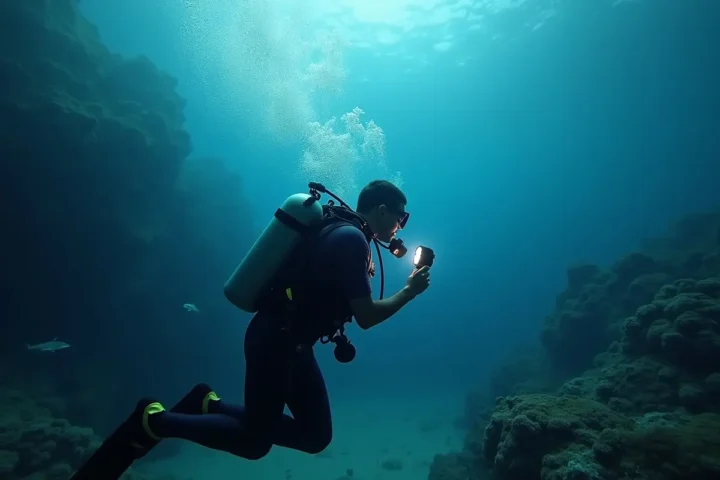
Handheld sonar is disrupting the game. Portable, easy to use sonar systems are giving divers, rescue teams, and explorers real-time visibility underwater.
Here’s what you’ll learn:
- What Is Handheld Sonar Technology?
- Why Can’t We Use Our Traditional Methods?
- Top 5 Applications For Handheld Sonar Devices
- How These Devices Will Change Search & Recovery
- How To Pick The Right Device For The Job
What Is Handheld Sonar Technology?
Handheld sonar is a portable detection system that uses sound waves to “see” under the surface.
Sound waves are projected into the water and bounce off underwater objects. The returning sound waves are used to calculate distance and generate an image.
This is how dolphins and whales have detected objects for millions of years.
The innovation is bringing this technology to individual users. Unlike massive and expensive ship-mounted systems that require a team to run, handheld sonar systems are compact, affordable, and can be operated by a single person.
The key benefits include:
- Portable: Can be used underwater by divers
- Real-time imaging: Provides instant feedback of the underwater environment
- Low visibility: Detects targets in low or zero visibility conditions
- Accessibility: Does not require extensive training to use
Amazing, huh?
Why Can’t We Use Our Traditional Methods?
Traditional methods have a lot of limitations. This is especially true underwater.
Conventional search and rescue or scientific survey methods usually rely on visual observation. But often visibility is zero due to sediment, algae, or debris suspended in the water column.
When there are an estimated 300,000 drowning deaths every year worldwide, we need a faster and more reliable method of searching.
What are our traditional methods?
Cameras don’t work. GPS signals cannot penetrate the water. Larger sonar systems are costly and time consuming. They need boats and crews to operate.
Portable sonar fills this important gap in real-time underwater detection. Handheld sonar systems use sound waves instead of light to “see” under the surface. Sound waves are unaffected by the water clarity, and divers can detect objects over 100 meters away, even in the dark.
It can be the difference between finding a target in days versus hours. That’s important for the families waiting for answers.
Top 5 Applications For Handheld Sonar Devices
Handheld sonar is useful in many industries and for many purposes. The following are the most impactful use cases…
Search and Rescue Operations
This one is an easy pick for top applications.
When a person is reported missing in water, you have a critical window for rescue. Unfortunately, current search methods are cumbersome. Dive teams must be assembled, boats launched, and areas searched methodically grid-by-grid. This process can take days or weeks.
Handheld sonar devices can help rescue teams to:
- Scan large underwater areas faster
- Detect submerged objects in zero visibility conditions
- Locate targets without deploying more divers
- Dramatically reduce total search time
Marine Research and Exploration
Scientists are discovering valuable applications for portable sonar devices.
Marine researchers can use handheld sonar to map out seafloor features, track the movement of marine life, and identify previously undiscovered underwater geological formations. The technology can also help document underwater habitats with minimal environmental disturbance.
Recreational Diving
Many advanced and technical divers use handheld sonar for safety and exploration.
Navigating through underwater caves, or exploring shipwrecks and ruins, all present potential dangers. Handheld sonar gives divers real-time awareness of their surroundings and allows them to identify hazards before they encounter them.
Infrastructure Inspection
Underwater infrastructure must be inspected and maintained.
Operators of dams, bridge engineers, and port authorities all need to examine the submerged parts of their structures for erosion, structural integrity, and other factors. Handheld sonar can help identify problems before they become major incidents.
How These Devices Will Change Search & Recovery
This is the part where I break down the real impact of this technology…
The sonar system market is about $2.55 billion globally, and it continues to expand as more industries adopt the technology. This doesn’t tell the whole story. The biggest change is not market size. It’s the accessibility.
What’s different?
Sonar systems were historically tied to large vessels, ships, or boats. They require trained specialists and hundreds of thousands of dollars worth of equipment. A search operation using these traditional systems would cost tens of thousands of dollars and weeks of work.
Handheld sonar systems completely change this dynamic. Rescue divers can carry one as part of their routine equipment. Training requirements are measured in hours, not months. Cost of entry is much lower.
Don’t mistake cheaper with low performance…
Handheld sonar systems have advanced signal processing and AI-enhanced imaging that provides professional-grade results. They can differentiate between materials, object shapes, and even render 3D maps of underwater environments in real-time.
How To Pick The Right Device For The Job
There are many handheld sonar devices to choose from. What you need depends on your intended use case. Consider the following factors when deciding…
Detection Range
Devices vary in their detection range. Some are meant for close-range inspection work at 20-30 meters. Others can detect targets up to 120 meters away.
- Close-range inspection: 20-50 meters
- General search and recovery: 50-80 meters
- Extended search and rescue: 80-120 meters
Image Resolution
Resolution will determine image quality. This is important if you need to identify or recognize specific objects.
Depth Rating
The depth rating must align with your intended operations. Recreational diving tends to be within 40 meters depth, but some professional operations will need a 100 meter depth rating or more.
Battery Life
Battery life can make or break long-duration operations. Opt for a unit with at least 4-6 hours of battery runtime.
Integration Capabilities
Some handheld sonar systems have the ability to connect to tablets or smartphones for an enhanced display. Others have built-in recording features.
The Future of Underwater Detection
Manufacturers are making continuous advances in handheld sonar technology.
Artificial intelligence is being integrated into signal processing to improve object recognition and minimize false positives. Transducer designs are being refined to provide increased range and reduced device size. Wireless connectivity is opening the doors for real-time data sharing between multiple users.
Some upcoming innovations to keep an eye out for…
Multi-beam sonar technologies are making the jump from large ship-mounted systems to handheld units. The result will be the ability to create 3D maps of underwater environments.
Improved signal processing, software capabilities, and use of advanced materials mean devices will only get smaller, more powerful, and more affordable.
Closing Thoughts
Handheld sonar is a major step forward in underwater search and recovery.
Technology is giving anyone access to underwater detection and imaging capabilities that were previously only available to organizations with specialized vessels and large budgets. From search and recovery to marine research to recreational diving, there are already uses for the technology in every segment.
Handheld sonar technology:
- Accessible: Available to anyone without specialized vessels or crews
- Effective: Works in conditions where cameras are ineffective
- Affordable: Costs a fraction of traditional sonar systems
- Practical: Small and light enough for individual divers
If you work in or around water, there is no reason not to understand handheld sonar technology. As more innovation is introduced, it will play an increasingly important role in keeping people safe and allowing us to expand our understanding of the underwater world.
The ocean is full of secrets. Handheld sonar technology is helping us to uncover more of them, one dive at a time.