Everyday Habits Kids Learn at School (That Have Nothing to Do with Academics)
Whether we realize it or not, school teaches children much more than academics.
In fact, throughout their entire day at school, kids are constantly developing habits and learning life skills that you’ll never find in any textbook. Lessons like waiting in line, sitting with others at lunchroom tables, and more…
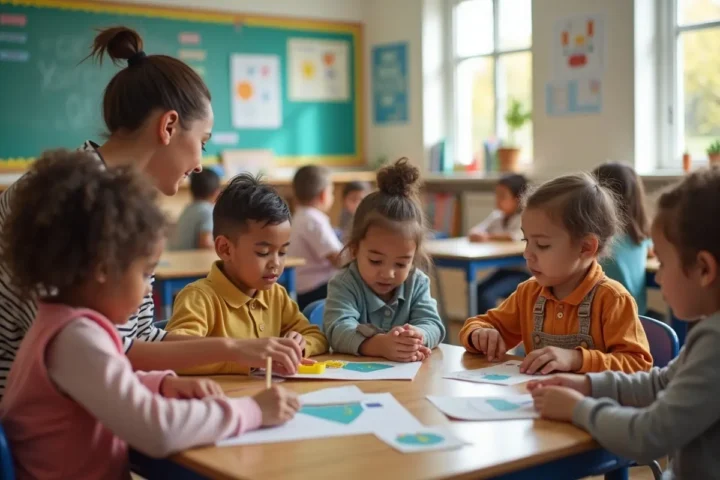
These everyday habits form the building blocks for who they become as humans.
Parents often overlook this. But the habits kids learn in social environments at school are every bit as important as their academic marks.
What you’ll learn in this article:
- Everyday habits are important because…
- 5 non-academic habits kids learn at school every day
- How lunchroom tables teach kids life lessons
- How parents can encourage these habits
Let’s dive in.
Everyday Habits Are Important Because…
Children spend an average of 1,000 hours each year inside the four walls of a school.
That’s a lot of time being around other kids and learning how to function around them.
Plus, studies show just how important these social environments are to a child’s development.
A recent Gallup poll concluded that 45% of parents believe the pandemic affected their children’s ability to develop social skills. The main reason? Children were isolated from their normal school environments.
Makes sense.
You see, schools do more than just teach arithmetic. They also provide students with an outlet to practice their “people skills.”
Whether it’s in the classroom, down the hallway, or at lunch tables in the cafeteria… children learn how to be human at school.
Non-Academic Habits Kids Learn Every Day At School
Social skills are important. But what are some of the everyday habits kids learn at school that have nothing to do with academics?
Patience & Taking Turns
Learning patience is something children learn at school whether they realize it or not.
Whether it’s waiting in line at lunch or raising their hand to speak in class… kids learn that sometimes they just have to wait their turn.
This is a critical skill that your child will use for the rest of their life.
Sharing Space
OK, this might sound crazy.
But giving your child a buddy to sit with at lunch will teach them more than you know.
At school, children learn to share their space with other students from all kinds of backgrounds and ethnicities. They share classrooms, hallways, and cafeteria tables with students they normally wouldn’t associate with outside of school.
Learn to get along with others.
Responsibility & Independence
At home, your kids know you’re going to make sure they have everything they need.
School is different.
No one is going to remind your child to pack their homework or library books. School teaches children to take responsibility for their actions. They learn to pack their own lunch. Bring needed materials. And learn consequences if they don’t do so.
Children learn independence at school.
Conflict Resolution
Your kid is going to fight with others.
It happens to every kid.
But what they learn to do with that conflict at school is important.
School allows children to work through those conflicts and build resolution skills. They learn to apologize, how to listen to other peoples’ perspective, and that being “right” isn’t always the most important thing in an argument.
Kids learn how to be problem solvers.
Routine & Time Management
Your child’s school day is run by routine. Lunchtime is at this time. Reading time is at this time. Play time is at this time.
Children learn this every single day.
They know when it’s time to be focused and when it’s time to relax.
School teaches children how to manage their time.
How Lunchroom Tables Teach Kids Life Lessons
It’s worth spending a few minutes on lunchroom tables and why they matter.
Researchers from a recent study published in Child Psychiatry & Human Development discovered that peer acceptance in the school lunchroom setting was a significant predictor of depression symptoms over the course of a school year.
In other words…
Kids who felt accepted by their peers around lunchroom tables experienced fewer depression symptoms a year later.
This is huge.
The lunchroom table is where kids learn:
- How to start conversations with new people
- Include others who may be sitting by themselves
- How to share and take turns
- Reading body language and social cues
When children sit down at lunchroom tables together, they are engaging in one of the best forms of learning.
They’re learning life skills.
Social skills.
Skills that classrooms simply can’t replicate because teachers are in charge of the conversations.
The lunchroom table is different. It’s a place where children learn to interact with each other with zero adult involvement.
This is why it’s so important.
How Parents Can Encourage These Habits
Parents should encourage every non-academic habit they can.
The best part about many of these habits is they translate perfectly from school to home.
Ask questions about their day that don’t involve school work or GPA. Create meals at home that force your kids to share (lookin’ at you, pizza) and praise them when they display these awesome habits.
Parents can do plenty to encourage these habits at home. But nothing is more important than paying attention to the little things. Show your kids that social skills and being kind to others is just as important as making the varsity team or getting straight A’s.
Encourage these habits at home by:
- Leading by example
- Asking about their day
- Creating an environment that forces them to share
Wrapping Up
School does far more than teach your child academics.
Everyday habits are formed by the time your child walks through the school door and doesn’t stop until they leave at the end of the day.
Hopefully this article opened your eyes to just how important these “non-academic” skills are to your child’s development.
And as a fun little bonus. Here’s a list of non-academic skills kids learn at school that weren’t mentioned above.
- Respect
- Good hygiene habits
- Adaptability
- Problem solving
- Decision making skills
- Teamwork
- Compassion
As you can see, the list goes on and on.