The Hidden Costs of Neglecting Your HVAC System
In reality, your heating and cooling system probably comes to mind a couple of times a year, when it gets hot enough or cold enough that ignoring it is impossible. You adjust the thermostat, the machine kicks on, and that’s the end of it. But what happens in between, and especially when it gets neglected?
It operates under subpar conditions and slowly compounds problems that end up costing bank accounts hundreds, if not thousands, of dollars every year thanks to avoidance. And it doesn’t even make sense why.
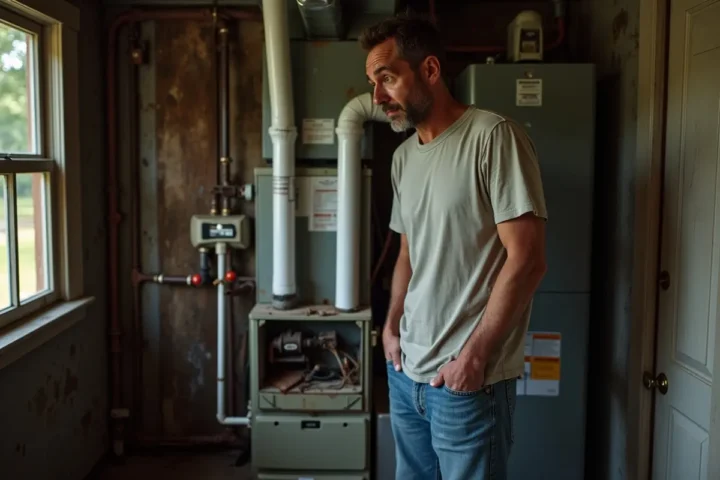
No component fails catastrophically right away for families to connect the dots. There’s no $600 repair five months later that makes someone understand the error of their ways. Instead, it’s gradual. Higher utility costs. Diminished lifespans of equipment. Costs as small as $150 that turn into $1000 repairs because multiple issues cascade from what was once considered a “small problem.”
The Energy Bill Spike No One Realizes
When HVAC systems get neglected, they don’t stop working. Instead, they work harder to provide the same amount of relief. They need to.
Dirt on coils and filters. Obstructions in ductwork forcing them to run longer cycles to achieve the same cubic feet per minute as before. They need to compensate for efficiency loss.
Yet when it builds from 15% to 25%, no one connects poor heating and cooling to spiraling energy costs.
Instead, with so many rate hikes, it’s a perfect scapegoat for families who see their $150 heating and cooling bill become $190 or $210 over several seasons. They don’t realize the kicker is their system is struggling to accommodate air transfer due to years of material and debris build-up.
Over time, this becomes thousands of dollars wasted over five years, money that could have been used on family vacations or saved for retirement for unnecessary costs, when HVAC systems are burning through electricity or gas attempting to pump air while limited openings and decreased efficiency foretell a sad story of demise.
The Equipment Death Spiral
The average system costs anywhere from $5,000-12,000 to replace. Manufacturers build them to last 15-20 years, although that only occurs when systems are regularly maintained. If a family skips seven years’ worth of investments per year from $100-$250 on parts and labor, that’s a difference of $600-$1,500 that could have lengthened the life of an HVAC system.
Instead, systems become overstressed. Motors burn out from use. Coils freeze. Blowers spin faster than expected while also less efficiently. Without proper maintenance, those 15-20 years become 10-12 years.
Additionally, when premature death occurs, this doubles lifetime use. Families are forced to pay for systems twice instead of once over the life of a home, an extra $5,000-12,000 that should have never been incurred due to failure to pay attention.
The Ductwork Dilemma
What’s hidden in ductwork becomes expensive down the line in ways people don’t expect. Ductwork is the respiratory system of heating and cooling.
When left untouched, inches, even feet, of dust accumulate along with pet dander and moisture. Sometimes it builds up enough that mold starts growing inside ductwork because, yes, that’s disgusting.
This reduced system efficiency doesn’t just mean dirty air over time, leading to health problems; it means system efficiency becomes compromised, making components strain against debris instead of finally pushing conditioned air effectively.
Sometimes blockages are so great that systems freeze up or overheat due to restricted airflow from their intended directions.
Professional cleaning makes a noticeable difference in system performance and air quality, which is why my recommendation goes to Pure Air Ducts for homeowners dealing with efficiency issues or indoor air concerns. Getting ductwork properly cleaned removes the accumulated debris that’s been building resistance and harboring allergens.
The problem with ductwork is that it ends up with high energy consumption minus any component wear and tear because it’s not functioning as it’s supposed to, making resistance harder each time as the system works harder for no reason, and poor air quality, which ultimately means more medical expenses from those rendered sick due to incompetent air transfer.
The Domino Effect
Preventive maintenance produces small checks along the way. A belt might be fraying. A capacitor might be showing signs of weakness. As one wears down, another component may stop working.
But failure makes everything else more expensive once the dam breaks.
What could have been a $150 repair becomes an $800 repair because wear and tear gets compounded along the way.
Now a capacitor failed after the belt broke; now we need to pay for labor twice, even if technically avoidable, because family involvement wasn’t there from the beginning.
Moreover, many families shell out hard-earned money for multiple visits because a first technician only sees one element broken, but due to ignored maintenance check opportunities, secondary damage is revealed only after everything comes apart.
Get ready for an emergency visit? That’s an additional visit charge. Get someone over on a Sunday night at 11:00 because July hit and the AC isn’t functioning? You’re going to pay a premium for after-hours service.
Let’s not even get started on airing dirty laundry from exploded capacitors trying to salvage some semblance of cool air in July, a one-time use diagnostic no one cares for unless it comes at a cost.
Poor Indoor Air Quality Fees
Poor indoor air quality doesn’t cost anything until someone ends up with asthma or allergies or another capacity where they need to visit a doctor more than once per season for cleanings or tests.
HVAC systems cycle dust and dander through ductwork, which kills efficiency, and dirt inside ductwork over time drives power-hitters who are supposed to help regulate temperature crazy because it’s not going as planned.
Air quality suffers because household particles aren’t eliminated; they’re recirculated, making every sneeze an expense, but it’s too hard to calculate personal lost days based on lackluster air.
Air quality reports jump through the roof in logical extremes as systems fail to catch cubic feet that can adequately circulate through tight spaces clogged with more debris than all systems can handle, and it’s sad when the people inside are paying for annual solutions – instead of letting appropriate systems pay dividends.
What Prevention Costs Instead
As mentioned before; The costs associated with preventive maintenance trump avoidance because they accumulate slowly over time into explosive levels.
An average HVAC visit costs about $100-$200 every year (to change filters and coils and check refrigerants and connections) plus every three to five years assessing duct cleaning ($300-$500); any homeowner can deal with exorbitant costs sooner than later for repairs after avoidance gives them no other option.
At least they don’t come retrospectively adding up over time; it’s not even close, it’s money in the bank any HVAC company would tell you with certainty, and it’s probably one of the best industries in homeownership where payoffs from one-time preventative investments reveal their secrets in due time over compounded losses people would rather avoid.
The Bottom Line
There are hidden costs that prevent systems from working well that don’t manifest themselves glaringly over time.
They occur via utility bills slowly creeping higher but consistently without families knowing where they’re coming from. They occur in diminished lifetimes of equipment as they’ve worked too damn hard, not functionally but sadly to pay attention from the beginning – and they occur through repair cascades that could have been prevented had someone listened to professionals or heeded their own warnings along the way.
Ignore your HVAC system, but note that thousands in hidden expenses occur annually due to failure to maintain what’s already working, even if it’s not sounding like it’s working well at all.