
Beyond the Puzzle: The Art of Crafting Immersive Escape Room Adventures
Weekends often bring the familiar cry of “I’m bored!” from teens. Finding fun and engaging activities for this age group can be a challenge. They crave experiences—like visiting an escape room—that are more than just passive entertainment. They want to be part of the story.
This is where immersive escape room shine. We believe they offer a unique solution. They transform players from observers into active participants. Our goal is to create worlds where everyone can truly suspend their disbelief. We aim to pull players into a compelling story.
Crafting these adventures is a proper art form. It combines storytelling, clever design, and smart psychology. We will explore the core components that make an escape room truly immersive. We will explore how we create worlds and engage all the senses. We will also discuss how puzzles advance the story.
We will share our insights on how to create unforgettable experiences. These experiences make players the heroes of their own adventure. We focus on every detail, from the grand narrative to the smallest prop. This takes careful planning and a deep understanding of what makes a story come alive.
At the heart of every truly memorable escape room lies a compelling narrative. It’s not enough to present a series of puzzles; players need a reason to solve them. We begin our design process by carefully crafting a world, complete with its own history, characters, and stakes. This world-building establishes the context for the adventure, drawing players into a story that feels both authentic and urgent.
The player’s role within this narrative is paramount. Are they detectives on a crucial case, explorers uncovering ancient secrets, or perhaps agents on a covert mission? Defining their identity within the story immediately lifts their engagement. This carefully constructed plot progression guides them through the experience, ensuring that each solved puzzle feels like a meaningful step forward in their journey.
Thematic consistency is our Guiding Principle, ensuring that every element, from the décor to the dialogue, reinforces the overarching narrative. We aim to create emotional stakes, giving players a compelling “why” that fuels their determination and makes their eventual success (or failure) resonate deeply.
A weathered diary or a cryptic scroll can instantly deepen the lore of an escape room.
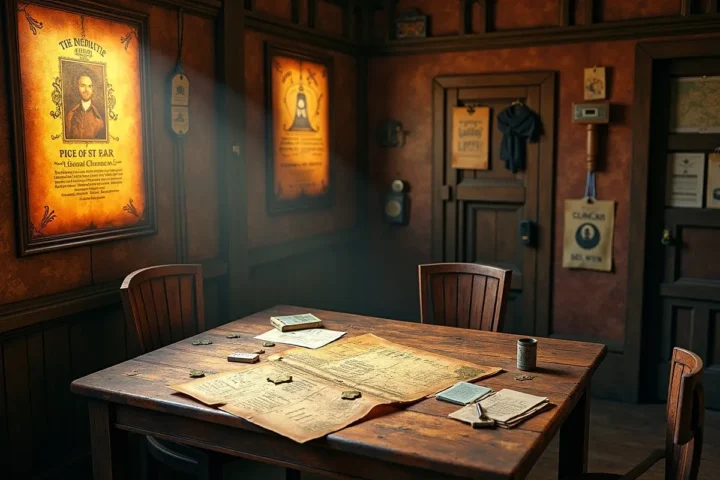
The Power of a Central Theme
The central theme is the beating heart of an immersive experience. It’s the genre selection that dictates the entire tone and atmosphere of the room. Whether it’s a chilling horror scenario, a whimsical fantasy quest, or a high-stakes espionage thriller, the theme sets the tone for player expectations from the moment they step through the door. A strong theme unifies all design elements, ensuring that the visual, auditory, and tactile aspects of the room work in harmony to transport players to another reality.
It’s about more than just decoration; it’s about creating a cohesive, believable world that players can lose themselves in. For instance, a pirate-themed room might feature weathered wood, nautical instruments, and the distant sound of crashing waves, all of which contribute to a singular, immersive experience. Exploring diverse escape room themes to try in Orange County can illustrate just how varied and captivating these narratives can be.
From Plot Points to Player Actions
The true magic happens when plot points seamlessly translate into player actions. We design meaningful objectives that are directly tied to the narrative. Players aren’t just solving puzzles; they’re disarming a bomb to save the city, deciphering an ancient map to find hidden treasure, or piecing together clues to expose a villain. This direct link ensures that story progression through puzzles feels organic and impactful. Every “aha!” moment isn’t just about cracking a code; it’s about advancing the plot.
Character motivation, both for the players and the fictional characters within the story, adds depth and complexity. Why are they here? What drives them? Understanding this creates a sense of urgency, making players feel personally invested in the outcome. A satisfying conclusion, whether it’s a triumphant escape or a dramatic revelation, provides closure and reinforces the feeling that they have genuinely been the protagonists of their own adventure. This careful orchestration transforms a game into a surprising, interactive story.
The Core Principles of Immersive Entertainment Design
Beyond the narrative, the physical environment plays a critical role in immersion. Our approach to set decoration, lighting design, soundscapes, and prop realism is akin to that of a film production. We strive to create spaces that are not merely functional but transportive. Every detail, from the distressed paint on a wall to the specific creak of a door, is considered to improve the thematic experience. Player agency is key; the environment must respond to their actions, making them feel like active participants rather than passive observers.
A carefully crafted set, complete with atmospheric lighting and realistic props, is essential for a truly immersive experience.
Sensory Engagement: Building a Believable World
To truly build a believable world, we engage all the senses. Visuals are carefully crafted, utilizing detailed set pieces, period-appropriate décor, and artistic finishes that draw the eye. Lighting design is a powerful tool, shifting from bright and open to dim and mysterious, guiding attention and enhancing mood. Audio cues, from subtle background hums to dramatic musical stings, create dynamic soundscapes that deepen the atmosphere. Music is carefully chosen to underscore tension, excitement, or wonder.
Tactile elements are integrated through varied textures—such as rough stone, smooth metal, and soft fabrics—encouraging players to interact physically with their surroundings. Even ambient smells, such as those of old books in a library or damp earth in a cave, can subtly enhance the illusion. Special effects, such as fog, wind, or controlled temperature changes, can add layers of realism, making the imaginary world feel tangibly present. These elements combine to create a rich, multi-sensory experience that fully envelops the players.
The Role of Puzzles in Immersive Entertainment Design
Puzzles are the engine of an escape room, but in an immersive experience, they are far more than just brain teasers. Their primary function is thematic integration. Each puzzle must logically fit within the narrative, and the physical environment—a puzzle involving ancient runes would be more fitting in a tomb than in a modern-day office. Logical flow ensures that players can progress naturally, with solutions leading to subsequent clues coherently.
We prioritize puzzle variety to keep the experience fresh and engaging, incorporating a range of challenges, from observational tasks and logic problems to physical manipulation and communication-based tasks. Collaborative challenges are significant, as they encourage teens to work together, fostering communication and teamwork – skills that are highly valued and developed through activities like team-building exercises for teens.
The goal is to avoid arbitrary tasks that feel disconnected from the story. Instead, we aim to create those satisfying “Aha!” moments where the solution not only opens up the next step but also reveals a piece of the story, deepening the overall immersion.
Integrating Technology into Immersive Entertainment Design
Modern escape rooms leverage technology to push the boundaries of immersion. Animatronics can bring characters to life, adding unexpected scares or delightful surprises. Interactive screens offer dynamic clues, puzzles, and narrative elements that respond to player input. Augmented Reality (AR) can overlay digital information onto the real world, revealing hidden messages or bringing fictional elements into the physical space.
Automated triggers ensure seamless transitions and reactions within the environment, making the world feel alive and responsive. Hidden mechanisms, activated by player actions, can reveal secret passages or open up elaborate props, adding layers of wonder and intrigue. The key is balancing advanced tech with tangible, hands-on puzzles. Technology should improve the story and interaction, not overshadow the core puzzle-solving experience.
The Player’s Journey: From Participant to Protagonist
The journey from a casual participant to a story’s protagonist is carefully orchestrated. It begins with the onboarding process, where players receive a straightforward narrative setup and understand their mission. This initial briefing is crucial for setting the tone and expectations. The Game Master’s role extends far beyond simply monitoring progress; they are part of the narrative, guiding players with thematic hints and maintaining the pacing and flow of the game. Our hint systems are designed to be integrated into the story, making them feel like natural interventions rather than external assistance.
The grand finale is the culmination of their efforts, a moment of triumph or dramatic resolution. Throughout this entire player arc, from the first step into the room to the final celebratory photo, every element is considered to ensure maximum immersion and enjoyment. Experts in narrative-rich entertainment design focus on the entire player arc, understanding that a truly remarkable experience is about the emotional and intellectual journey, not just the puzzles that comprise it.
Guiding the Experience
A skilled Game Master is the unseen conductor of the immersive experience. They often act as in-character guides, subtly nudging players forward while maintaining the narrative’s illusion of reality. Thematic hints are delivered in ways that improve the narrative, perhaps through a cryptic message from a character or a clue found within the environment, rather than a disembodied voice.
Dynamic difficulty allows the Game Master to adjust the challenge on the fly, ensuring that experienced players remain engaged while newcomers don’t become overly frustrated. This careful guidance maintains momentum, preventing stalls and keeping the energy high, ultimately ensuring everyone has a rewarding experience. This is especially important for teens, who benefit from engaging activities that challenge them without being overwhelming.
Crafting a Memorable Climax
The climax of an escape room is its defining moment. It’s where all the built-up tension converges, leading to a clear final objective. This objective should be grand and impactful, providing a powerful sense of purpose. Whether it’s launching a rocket, disarming a device, or confronting a villain, the final puzzle should feel like the ultimate test. A rewarding sense of accomplishment washes over players as they succeed, solidifying their role as heroes.
After the game, a post-game debriefing allows players to relive their adventure, discuss their favorite moments, and understand any puzzles they missed. This also provides an opportunity for valuable feedback. Finally, photo opportunities, often with thematic props or within a specially designed set, provide a tangible memory of their heroic achievement, allowing them to share their story long after they’ve left the room.
The Future of Immersive Adventures
The landscape of immersive adventures is constantly evolving, promising even more captivating experiences. We anticipate a greater integration of live actors who can interact dynamically with players, adapting the narrative based on their choices and decisions. Branching narratives will enable personalized experiences, where player decisions genuinely alter the storyline and outcome, thereby encouraging replayability.
Hyper-reality, which blends physical environments with advanced digital overlays, will create seamless transitions between the real and virtual worlds. We also foresee a growing crossover with other interactive forms, such as Live Action Role-Playing (LARP) and Virtual Reality (VR), creating hybrid experiences that push the boundaries of what’s possible. These advancements mean that activities like escape rooms will continue to offer cutting-edge entertainment.
Imagine interactive digital walls that transform the environment, responding to your every move.
Pushing the Boundaries of Interaction
The future will see players having an even greater impact on the story. Their choices, not just their puzzle-solving skills, will shape the narrative, leading to multiple endings and truly personalized adventures. This will significantly boost replayability, as players return to explore different paths and outcomes. Large-scale group experiences are also on the horizon, allowing larger teams to collaborate on epic adventures that potentially span multiple rooms or even entire venues. We’re also seeing the rise of outdoor immersive games, changing city streets or natural landscapes into vast, interactive playgrounds, offering a fresh take on fun family activities in Orange County.
Lessons from Immersive Design
The principles of immersive design extend far beyond escape rooms. The focus on narrative, sensory engagement, and player agency offers valuable lessons for other media, including video games, theme park attractions, educational programs, and brand experiences. This evolution of entertainment reflects a growing demand for active experiences where audiences are no longer content to observe. People crave participation, connection, and the thrill of being the hero. This shift ensures that interactive, story-driven activities will continue to thrive and innovate, providing endless new opportunities for teens in Orange County and beyond.
Conclusion
Crafting immersive escape room adventures is a delicate blend of artistry and engineering. It requires a deep understanding of storytelling, meticulous set design, clever puzzle integration, and a keen sense of player psychology. The goal is always to make players the heroes of their own narrative, providing them with a compelling “why” and equipping them with the tools to achieve their objectives. From the initial world-building to the final triumphant debriefing, every element is carefully considered to create a seamless, believable, and utterly captivating experience.
As entertainment continues to evolve, the demand for active and engaging experiences will only continue to grow. Escape rooms stand at the forefront of this movement, offering teens and families a unique opportunity to step away from screens and into worlds where they can truly lead the adventure. We are passionate about pushing the boundaries of interactive entertainment, ensuring that every journey we craft is not just a game but an unforgettable story waiting to unfold.