
How Automated Liquid Handling Is Quietly Powering Modern Science
Walk into a modern research lab. You might expect a certain scene. Scientists in white coats are peering into microscopes. They are deep in thought. This still happens, of course. But listen closely. You will hear another sound.
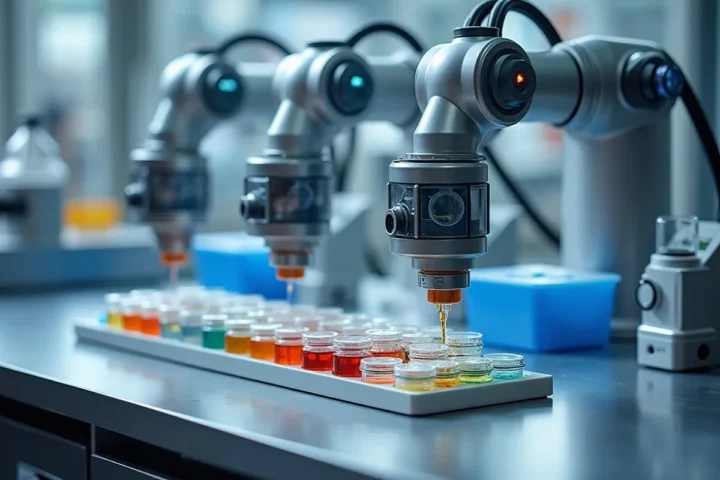
It is a quiet, rhythmic hum. It is the sound of a robotic arm moving. And it transfers tiny droplets of liquid with impossible precision. This workhorse is not glamorous. It rarely makes headlines. Yet, it is absolutely fundamental. It is the silent engine behind today’s biggest scientific leaps.
Freeing Minds From Manual Tasks
Repetition is the enemy of innovation. Imagine pipetting for hours. Your mind goes numb. Your hand grows tired. This was the daily reality for many researchers. No more. Technology has stepped in to handle the monotony.
This is the gift of automated liquid handling. These robotic systems take over the repetitive, precise work. They free scientists for more important things. Like designing experiments. Or analyzing complex data. The robot handles the what. The human focuses on the why.
The Pursuit of Perfect Precision
Science demands consistency. A tiny error can ruin months of work. Human hands, no matter how skilled, introduce variation. A slight tremor. A moment of distraction. It all matters. Robots do not have this problem. They operate with machine-like consistency. They dispense the exact same volume. Every single time.
This reliability is a game-changer. It makes experimental results truly reproducible. Data from Tuesday perfectly matches data from Thursday. Trust in the science grows enormously.
Accelerating the Pace of Discovery
Speed is everything. Diseases need cures. Environmental solutions are urgent. Manual methods are simply too slow. Automated liquid handling changes the equation. A robot can prepare hundreds of samples in the time a human does a dozen. It works through the night without a break.
This acceleration is transformative. It allows for larger, more powerful experiments. Researchers can test thousands of drug candidates. They can sequence more genomes. Discovery timelines shrink from years to months.
Enabling the Impossible Experiment
Some experiments were once just dreams. They were too complex for human hands. Think of creating massive DNA libraries. Or preparing thousands of individual CRISPR reactions. These tasks are now routine.
Automated systems handle the incredible complexity with ease. They manage dozens of reagents. They work in tiny volumes. And they do it all without confusion or cross-contamination. This opens doors to entirely new fields of research.
The Guardian of Sample Integrity
Precious samples must be protected. A rare cancer biopsy. Ancient archaeological DNA. These materials are irreplaceable. Human handling always brings risk. A sneeze. A contaminated glove.
Robots create a cleaner, more controlled environment. Many systems use sterile, disposable tips. They minimize the chance of contamination. They also protect scientists from hazardous materials. The samples stay pure. The people stay safe.
The Backbone of Big Data Biology
Modern biology is flooded with data. Genomics. Proteomics. Drug screening. All these fields generate massive datasets. They all start with liquid. Preparing thousands of samples for sequencing is a robotic task. Screening a million compounds for a new drug requires automation.
This technology is the essential first step. It is the bridge between a scientific question and the computational analysis that provides the answer.
An Investment That Pays Dividends
Yes, these systems cost money. But the true cost of manual error is much higher. Wasted reagents. Wasted time. Misleading results that send research down a blind alley.
Automation is an investment in accuracy and efficiency. It ensures that funding and effort yield reliable, usable data. It turns the lab into a more predictable, productive engine.
Quietly Shaping the Future
Look at any major breakthrough. A new mRNA vaccine. A revolutionary gene therapy. A novel climate-friendly material. Behind the scenes, robots were likely moving liquids. They are the quiet, indispensable partners in modern science.
They don’t make the discoveries. But they empower the people who do. They handle the tedious foundation. This allows human creativity and ingenuity to reach further than ever before. The hum in the lab is the sound of progress, steadily moving forward.
Bottom Line
In the end, automated liquid handling is more than equipment. It is a fundamental shift in how science operates. It provides the relentless precision and scale that modern research demands. This technology handles the repetitive, letting scientists focus on the revolutionary.
The next great discovery will have a human mind behind it. But it will almost certainly have a robotic arm beside it, quietly making the impossible routine.