Water Heater Warning Signs And Safe Next Steps For Homeowners In 2026
A water heater rarely fails without showing some kind of clue first. A shorter hot shower, a new rumbling sound, rusty water, or a damp spot near the tank may seem minor, but early attention can help prevent property damage and a rushed replacement decision.
Water heating is also a meaningful part of household energy use, so performance problems can affect both comfort and monthly costs. Homeowners comparing maintenance, repairs, and energy-efficient hvac services should start by identifying the symptom, checking for immediate hazards, and documenting what has changed.
1. Early Signs Of Water Heater Trouble
Pay attention when hot water becomes lukewarm, varies from one use to the next, or runs out much sooner than normal. Other common signs include popping or banging sounds during a heating cycle, cloudy or rust-colored hot water, unexplained moisture around the unit, a pilot light that will not remain lit, or a breaker that repeatedly trips on an electric model.
A higher utility bill can also be a warning sign, particularly when household water use has stayed about the same. ENERGY STAR notes that water heaters use about 12 percent of a home’s energy, making gradual efficiency losses worth investigating.
2. What Each Warning Sign May Mean
Lukewarm Or Inconsistent Water
For an electric tank heater, inconsistent temperature may involve a heating element, thermostat, wiring issue, or sediment inside the tank. Gas units can have burner, ignition, pilot, or control problems. It is also possible that a growing household simply needs more hot water than the current unit can provide.
Popping, Banging, Or Rumbling Sounds
These sounds often occur when mineral sediment collects at the bottom of a storage tank. Water becomes trapped beneath the buildup and makes noise as it heats. Sediment can force the system to work harder and may contribute to reduced efficiency over time.
Rusty Or Cloudy Hot Water
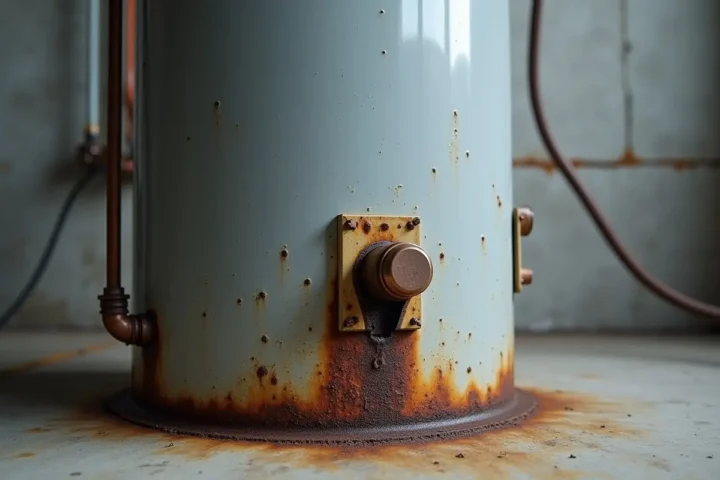
Discolored water from hot taps may indicate corrosion inside the water heater or a depleted anode rod, which is designed to help protect the tank. If both hot and cold water are rusty, the source could be aging plumbing rather than the heater itself.
Water Around The Unit
Water near the heater does not always mean the tank has failed. A loose connection, relief valve, drain valve, or nearby pipe can leak. However, moisture coming from the tank body or a seam is more serious and often indicates internal corrosion that cannot be reliably repaired.
3. When A Problem Is An Emergency
Treat a major leak, flooding, smoke, sparks, a burning odor, or a strong gas smell as an urgent safety issue. Keep children and pets away from the area. If it is safe to do so, turn off the water supply to an actively leaking unit. For an electric heater, shut off power at the breaker only if you can reach it without standing near water.
Leave the home immediately if you smell gas, then contact emergency services or the gas utility from a safe location. Do not relight a pilot, operate electrical switches, or attempt to find the source of a gas leak. Fuel-burning appliances also require clear venting and functioning carbon monoxide alarms. The EPA recommends maintaining fuel-burning equipment and using carbon monoxide alarms as an added layer of protection. Review EPA carbon monoxide alarm guidance.
4. Safe Checks Homeowners Can Make
Safe observation can help a technician diagnose the problem faster. Before scheduling service, gather the following details:
- The unit’s approximate age, model number, and fuel type.
- Whether the problem affects every hot-water fixture or only one.
- The location of any moisture, such as a fitting, valve, pipe, or tank body.
- Any error code, warning light, unusual smell, or new sound.
- Whether the issue began suddenly or has become worse over weeks or months.
Do not remove electrical access covers, touch standing water near electrical equipment, repeatedly reset a tripped breaker, or raise the temperature setting to hide poor performance. These actions can create burn, shock, fire, or equipment-damage risks.
5. A Simple Maintenance Plan
Maintenance needs vary by water quality, system design, age, and manufacturer instructions. A practical plan can include:
- Every few months: Look for damp flooring, corrosion, loose insulation, or leaking connections.
- As directed by the manufacturer: Flush a storage tank to manage sediment, if the unit and valves are in suitable condition.
- Periodically: Have the anode rod inspected, especially in areas with hard water.
- For gas units: Check that the area around the unit remains clear and that venting is not blocked or damaged.
- When symptoms appear: Arrange a professional inspection rather than waiting for total failure.
Water quality can influence how quickly sediment and corrosion develop inside a water heater. Hard water may leave mineral deposits on heating surfaces, while highly corrosive water can shorten the life of protective components. Homes with a water softener may also need guidance tailored to their equipment and water conditions.
If you notice recurring scale, unusual discoloration, or repeated valve issues, mention those details during service. A qualified professional can assess whether filtration, treatment, anode selection, or a maintenance adjustment could help protect the next unit. Keep records of service dates, flushed material, repairs, and changed parts. Those notes make
future troubleshooting more efficient and can reveal patterns that are easy to miss. Water pressure matters as well. Excessively high pressure can strain valves, fittings, and plumbing connections, while unusual pressure changes may cause relief valve discharge. Never cap, plug, or disable a temperature and pressure relief valve. Its purpose is to release pressure under abnormal conditions.
If water appears at the discharge pipe, arrange an inspection so the cause can be identified. The technician may evaluate water pressure, thermal expansion, valve condition, and the plumbing configuration. Keep the discharge path visible and unobstructed, and do not place storage items
near the heater that could be damaged by heat or water. Installation conditions also affect reliability. A unit placed in a garage, attic, crawl space, or utility closet may face temperature swings, limited drainage, dust, or restricted airflow. Heat pump models need adequate surrounding air and condensate management, whereas fuel-burning systems need proper combustion air and venting.
Confirm that the area remains accessible for inspection and replacement. Avoid enclosing equipment or modifying doors, vents, pipes, or flues without professional advice. If the heater sits above finished living space, consider whether a drain pan, leak alarm, or automatic shutoff device provides
an extra layer of protection. These measures do not prevent every failure, but they can reduce the consequences of an unnoticed leak. When planning replacement, measure the route from the entry point to the installation location as well as the available service clearance.
Check ceiling height, doorway width, floor support, nearby drains, electrical panel capacity, gas line condition, and vent routing where applicable. A replacement that fits physically but overlooks these details can create delays or added costs. It is also useful to ask about permits, inspections, code requirements, hauling away the old unit, and complete warranty registration promptly afterward.
6. Repair Or Replace: How To Decide
Age matters, but it is not the only factor. Repair may be reasonable when the tank is sound, the issue involves one replaceable component, the unit has been dependable, and the repair cost is modest compared with replacement.
Replacement deserves stronger consideration when the tank itself is leaking, corrosion is severe, repairs are frequent, hot-water demand has changed, or energy use has steadily increased. Ask for a written diagnosis that separates essential repairs from optional upgrades, then compare expected operating costs, capacity, warranty coverage, and installation requirements.
7. How System Type Changes Diagnosis
- Electric tank heaters: Common concerns include elements, thermostats, wiring, breakers, and sediment.
- Gas tank heaters: Burners, pilot systems, gas controls, combustion air, and venting require careful evaluation.
- Tankless heaters: Mineral scale, flow sensors, filters, ignition components, and venting can affect output.
- Heat pump water heaters: Airflow, filters, condensate drainage, operating mode, and electrical service can influence performance.
8. Ways To Reduce Energy Waste
Use the manufacturer-recommended temperature setting, repair dripping hot-water faucets promptly, insulate accessible hot-water pipes where appropriate, and select replacement equipment based on real household demand. When comparing new models, review the Uniform Energy Factor and consider installation space, noise, electrical capacity, and local incentives before choosing a high-efficiency option.
9. Common Questions
How Long Does A Water Heater Usually Last?
Service life varies widely based on water quality, usage, installation quality, maintenance, and system type. Watch condition and repair history instead of relying on one expected lifespan.
Can A Homeowner Flush A Water Heater?
Some homeowners can follow the manufacturer’s instructions, but hot water, pressure, stuck valves, and older equipment can make the task risky. Professional help is sensible when there is visible corrosion, heavy sediment, or uncertainty about the procedure.
Is A Small Leak Safe To Ignore?
No. Even a small leak can worsen, damage surrounding materials, or reveal a failing valve, fitting, or tank. It should be inspected soon, even if it is not an immediate emergency.
Final Advice
A strange sound, rusty water, weak hot-water performance, or a damp floor is an opportunity to act before the problem becomes more expensive. Careful observation, safe response steps, routine maintenance, and a clear repair-versus-replacement review can help homeowners protect their homes and make informed decisions in 2026.