
Essential Maintenance Tips for E-Bike Longevity
The battery is undeniably the heart of your e-bike, and understanding its intricate workings is crucial for optimal performance and longevity. Modern e-bike batteries predominantly utilize advanced lithium-ion chemistry, often lithium-NCM (Nickel Cobalt Manganese), which offers a superior balance of energy density, power output, and lifespan compared to older technologies. However, this sophisticated technology demands informed care.
A critical component ensuring the safe and efficient operation of your e-bike battery is the Battery Management System (BMS).
The BMS acts as the battery’s brain, constantly monitoring voltage, current, and temperature to prevent overcharging, over-discharging, and overheating. It also plays a vital role in cell balancing, ensuring that all individual cells within the battery pack are charged and discharged uniformly. This meticulous regulation is what allows your battery to deliver consistent power and contributes significantly to its overall lifespan. For comprehensive insights into maintaining this crucial component, exploring dedicated resources on E-bike battery maintenance can provide invaluable guidance.
Safety standards, such as UL 2849 for the entire e-bike electrical system and UL 2271 specifically for battery packs, are increasingly important. These certifications confirm that the battery and its associated components have undergone rigorous testing to mitigate risks like fire and electrical shock, offering peace of mind to riders.
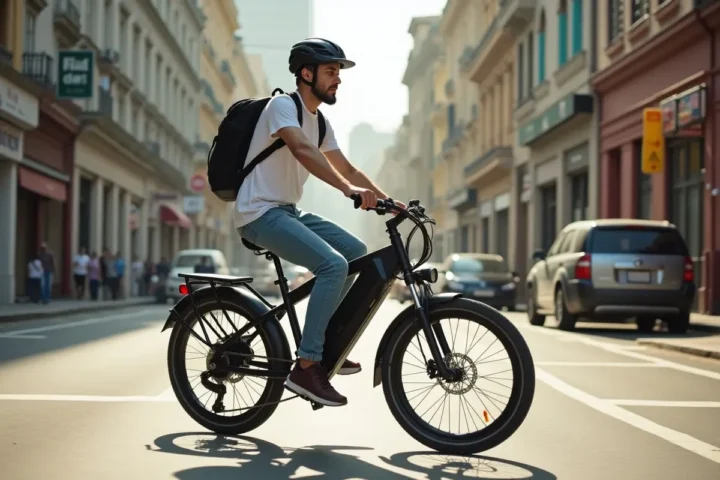
The Science of E-Bike Maintenance and Charge Cycles
Understanding charge cycles is fundamental to e-bike battery care. A “charge cycle” isn’t simply every time you plug in your charger; it represents the cumulative discharge of 100% of the battery’s capacity. For instance, if you use 20% of your battery’s capacity five times, that equates to one full charge cycle. This cumulative calculation means that frequent partial charges are not detrimental and are, in fact, often beneficial for lithium-ion batteries.
Most high-quality lithium-ion e-bike batteries are rated for 700 to 1,000 full charge cycles before they experience significant capacity loss. With proper maintenance, these batteries can often last between 5 to 7 years. The “significant capacity loss” benchmark typically refers to the battery retaining around 80% of its original capacity. Even after reaching this threshold, the battery remains perfectly usable, albeit with a reduced range. This 80% capacity retention is a key indicator of a battery’s health and performance over time.
Debunking Common Myths in E-Bike Maintenance
The world of battery care is rife with misconceptions, often stemming from older battery technologies. Let’s clarify some of the most common myths surrounding e-bike battery care:
Myth 1: E-bike batteries suffer from “memory effect” and need to be fully discharged. Truth
This myth originates from older Nickel-Cadmium (NiCad) batteries. Modern lithium-ion batteries, like those in e-bikes, do not have a memory effect. In fact, fully discharging a lithium-ion battery can stress the cells and potentially shorten its lifespan. It’s generally better to top off your battery frequently rather than waiting for it to be nearly empty.
Myth 2: Leaving your e-bike battery on the charger overnight will damage it. Truth
While excessive time at 100% charge can cause some long-term degradation, quality e-bike chargers and Battery Management Systems (BMS) are designed to prevent overcharging. They automatically stop charging once the battery is full. However, for maximum longevity, it’s advisable to unplug the charger once charging is complete, or use a smart timer to prevent the battery from sitting at 100% for extended periods, especially if you won’t be riding immediately. Continuous “trickle charging” can generate unnecessary heat and stress over time.
Myth 3: You should fully discharge your battery before recharging to prolong its life.Truth
As mentioned, this is a carryover from NiCad batteries. For lithium-ion batteries, operating within a partial charge range (e.g., 20% to 80%) is often recommended for daily use to minimize stress on the cells and maximize cycle life. Full charges are sometimes recommended every few weeks to allow the BMS to balance the cells, but daily deep discharges are counterproductive.
Temperature Management and Environmental Protection
Temperature is one of the most significant factors influencing your e-bike battery’s performance and lifespan. Both extreme heat and extreme cold can negatively impact the battery’s chemical reactions, leading to reduced range, slower charging, and accelerated degradation.
The optimal operating and charging temperature range for most e-bike lithium-ion batteries is between 10-25°C (50-77°F). Outside this “sweet spot,” batteries experience increased internal resistance. In cold conditions, the electrolyte becomes denser, slowing down the movement of lithium ions and temporarily reducing available capacity. In hot conditions, elevated temperatures accelerate parasitic chemical reactions within the battery, leading to faster degradation and permanent capacity loss. Batteries stored or charged above 32°C (90°F) can degrade up to twice as fast.
Here’s a quick overview of how temperature affects battery performance:
It’s not just daily use that requires attention—how you store your e-bike battery long-term is equally critical. For instance, if you anticipate not using your e-bike for several weeks or months, it’s prudent to store the battery at about 60% charge in a cool, dry place.
This charge level helps prevent the battery from dropping to dangerously low voltage over time, which can trigger the BMS protection and potentially make the pack unusable without specialized resetting equipment. Avoid storing your battery at full charge or while completely empty, as both extremes can damage cell chemistry during prolonged storage.
Moisture and dust are other environmental factors that can compromise your battery’s integrity. Always ensure the battery casing and terminals remain clean and dry, as dirt and water ingress can cause short circuits or corrosion. After riding in wet conditions, dry the battery using a soft cloth before recharging or storing it.
Integrating regular maintenance into your e-bike routine—such as checking for secure electrical connections, updating your bike’s firmware (if applicable, for smart systems), and visually inspecting the battery and its compartment—can help you spot issues before they become serious. Periodically examine the battery for swelling, leaks, or damage to the casing, and consult professionals if any abnormalities are found. These diligent habits not only extend battery life but enhance safety.
The environmental benefits of e-bikes can only be fully realized if the batteries themselves are managed responsibly throughout their lifespan. When a battery finally reaches the end of its usable life, always dispose of or recycle it through certified e-waste programs rather than regular household waste. Many bike shops and electronic retailers offer take-back or recycling programs, ensuring that toxic materials are safely managed and valuable resources reclaimed.
In conclusion, optimal e-bike battery health is achieved through a blend of informed charging habits, temperature awareness, and consistent maintenance. By dispelling myths, respecting the chemistry, and making proactive care a routine, you’ll ensure years of reliable and enjoyable riding.
Choosing the Right Charger and Accessories
The importance of using the correct charger for your e-bike battery cannot be overstated. Each battery pack is engineered with specific voltage and current requirements, and using an incompatible or third-party charger can pose significant risks—not only to the health of your battery but also in terms of safety. Always use the manufacturer-supplied or recommended charger, as this ensures that charging rates, cut-off voltages, and safety features are appropriately matched for your battery’s chemistry.
Modern chargers often feature LED indicators or digital screens that let you know when your battery is charging, fully charged, or if an error has occurred. Some smart chargers allow you to select a partial charge (such as 80%) to further prolong battery health during periods of infrequent use. Investing in a smart charger with these customizable settings may have a higher upfront cost, but it can noticeably extend the lifespan of costly lithium-ion batteries, particularly if you routinely commute short distances.
Additionally, consider accessories like protective covers or cases, especially if you store your bike outdoors or in variable climates. Soft silicone or neoprene wraps can shield the battery from rain, road spray, and extreme temperatures. For added security, anti-theft locking mechanisms are available for many models, ensuring your valuable battery isn’t an easy target while parked in public areas.
Riding Habits and Range Optimization
Preserving battery life isn’t just about maintenance—it’s also about how you ride. Consistently riding in the highest power assist mode or accelerating abruptly can drain your battery quickly and increase the number of charge cycles, shortening its useful life. Instead, use the lowest assist level compatible with your needs, and leverage your own pedaling power on flat terrain or downhill stretches to conserve energy.
Practicing energy-efficient riding techniques can noticeably increase your range and reduce battery stress. Anticipate stops so you can decelerate gradually, coast when possible, and maintain steady speeds rather than accelerating aggressively out of every corner. If your e-bike features regenerative braking, use it appropriately—while regenerative braking on e-bikes recovers only a small fraction of energy compared to electric cars, it can nonetheless add incremental gains over time.
Weight is another important factor. Carrying excessive cargo or riding with flat tires increases rolling resistance and forces the battery to work harder. Regularly check your tire pressure and minimize unnecessary cargo for smoother, more efficient rides.
Periodic Professional Inspection
While most routine maintenance tasks can be managed by e-bike owners, a periodic professional inspection—perhaps once a year—is invaluable, especially if you rely on your e-bike for daily commuting or long-distance travel. Certified technicians can perform diagnostics on the battery and BMS, check for hidden electrolyte leaks, and use specialized tools to test the health of each cell. They may also be able to perform firmware updates for smart batteries, unlocking performance improvements or additional safety features.
Professional servicing helps detect potential problems early and ensures that your battery—and your e-bike as a whole—remain in peak condition. If you are ever unsure about your battery’s condition, especially if it exhibits unusual heat, swelling, slow charging, or a sudden drop in capacity, don’t hesitate to consult a specialist.
Proactive Care: Investing in Longevity
Ultimately, extending the life of your e-bike battery is about attention, adaptation, and respect for the technology. By integrating these best practices—including proper charging routines, climate-aware storage, accessory protection, mindful riding habits, and periodic professional checks—you not only maximize your e-bike’s efficiency, but also protect your investment and support a more sustainable model of urban mobility.