
How One Waukegan Flight School Is Making Aviation Accessible
Flying has always occupied a peculiar place in the human imagination — part engineering discipline, part sensory experience, part philosophical act. To leave the ground under your own control, to navigate by instruments and instinct through three-dimensional space, to read weather and terrain and airspace as a practiced language: these are not merely technical skills. They are a craft. And like all crafts, they reward patience, attention, and the willingness to begin as a beginner.
At Waukegan Regional Airport on the shores of Lake Michigan, a flight school is doing something quietly remarkable — making that craft accessible to people who never imagined themselves in a cockpit.
Aviation as a Learnable Art
The popular image of pilots as a special category of person — uniquely daring, innately gifted, born to fly — is a myth that keeps more people on the ground than any regulatory barrier ever has. The reality of flight training is considerably more democratic. Learning to fly is a structured, progressive process that any motivated adult can complete. The skills required are not extraordinary reflexes or fearlessness. They are attention to detail, the ability to build mental models, comfort with procedure, and the capacity to remain calm when circumstances require a decision.
These are learnable. They are, in fact, the same qualities that make a skilled craftsperson, musician, or visual artist. The cockpit is not so different from the studio or the workshop — it is a space where practiced attention produces results that look, from the outside, like talent.
The Bristell: A Modern Instrument for a Timeless Pursuit
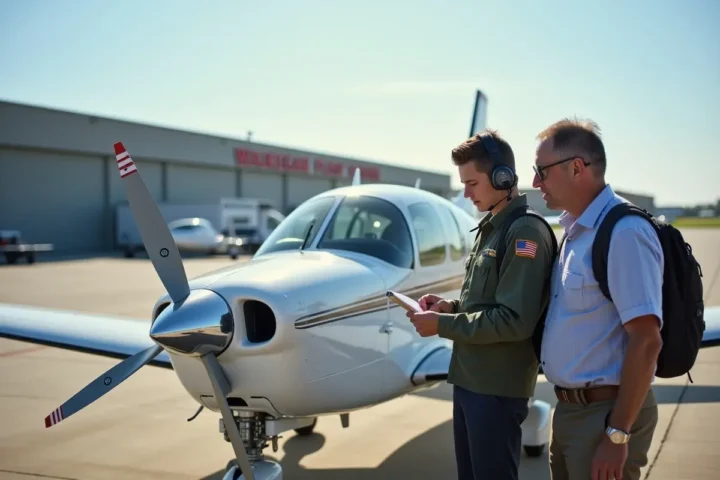
The choice of aircraft says something about a flight school’s philosophy. Lumina Aviation flight training is conducted in Bristell aircraft — sleek, modern light sport planes that represent the current state of the art in general aviation design. The Bristell is not a relic of mid-century aviation culture. It is a precision-engineered aircraft with a glass cockpit, excellent visibility, and handling characteristics that make it an ideal platform for building the foundational skills that transfer to any aircraft a pilot might fly in the future.
Training in modern equipment matters. It removes the cognitive friction of outdated analog instruments and allows students to focus on the core skills — navigation, airspace management, weather interpretation, radio communication — that define competent pilothood.
Accessibility Without Compromise
Making aviation accessible does not mean making it easy in the pejorative sense. The Federal Aviation Administration sets rigorous standards for pilot certification, and programs that cut corners produce pilots who are a danger to themselves and others. True accessibility means removing the unnecessary barriers — intimidating atmospheres, inflexible scheduling, poorly maintained aircraft — while maintaining the standards that make the certificate meaningful.
Lumina Aviation’s approach centers on clear progression, honest communication with students about where they are and what they need to work on, and an instructional culture that treats the discovery flight student with the same respect as the instrument-rated pilot building toward a commercial certificate.
The First Lesson
For most students, the experience of actually flying an aircraft for the first time — hands on the controls, feet on the rudder pedals, the ground dropping away beneath the wings — is decisive. The analytical questions that preceded it (How much will it cost? How long will it take? Am I the kind of person who does this?) become secondary to a simpler realization: this is something I want to learn.
That moment is what Waukegan’s aviation community has been creating for new pilots for generations. It is what Lumina Aviation is creating today, one discovery flight at a time. The art of flying has always been available. It has simply been waiting for more people to reach for it.