
The Art of ‘Awake’ Liposuction and Painless Augmentation
The term “awake surgery” might sound intimidating, but in the context of aesthetic procedures like tummy tucks and liposuction, it refers to a carefully managed process that prioritizes patient comfort and safety. This innovative approach relies heavily on local anesthesia and conscious sedation, offering a distinct alternative to traditional methods that use general anesthesia.
At its core, awake surgery means that while you remain conscious and able to communicate, the targeted area of your body is completely numb. This is achieved through local anesthesia, which directly numbs the surgical site, unlike general anesthesia, which induces a state of unconsciousness. Often, a light oral sedative is also administered to help you relax and feel at ease throughout the procedure.
The primary technique employed in many awake aesthetic procedures, particularly for fat removal, is the tumescent technique. This involves infiltrating the treatment area with a specialized solution. This tumescent fluid is a dilute mixture of lidocaine (a local anesthetic) and epinephrine (a vasoconstrictor). The lidocaine ensures the area is thoroughly numbed, providing a pain-free experience, while the epinephrine constricts blood vessels, significantly reducing bleeding and bruising during and after the procedure. This not only improves safety but also contributes to a faster and more comfortable recovery.
A range of procedures can be effectively performed using the awake method. These commonly include awake liposuction, which can target various stubborn fat pockets across the body, and even certain types of tummy tucks, often referred to as awake mini tummy tucks. Other procedures like arm lifts and fat transfers can also be adapted for the awake approach, depending on the extent and complexity of the surgery.
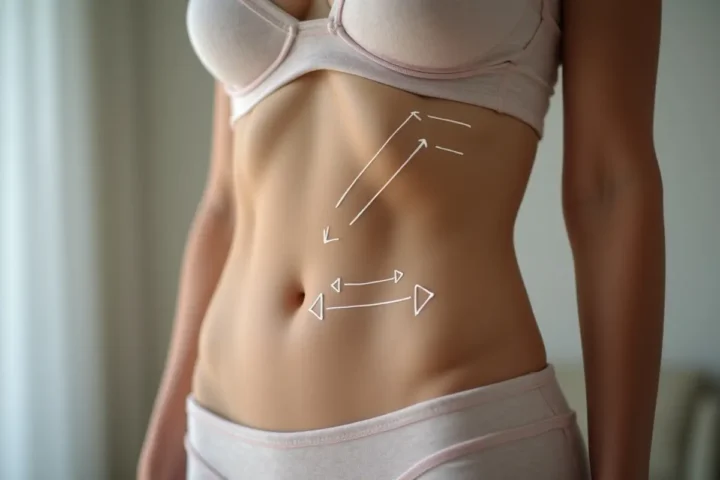
The Mechanics of an Awake Tummy Tuck and Liposuction
Let’s dig a little deeper into how these “awake” procedures work, focusing on the mechanics of an awake tummy tuck and liposuction. The tumescent technique is central to both. Before any incisions are made, the surgeon carefully injects the tumescent solution into the fatty tissue and underlying areas. As mentioned, the lidocaine ensures profound numbing, allowing us to perform the surgery without you feeling pain. The epinephrine plays a crucial role in minimizing blood loss, which is a significant advantage, leading to less bruising and a smoother recovery.
For awake liposuction, small incisions (often just a few millimeters) are made in discreet locations. A thin, hollow tube called a cannula is then inserted through these incisions. The surgeon gently moves the cannula back and forth to dislodge and aspirate (suction out) the unwanted fat cells.
Because you are awake, your surgeon can engage with you, asking you to flex muscles or reposition your body. This real-time feedback is invaluable, allowing for more precise sculpting and contouring, potentially leading to a better finished product. As one source notes, this interaction can help surgeons “sculpt your body more effectively, allowing them to see certain aspects of their work more clearly as they sculpt and contour your body.”
An awake tummy tuck, often a “mini tummy tuck,” focuses on addressing excess skin and fat primarily below the navel, and can involve tightening of the abdominal muscles (diastasis recti repair) in this region. This minimally invasive approach, involving small incisions and local anesthesia, means less downtime, minimal scarring, and reduced discomfort compared to traditional tummy tucks.
The surgeon carefully removes excess skin and fat, and if necessary, tightens the underlying abdominal muscles to create a flatter, more toned appearance. The precision offered by the awake method, combined with the benefits of local anesthesia, makes it a compelling option for suitable candidates.
Key Differences from Traditional Methods
The distinction between awake and traditional aesthetic procedures, particularly tummy tucks, lies fundamentally in the type of anesthesia used and the patient’s state during surgery. This difference cascades into various aspects of the surgical experience, from recovery to associated risks.
Traditional tummy tucks (abdominoplasty) are typically performed under general anesthesia, meaning the patient is completely unconscious and unaware of the procedure. While safe and effective for many, general anesthesia carries its own set of considerations, including a longer recovery from the anesthesia itself and a slightly higher risk profile for some individuals.
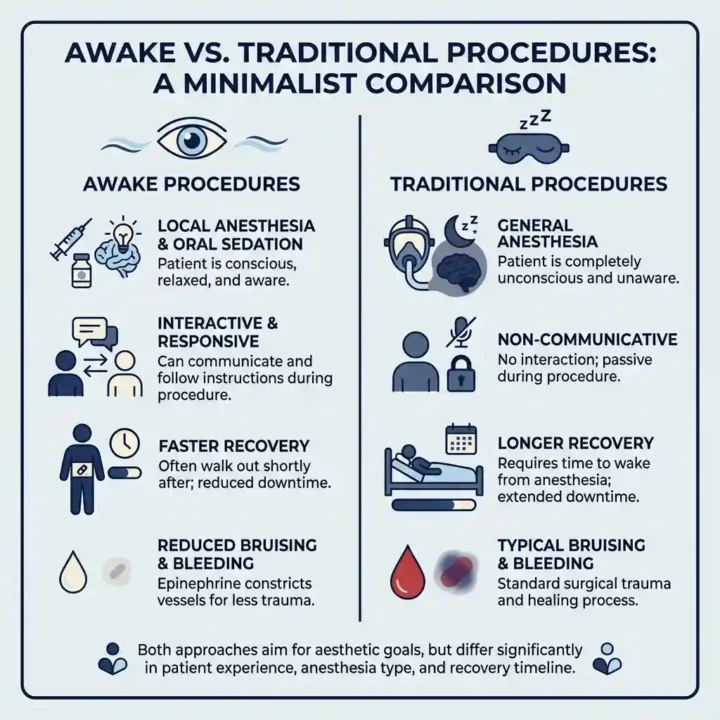
In contrast, awake procedures use local anesthesia, often supplemented with light oral sedation. The patient remains conscious, aware, and can even communicate with the surgical team. This fundamental difference leads to several key distinctions, which we’ve summarized in the infographic below.
Core Differences: Awake vs. Traditional Aesthetic Procedures
| Feature | Awake Procedures | Traditional Procedures |
| Anesthesia Type | Local anesthesia (e.g., tumescent fluid with lidocaine and epinephrine), often with oral sedation | General anesthesia (patient is completely unconscious) |
| Patient State | Conscious, aware, able to communicate | Unconscious, unaware |
| Recovery Duration | Generally faster; patients can often go home within an hour, light activities in days | Longer recovery from anesthesia; typical downtime of 2+ weeks |
| Associated Risks | Fewer risks compared to general anesthesia | Risks associated with general anesthesia (e.g., nausea, grogginess, respiratory issues) |
| Surgeon-Patient Interaction | Possible; allows for real-time feedback and optimal positioning for sculpting | None during the procedure |
The absence of general anesthesia in awake procedures means avoiding the grogginess and disconnected feeling that can last for hours, or even up to 24 hours. This translates directly into a faster recovery. While traditional tummy tucks can last 2-3 hours and require general anesthesia, awake procedures often have a quicker initial recovery period, allowing patients to return to light activities sooner.
The Compelling Benefits of Choosing Awake Surgery
The shift towards “awake” aesthetic procedures isn’t just about a different type of anesthesia; it’s about a holistic approach that offers significant advantages for many patients. These benefits span from improved safety to a more comfortable and efficient recovery, ultimately contributing to a more positive overall experience and potentially superior results.
One of the most compelling benefits is the reduced risk associated with anesthesia. General anesthesia, while generally safe, carries inherent risks, especially for individuals with certain underlying health conditions. Local anesthesia, on the other hand, poses fewer risks, making awake procedures a safer option for a broader range of patients. This is particularly reassuring for those who feel nervous about going under general anesthesia.
This leads directly to a faster recovery period. Without the need to recover from the effects of general anesthesia, patients often feel more alert and mobile almost immediately after the procedure. As statistics show, “Awake liposuction provides a faster recovery since general anesthesia is not needed.” Most patients can typically go home within about an hour after awake liposuction, and can resume light activities within a few days. This convenience is a significant advantage for busy individuals.
Another welcome benefit is less post-operative nausea and grogginess. General anesthesia can often leave patients feeling disoriented and nauseous for hours. By avoiding it, awake procedures bypass these unpleasant side effects, allowing for a smoother transition back to daily life. You can get back to life more quickly, avoiding the feeling of being groggy and disconnected.
Perhaps one of the most unique advantages is patient involvement for precision. During an awake procedure, the surgeon can communicate with you. This allows for real-time feedback, enabling the surgeon to ask you to flex specific muscles or move into certain positions. This direct interaction can be crucial for achieving optimal aesthetic results, as the surgeon can “sculpt your body more effectively, allowing them to see certain aspects of their work more clearly as they sculpt and contour your body.”
This collaborative approach can result in a better finished product, as the surgeon can fine-tune contours based on your live feedback. The ability to reposition for better contouring also means the surgeon can assess the effects of gravity and movement on your body’s shape, leading to a more natural and harmonious outcome.
The Patient Experience and Recovery Journey
The recovery journey after an awake tummy tuck or liposuction is typically characterized by its relative speed and comfort compared to traditional methods. Immediately following the procedure, you’ll undergo a period of post-procedure monitoring, ensuring your vital signs are stable and you’re feeling well. A significant advantage is the ability to go home the same day, often within an hour or so after the surgery, as general anesthesia is not involved.
A crucial component of the recovery process is the compression garment. Most patients will need to wear a compression garment for around six to eight weeks following a tummy tuck and/or lipo. This garment plays a vital role in reducing swelling, supporting the treated tissues, and helping the skin contract smoothly to your new contours.
While the procedure itself is pain-free due to local anesthesia, managing discomfort during recovery is important. Most patients experience only minor side effects, including bruising, swelling, and temporary numbness around the incision site. Your surgeon will provide pain medication to manage any mild to moderate pain you might experience.
The typical downtime is significantly reduced. While traditional tummy tucks often require at least two weeks off work, with awake procedures, many patients can resume light activities within a few days. For returning to work, most physicians recommend taking at least two weeks off to ensure incisions are healing well and swelling has diminished. However, for less physically demanding jobs, some individuals might return sooner. Light exercise can often be resumed around four weeks, with full activity typically cleared at six weeks.
Scar management techniques are also a key part of the recovery. As with any major surgical procedure, you will have visible scars. However, with time, healing, and proper care, your tummy tuck scars will fade and become less noticeable. The scar will gradually fade and, in most patients, will take up to 18 months to be as inconspicuous as possible. Your surgeon will provide guidance on scar care, which may include special dressings or topical treatments.
Who is an Ideal Candidate for these Aesthetic Procedures?
Determining if you’re an ideal candidate for an awake tummy tuck or liposuction involves a comprehensive evaluation of your health, aesthetic goals, and lifestyle. While the awake approach offers benefits to many, certain characteristics make an individual particularly well-suited for these procedures.
Firstly, being close to your ideal body weight is crucial. Awake procedures, like traditional tummy tucks and liposuction, are not weight-loss solutions. To achieve the best results, you should be at or near your goal weight and looking to address excess skin or fat due to genetics, pregnancy, or significant weight loss. For instance, a tummy tuck works by removing fat and excess skin from the abdomen, but it is not a substitute for weight loss. Similarly, the best candidates for awake liposuction are generally healthy and close to their ideal body weight.
Good skin elasticity is another important factor. While awake tummy tucks address excess skin, the overall quality and elasticity of your skin will influence how well it retracts and conforms to your new contours after fat removal.
These procedures are particularly effective for addressing localized fat deposits that are resistant to diet and exercise. If you have stubborn pockets of fat that simply won’t budge, awake liposuction can precisely target and remove them.
Being a non-smoker is highly recommended. Smoking can impair healing and increase the risk of complications, making it a significant factor in candidacy for any surgical procedure, including awake ones.
Realistic expectations are paramount. While awake procedures can deliver transformative results, it’s important to understand what can be achieved and to have a clear, open discussion with your surgeon about your goals.
Finally, a significant group of ideal candidates are patients with anxiety about general anesthesia. If the thought of going under general anesthesia makes you nervous, awake liposuction or an awake tummy tuck might be the perfect solution for you. This approach can alleviate much of that apprehension, allowing you to proceed with confidence. Interestingly, even patients with a BMI of 40 who might not be good candidates for general anesthesia may be eligible for awake liposuction, potentially needing multiple sessions to achieve ideal results.
Navigating Your Options and Ensuring a Safe Outcome
Choosing to undergo an aesthetic procedure, even an awake one, is a significant decision that requires careful consideration and thorough research. Ensuring a safe outcome and achieving your desired results hinges heavily on selecting the right surgeon and clinic.
The importance of board certification cannot be overstated. A board-certified plastic surgeon has undergone rigorous training, passed comprehensive examinations, and maintains high standards of patient care and ethical conduct. This certification indicates a surgeon’s commitment to continuous education and adherence to the latest, safest techniques in plastic surgery. When considering an awake tummy tuck near you, always verify your surgeon’s credentials.
Equally vital is verifying surgeon experience. Look for a surgeon with extensive experience specifically in awake procedures and the particular technique you are interested in. Experience often translates to greater skill, better judgment, and a deeper understanding of how to manage potential challenges. For instance, some surgeons have performed thousands of tummy tucks, indicating a high level of expertise.
The facility where your procedure will be performed also plays a critical role in safety. Accredited surgical facilities meet stringent standards for equipment, personnel, and emergency protocols. Whether it’s a private surgical center or a hospital, accreditation ensures a safe environment for your procedure.
The consultation process is your opportunity to gather information, ask questions, and assess whether a surgeon and their team are the right fit for you. During this initial meeting, you will discuss your goals and medical history in detail. Be open and honest about your expectations, any previous surgeries, current medications, and health conditions.
This allows the surgeon to determine your suitability for an awake procedure and to tailor a treatment plan specifically for you. It’s also the time to learn about the specific techniques they use, their approach to pain management, and what to expect during recovery. Surgeons specializing in advanced techniques, such as Precision Sculpt aesthetic procedures, often have extensive portfolios to review, which can help you visualize potential outcomes and understand their artistic approach.
Frequently Asked Questions about Awake Procedures
As the popularity of awake aesthetic procedures grows, so do the questions surrounding them. We aim to address some of the most common concerns to provide clarity and help you make informed decisions.
Is an awake tummy tuck or liposuction painful?
This is often the first question patients ask, and it’s a valid one. The fundamental principle of awake procedures is to ensure a pain-free experience during the surgery itself. This is achieved through the meticulous application of local anesthesia. When administered correctly, the local anesthetic effectively numbs the entire treatment area, meaning you should not feel any sharp pain during the awake tummy tuck or liposuction. As one source states, “During your awake tummy tuck, you will be pain-free due to the local anesthesia.”
While you won’t feel pain, you might experience sensation – a feeling of pressure, tugging, or movement – but this should not be painful. Many patients describe the sensation as being similar to a “hot stone massage” for procedures like truSculpt® iD, which uses similar principles of localized energy. Your surgeon will continuously monitor your comfort levels and can administer more local anesthetic if needed.
For managing post-procedure discomfort, it’s important to understand that some soreness, bruising, and swelling are normal as the local anesthesia wears off. However, this discomfort is typically mild to moderate. Your surgeon will provide you with pain medication options to ensure you remain comfortable during your recovery. Additionally, wearing a compression garment as directed helps significantly in reducing swelling and discomfort.
Can other treatments be combined with an awake procedure?
Yes, it is often possible to combine an awake tummy tuck or liposuction with other treatments, but there are important considerations and limitations.
Combining with liposuction is very common. For example, an awake tummy tuck might be performed in conjunction with awake liposuction to contour adjacent areas or to remove additional fat that contributes to the overall abdominal shape. Many patients who receive an awake tummy tuck have combined it with other body contouring procedures such as liposuction or arm lift.
However, since these procedures use local anesthesia and conscious sedation, there are limitations on procedure duration. It is generally recommended that patients aren’t awake for surgery for too long to maintain comfort and safety. This means that while combining procedures is feasible, extensive, lengthy combinations might be better suited for traditional general anesthesia or performed as separate awake sessions. Your surgeon will advise on the safest and most effective approach for your specific goals.
For those considering a Mommy Makeover, an awake approach can sometimes be part of a customized plan. A Mommy Makeover typically addresses multiple areas affected by pregnancy and childbirth, often including breast augmentation or lift, and a tummy tuck.
While a full Mommy Makeover might be too extensive for a single awake session, individual components, such as an awake tummy tuck or awake liposuction, can certainly be incorporated. Treatment is fully customized and can include as many or as few procedures as you need in order to achieve your desired results. Popular procedures include breast augmentation, a tummy tuck, liposuction, and several other treatments.
It is crucial to discuss all your options with your surgeon during your consultation. They can provide personalized recommendations based on your medical profile, aesthetic goals, and the feasibility of combining procedures under conscious sedation.
How long do the results of an awake procedure last?
The results of an awake tummy tuck or liposuction are designed to be long-lasting, even permanent, provided you maintain a stable lifestyle.
The permanence of fat cell removal is a key aspect. When fat cells are removed during liposuction, they are gone for good. Our bodies generally do not produce new fat cells in adulthood. This means that the contoured areas will remain slimmer. However, it’s important to understand that if you gain a significant amount of weight after the procedure, the remaining fat cells in your body can still expand. As one source explains, “Fat cannot come back unless one gains weight again, in which case all body areas will share in the weight gain.”
For a tummy tuck, the removal of excess skin and the tightening of abdominal muscles (if performed) are also considered permanent changes. The muscles are surgically repaired and tightened, and the excess skin is excised.
Therefore, the importance of stable weight cannot be overstated for maintaining your results. While a tummy tuck will create a flatter, more toned appearance, keep in mind that it is not a substitute for weight loss. To get the best results from your tummy tuck, you should be at or near your goal weight before the procedure and strive to maintain it afterward. Significant weight fluctuations, particularly weight gain, can cause remaining fat cells to enlarge and skin to stretch, potentially compromising your results.
The impact of future pregnancies is another critical consideration, especially for women contemplating a tummy tuck. Pregnancy after a tummy tuck can stretch the abdominal skin and muscles again, potentially reversing the aesthetic improvements. For this reason, many surgeons recommend waiting until you are finished with childbearing before undergoing a tummy tuck. Pregnancy or future weight loss can distort the effects of a tummy tuck.
Adopting and maintaining a healthy lifestyle is the best way to ensure the longevity of your awake procedure results. This includes a balanced diet and regular exercise. While the structural changes from the surgery are permanent, your body’s overall shape and contour will continue to reflect your lifestyle choices.
Conclusion: A New Era of Personalized Body Contouring
The journey toward achieving your aesthetic goals has evolved significantly, with “awake” aesthetic procedures marking a new era of personalized body contouring. We’ve explored how these innovative techniques, particularly awake tummy tucks and liposuction, offer a compelling alternative to traditional surgery under general anesthesia.
The benefits are clear: reduced anesthesia risks, a faster and more comfortable recovery, less post-operative nausea, and the unique advantage of patient involvement for precise sculpting. These procedures empower individuals to achieve their desired contours with a heightened sense of control and peace of mind. From the meticulous application of tumescent fluid to the ability to communicate with your surgeon during the procedure, the awake approach prioritizes your comfort and contributes to a smoother experience.
This evolution in cosmetic surgery is all about empowering patients with choices. For those who are nervous about general anesthesia, or who simply prefer a less invasive path, awake procedures provide a viable and effective option. They allow for transformative results while minimizing downtime and certain risks, making aesthetic improvements more accessible and less daunting.
The future of cosmetic surgery is undoubtedly moving towards more refined, patient-centric approaches. Awake procedures represent a significant step in this direction, offering a blend of advanced medical techniques and a compassionate understanding of patient needs.
In closing, safety and informed decision-making are paramount. By understanding what an awake tummy tuck entails, its benefits, and who makes an ideal candidate, you are better equipped to explore this option. Always prioritize consulting with a board-certified, experienced surgeon who operates in an accredited facility. They can provide the expert guidance needed to determine if an awake procedure is the right path for you, ensuring a safe journey towards a more confident and contoured you.